Can Permanent Lighting Be Installed on Flat Roofs?
Flat roof permanent lighting can be installed safely and successfully when properties offer secure mounting points like parapet walls or fascia edges and use materials rated for Arizona’s heat, sun, dust, and monsoon storms. We focus on a professional assessment that protects roof waterproofing, meets local building codes, and uses low-profile, climate-ready systems that improve curb appeal without visible clutter.
Key Takeaways
- Flat roofs can support permanent lighting if there are stable vertical or edge surfaces for secure track mounting.
- Professional installation is essential to protect waterproofing layers, especially on foam and stucco roof designs.
- Arizona’s extreme heat, UV exposure, dust, and high winds require durable, weather-sealed, heat-resistant LED systems.
- Low-profile, color-matched tracks keep lighting discreet during the day while delivering customizable effects at night.
- Benefits include year-round use, smart app control, improved curb appeal, and reduced need for seasonal installations.
Yes, Flat Roof Permanent Lighting Is Possible—Here’s What You Need to Know First
Flat roof permanent lighting is absolutely possible when the structure allows for secure mounting and proper planning. Both homes and commercial buildings across Arizona can qualify, provided we evaluate the roof design carefully and use climate-ready materials.
A flat roof doesn’t automatically rule out permanent lighting. At the same time, it isn’t automatic approval either. Success depends on the roof type, attachment points, and long-term durability in Arizona weather. Guesswork won’t cut it.
Permanent lighting for flat roofs works beautifully on many properties, from modern stucco homes to retail storefronts with clean parapet lines. What matters most is having stable vertical or edge surfaces where lighting tracks can attach securely. We always recommend a professional assessment to confirm structural suitability and local code compliance before moving forward.
If we’re wondering whether it’s feasible, how it gets installed, or if it’s worth the investment, the short answer is this: with the right system and the right team, flat roof permanent lighting can be a smart, long-term upgrade that transforms the look and function of a property.
How Permanent Lighting Works on Flat Roofs
Flat roofs don’t have traditional eaves like pitched roofs, but they often offer excellent mounting opportunities. The key is knowing where—and how—to anchor the system.
Common mounting locations include parapet walls, which are especially popular in commercial flat roof lighting projects. These vertical extensions create an ideal hidden edge for track mounting. Fascia edges can also work well on residential properties. In Arizona, foam roofs are common, and installation must avoid penetrating waterproof layers without proper sealing.
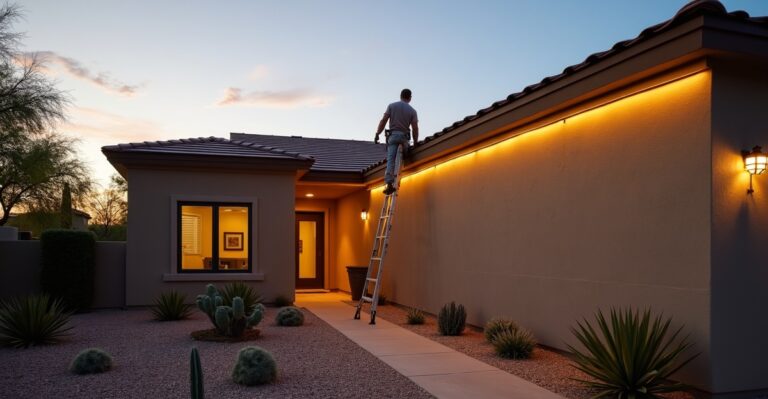
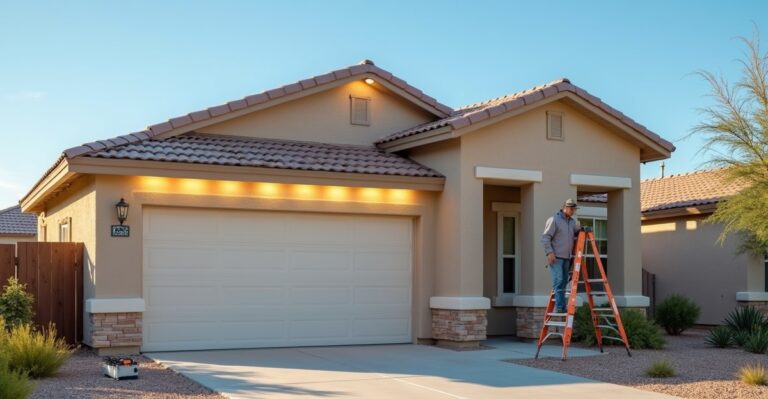
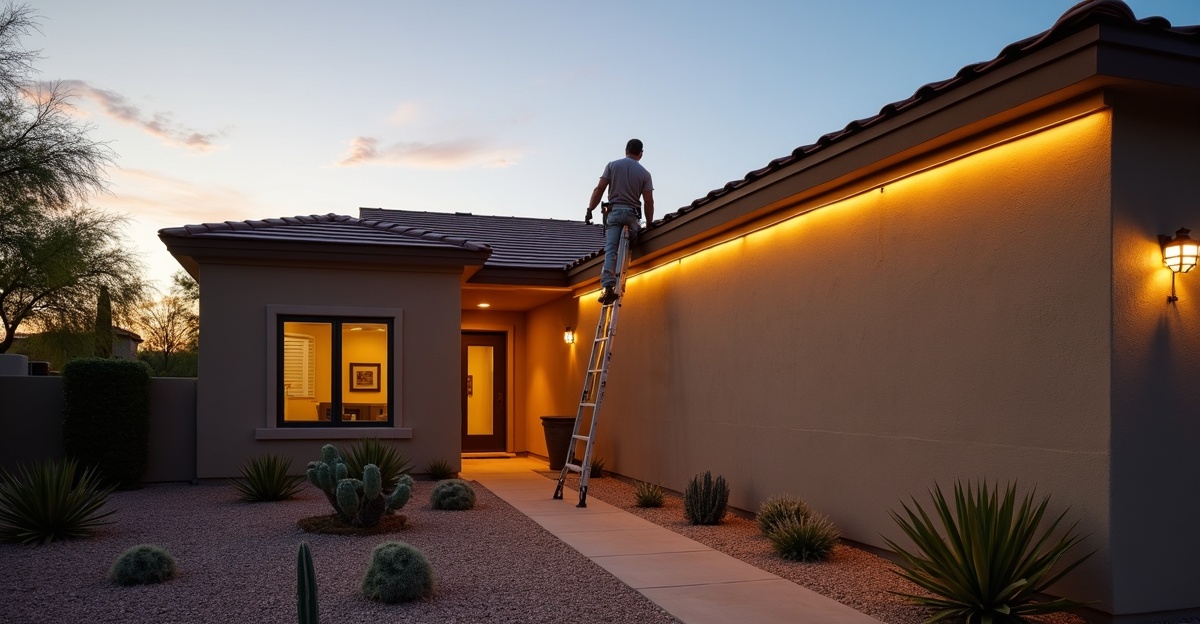
When we install permanent lighting for flat roofs, we use custom low-profile track systems designed to stay discreet. These concealed outdoor lighting systems sit just below the parapet or edge, so they’re virtually invisible during the day. If we’ve ever wondered what hidden lighting tracks look like, they’re slim, color-matched channels that blend into the architecture instead of standing out.
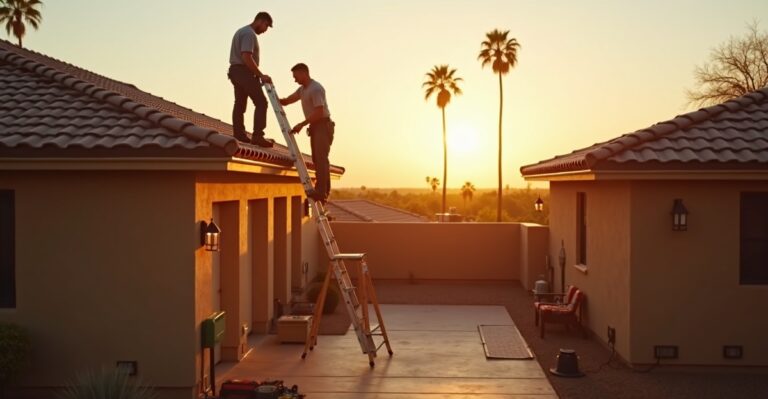
Flat roof LED lighting installation relies on stable, vertical or edge surfaces. We secure custom tracks to these areas and route wiring through protective channels. Those channels shield connections from dust, debris, and harsh sunlight. This is not a DIY project. Flat roofs require careful sealing, proper anchoring, and attention to structural integrity. Professional installation protects both the roof and the lighting system.
Today’s smart permanent lighting systems give us full control from an app. We can schedule warm white lighting every evening, switch to team colors for game day, or run animated effects for holidays and events. Permanent Christmas lights for flat roofs don’t have to stay red and green. One tap can shift from festive colors to subtle everyday ambiance. That flexibility makes year-round exterior lighting practical and exciting at the same time.
Arizona Climate: Heat, Sun, Dust, and Monsoon Considerations
Arizona’s environment demands tough lighting systems. Extreme heat pushes materials to their limits. Intense UV exposure can fade cheap plastics. Dust settles into every crack. Monsoon storms bring high winds and driving rain.
Heat-resistant outdoor LED lighting is essential in this climate. Low-quality products weaken quickly under desert sun. UV-rated materials protect housings and wiring insulation from breaking down. Weather-sealed connections keep moisture out during storm season.
Secure attachment systems matter just as much as the lights themselves. High winds can test every fastener. Tracks must anchor into stable structural elements, not just surface foam or decorative trim. That’s why Arizona outdoor lighting solutions need to be chosen with durability in mind.
Not all lighting products are built for desert conditions. A system that performs well in mild climates may struggle here. High-quality flat roof permanent lighting can handle heat, sun, dust, and storms, but proper installation is the difference between a system that lasts and one that fails early.
Design, Visibility, and Curb Appeal on Flat Roofs
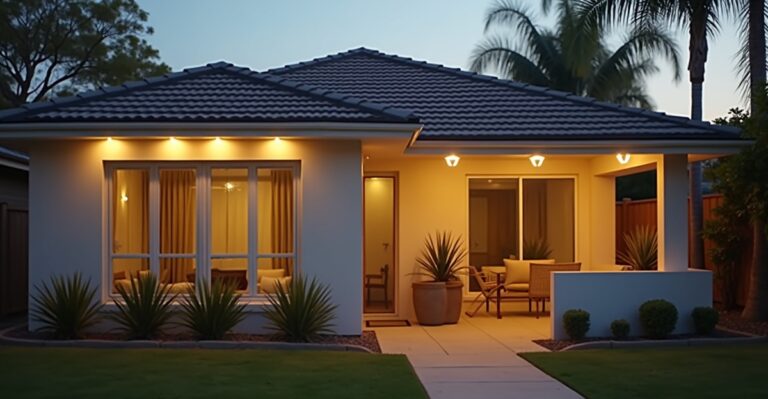
Daytime visibility is one of the most common concerns. No one wants bulky fixtures disrupting clean architecture. With well-designed tracks and thoughtful placement, permanent lighting for flat roofs stays subtle during the day.
Concealed outdoor lighting systems hug the roofline. On a modern stucco home, a warm white glow can gently outline the building’s straight lines at night while remaining nearly invisible in daylight. Properties with stucco exteriors have unique surface considerations, and proper mounting makes all the difference, as explained in how permanent lights are installed on stucco homes.
Small businesses benefit even more from thoughtful placement. A clean parapet line can glow in bold team colors or brand tones in the evening, drawing attention without overwhelming the facade. Commercial flat roof lighting offers visibility and personality while keeping a professional appearance. Our commercial outdoor lighting services focus on creating that balance.
The result feels polished. Architectural lines stand out. The building looks finished. There are no sagging cords, no temporary clips, no seasonal clutter. Permanent Christmas lights for flat roofs shift seamlessly into everyday white lighting or subtle accent tones. That flexibility adds both beauty and function.
Benefits and Limitations to Consider Before Installing
Permanent lighting for flat roofs is a long-term upgrade. It delivers meaningful benefits, but it’s important to understand the full picture before moving forward.
Under the right conditions, here’s what we gain:
Key Benefits
Before installing, it helps to see where the value comes from:
- Year-round use without climbing ladders every season
- Reduced recurring holiday installation costs over time
- Smart controls with scheduling and color customization
- Improved curb appeal and increased property visibility
- Cleaner look without temporary cords or clips
There are also practical limitations to keep in mind.
Important Considerations
Flat roof permanent lighting requires:
- Secure mounting surfaces such as parapet walls or fascia edges
- Roof designs that allow safe attachment without compromising waterproofing
- Upfront investment for quality materials and professional installation
- HOA or city code compliance where applicable
Some flat roofs offer perfect anchor points. Others may limit placement options. For example, the surface material itself affects installation methods. We see similar evaluation processes discussed in permanent lighting on brick homes and permanent lights on metal roofs. The principle is the same: the structure drives the solution.
Professional assessment is essential. We inspect mounting areas, confirm safe attachment methods, and ensure installation aligns with code requirements. If long-term roof safety is a concern, it’s helpful to review guidance on roofline lighting safety before committing.
Common Questions About Flat Roof Permanent Lighting
Flat roof properties raise unique questions. Clear answers help us make confident decisions.
Is it visible from the street during the day?
Quality systems are designed to blend into the roofline. Tracks are low-profile and color-matched, so daytime visibility stays minimal.
How much energy does it use?
Flat roof permanent lighting relies on LED technology. LEDs use significantly less energy than traditional incandescent holiday lights while delivering brighter, more consistent light.
How long does it last?
High-quality systems are built for long-term outdoor exposure in Arizona conditions. Durability depends on material rating, secure installation, and routine inspection.
What about maintenance?
Maintenance is simple. Occasional visual checks and light cleaning help remove dust buildup. Systems are built to be low-maintenance, with sealed wiring and protected channels.
Is it only for holidays?
Permanent Christmas lights for flat roofs can shift from festive displays to everyday white lighting, team colors, event themes, or subtle accent lighting. Many homeowners pair them with residential outdoor lighting to create a cohesive look across the property.
Every flat roof is different. Before installing, it makes sense to evaluate the structure, goals, and long-term vision for the space. A personalized assessment ensures the system fits the building and performs reliably. The next step is simple: schedule a consultation and review the roof design, mounting options, and lighting preferences in detail. With the right plan in place, flat roof permanent lighting can shine for years to come.