Can Permanent Lights Be Integrated With Timers?
Yes, permanent lights can integrate with timers, and a permanent lighting timer setup gives us consistent control over when and how our home or business shines. We can run basic on-and-off schedules or use full smart automation with apps and voice assistants. These systems let us control colors, brightness, recurring events, and dusk-to-dawn settings with precision and ease.
Key Takeaways
- Permanent lights support built-in timers, app-based scheduling, and smart home integration, giving us flexible and reliable control.
- We can set fixed on and off times, build recurring schedules, or activate dusk-to-dawn mode that adjusts automatically as seasons change.
- Smart automation lets us change colors for holidays, events, and promotions without reinstalling lights each year, saving time and effort.
- Most systems save schedules after power outages and reconnect to Wi-Fi on their own, though we may need occasional app updates to keep everything running smoothly.
- Professional installation strengthens durability and improves long-term performance, especially in harsh climates like Arizona’s intense heat and monsoon season.
How a Permanent Lighting Timer Setup Works (And What You Can Control)
Permanent lights can absolutely be integrated with timers. From simple on-and-off schedules to full smart home automation, a permanent lighting timer setup gives us complete control over how and when our lights shine.
A modern system usually includes one or more of the following:
- A built-in programmable timer inside the lighting controller
- App-based scheduling through a smart lighting system
- Integration with smart home platforms and voice assistants
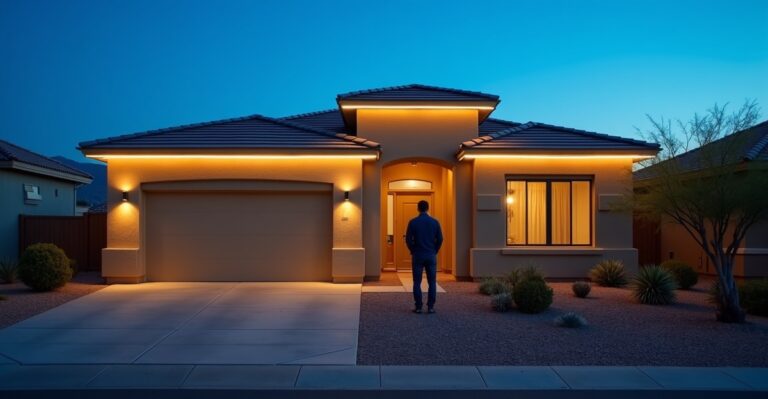
With permanent outdoor lighting with a timer, we can set exact on and off times. For example, lights can turn on at 6:30 PM and shut off at 10:00 PM every night. That’s consistent curb appeal without extra effort.
We can also create recurring schedules. Weekend patio lighting. Holiday color changes. Seasonal updates that shift automatically. For a deeper look at seasonal planning, our guide on how to schedule outdoor lighting by season shows how to map lighting to the calendar.
Many homeowners love the dusk-to-dawn lighting system mode. Lights turn on automatically at sunset and shut off at sunrise. There’s no guesswork and no manual adjustment as the days get shorter or longer.
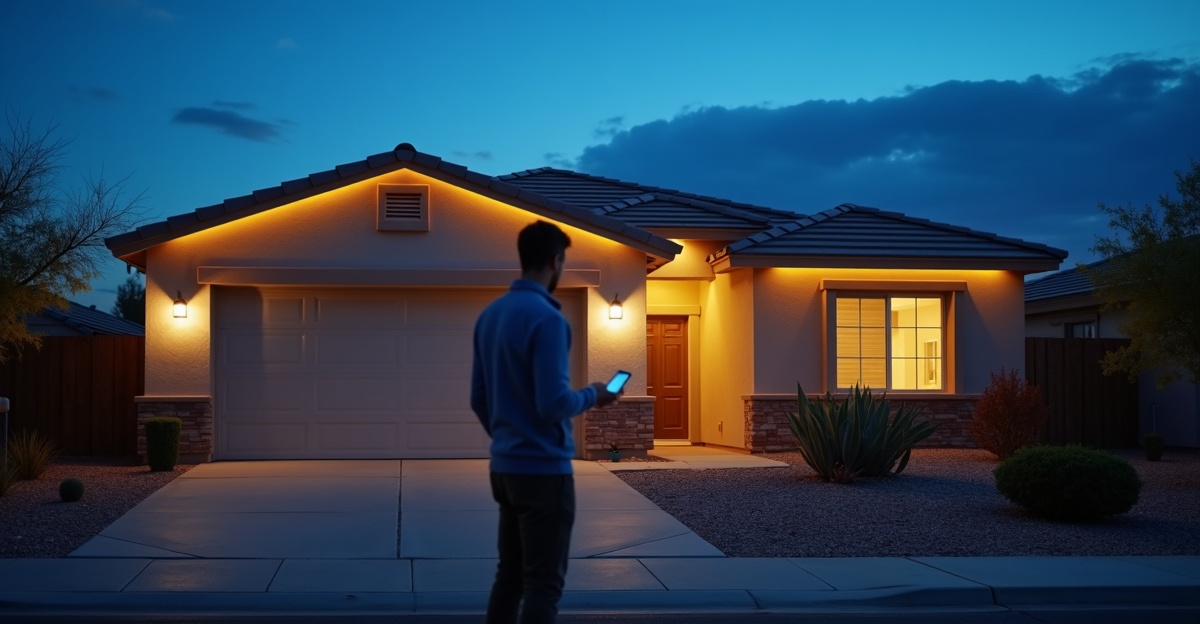
Even better, we’re not climbing ladders or plugging and unplugging cords anymore. App-controlled outdoor lights handle everything with just a few taps on a phone.
Manual Timers vs. Smart Automation: What’s the Difference?
All timers are not equal. There are three clear levels of control.
Basic plug-in timers are familiar to most of us. They turn lights on and off at set times. That’s it. No color control. No remote access. No flexibility for special events.
Built-in programmable timers step things up. These are installed inside a permanent lighting system and allow pre-set schedules. They’re reliable and consistent, but they don’t offer deep customization.
Then there’s a fully automated smart permanent lighting system. This is where the magic happens. Through app control and smart home lighting integration, we can:
- Schedule holiday lights months in advance
- Change colors for birthdays, game days, or special events
- Program automated holiday lights for specific dates only
With holiday lighting automation, decorations feel effortless. Instead of installing and removing lights every year, we simply adjust colors and patterns through the app. Our outdoor holiday lights systems make it easy to keep celebrations built right into the home.
Voice assistants also integrate smoothly with these systems. If we’re wondering about compatibility, our guide on Alexa or Google integration breaks down how voice control works in real life.
For businesses, a commercial exterior lighting timer offers serious advantages. Retail stores can shift brand colors after sunset. Restaurants can highlight themed nights automatically. With professional commercial outdoor lighting, promotions and seasonal changes run on autopilot.
We do want to set realistic expectations. Smart lighting isn’t “set it and forget it forever.” Occasionally, apps update. Wi-Fi connections may need a quick check. A few minutes of attention keeps everything running smoothly.
Real-Life Ways Homeowners and Businesses Use Lighting Timers
Lighting timers change everyday life in simple but powerful ways.
At home, many families schedule warm white lights every evening. The house looks polished the moment the sun drops. In December, those same lights shift automatically to red and green. No extra install. No storage bins.
Vacation mode brings peace of mind. Lights turn on at sunset while we’re away, adding an extra layer to our outdoor security lighting strategy, a concept supported by U.S. Department of Justice guidance on environmental crime prevention. The home never looks dark or empty.
Backyard spaces also benefit. With outdoor mood lighting, we can create a soft patio glow for dinners or brighter settings for gatherings. There’s no switch flipping required. It’s already scheduled.
For businesses, the impact is just as strong. A commercial exterior lighting timer keeps a storefront consistent and inviting each night. Restaurants can shift colors for holidays. Offices maintain steady, professional lighting without relying on staff to manage it.
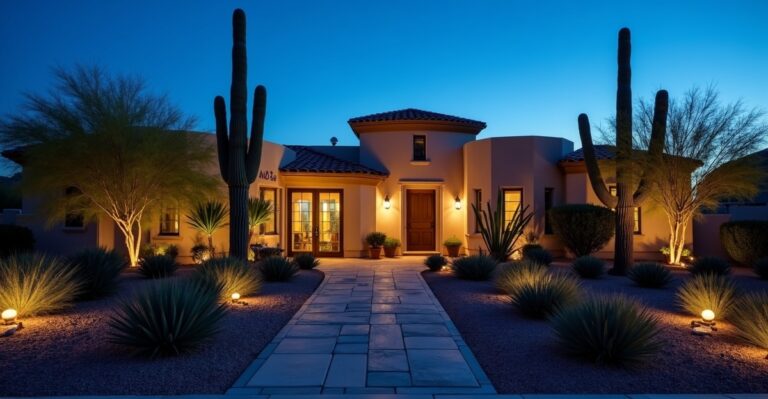
In Arizona, this flexibility matters. Many property owners look for dependable Arizona outdoor lighting solutions that handle daily use, seasonal events, and heavy sun exposure without constant adjustments.
Automated holiday lights turn special occasions into easy moments. The home or storefront stands out. The mood shifts instantly. Everyday life feels brighter.
Reliability in Arizona: Heat, Monsoons, and Power Interruptions
Arizona weather tests lighting systems. Extreme heat, intense sun, and monsoon storms demand durability.
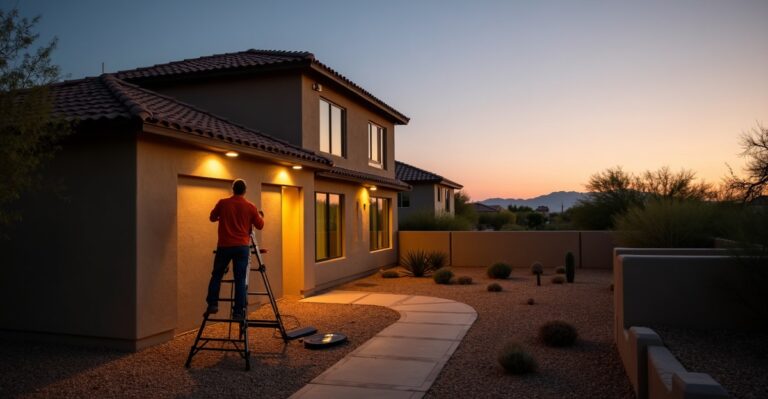
A professional permanent lighting installation secures wiring and mounting points so they hold up against wind and dust. Systems built for desert climates use weather-resistant components designed to withstand prolonged sun exposure, as outlined in ASTM International standards for UV resistance.
Power interruptions are another concern. Many smart systems retain programmed schedules even after an outage. When electricity returns, the lighting controller restores the saved settings. In most cases, Wi-Fi reconnects automatically. If we’re curious about connectivity needs, our overview on Wi-Fi requirements explains what to expect.
Technology is dependable, but it still benefits from occasional check-ins. A quick app update or seasonal review keeps the system sharp.
For properties in the Valley, local experience matters. Our Phoenix permanent outdoor lighting installations are built specifically for desert conditions. That means secure mounts, protected wiring, and materials chosen for long-term exposure.
Arizona outdoor lighting solutions should feel solid and steady, even after years of intense summers.
How Scheduling Works Day-to-Day (In Plain Language)
Once installed, daily control is simple.
- Download the app for your app-controlled outdoor lights.
- Choose colors and adjust brightness levels.
- Set on and off times or enable dusk-to-dawn mode.
- Create recurring events for weekends, holidays, or special occasions.
For those wanting deeper control, smart home lighting integration takes it further. We can build scenes like “Game Night” or “Patio Dinner Glow.” Voice assistants allow quick commands such as turning on patio lights without opening the app.
If we want to understand the full scope of control options, our guide on controlling permanent outdoor lighting walks through it step by step. Remote access is also possible, as explained in our article on remote lighting control.
Customization drives the experience. We control brightness. We adjust color. We decide timing and patterns. Changes happen instantly from a phone, whether we’re at home or out of town.
Is a Permanent Outdoor Lighting System with Timer Worth It for You?
A permanent outdoor lighting system with a timer makes sense for many property owners.
It’s a strong fit if we want to avoid seasonal setup and teardown. It works well if year-round curb appeal matters to us. It’s ideal if we enjoy smart home lighting integration and easy customization.
Over time, permanent outdoor lighting with a timer reduces yearly labor and replacement costs. There are no tangled strands or burned-out bulbs to swap every season. Professional installation improves reliability and consistency, giving the property a clean, finished look through every month of the year.
For homes, our residential outdoor lighting systems are planned around the roofline, architecture, and layout. For businesses, automation supports branding and visibility without daily attention.
We treat every project with care, focusing on what fits the property best. The goal is simple: dependable lighting that works quietly in the background while making everything look better.
If it feels like time to simplify exterior lighting and let automation handle the schedule, we invite property owners to reach out through our contact page. We’re always ready to answer questions, review options, and recommend a solution that matches the space and long-term goals.
Frequently Asked Questions
A permanent lighting timer setup typically starts with installing a compatible lighting controller and connecting it to Wi-Fi if smart features are included. After installation, you program on-and-off times through a built-in timer or mobile app. Most systems allow recurring schedules, color adjustments, and brightness control. Professional installation ensures proper wiring, weather protection, and long-term reliability.
Yes, many permanent lighting systems offer a dusk-to-dawn mode that automatically adjusts to sunset and sunrise times. The controller uses location-based data or a light sensor to trigger operation. This eliminates seasonal manual changes and keeps exterior lighting consistent year-round. Dusk-to-dawn scheduling is especially useful for security, curb appeal, and energy efficiency.
A basic timer turns lights on and off at fixed times without remote access or customization. Smart automation connects to an app or home system, allowing color changes, brightness control, holiday scheduling, and voice commands. Smart systems provide greater flexibility and remote management, while traditional timers offer simple, reliable scheduling without advanced features.
Most modern systems store programmed schedules within the controller, so settings remain saved after a power interruption. When electricity returns, the system typically resumes its schedule automatically. Wi-Fi-enabled systems may take a moment to reconnect, but they usually restore functionality without manual reprogramming. Checking firmware updates periodically helps maintain consistent performance.
Yes, a properly configured permanent lighting timer setup can improve energy efficiency. Scheduling prevents lights from running unnecessarily and allows brightness adjustments based on need. According to the U.S. Department of Energy, LED-based permanent lighting systems use significantly less electricity than traditional bulbs. Automated shut-off times and seasonal programming further reduce wasted power while maintaining consistent exterior illumination.