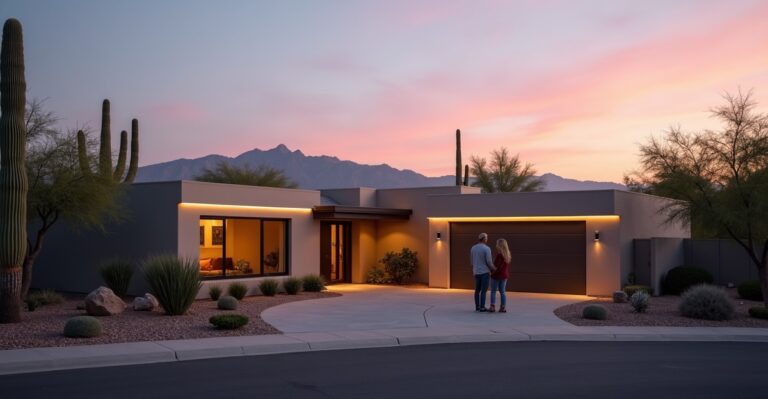
Do Permanent Lights Attract Bugs?
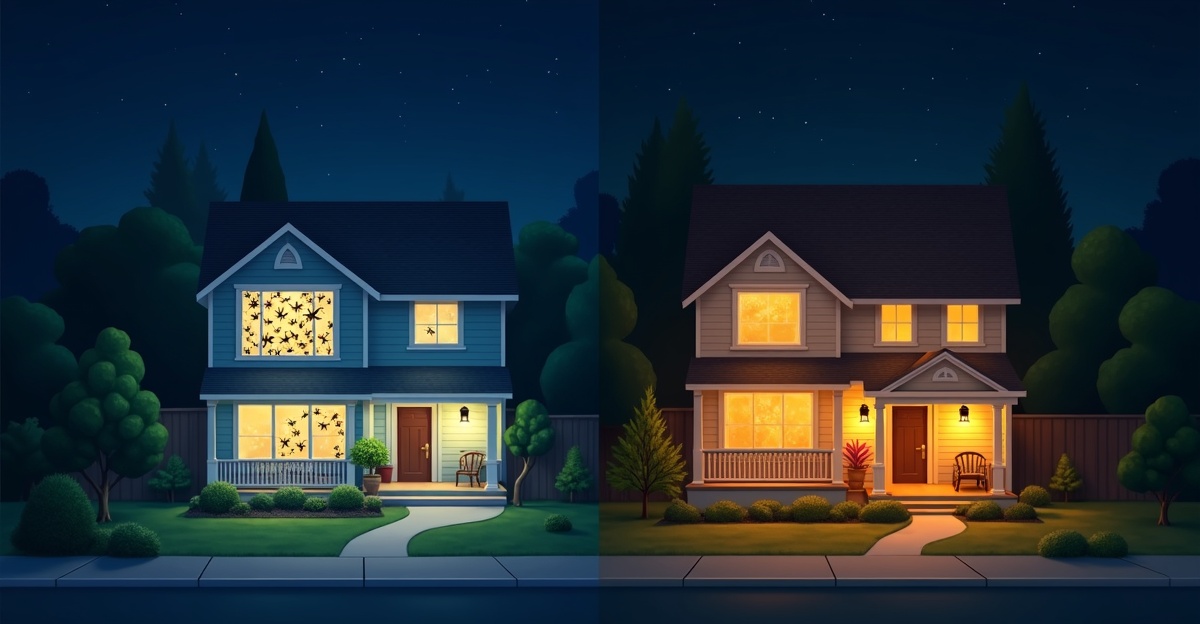
Many homeowners often ask, “Do permanent lights attract bugs?” The short answer depends on the lighting’s type, color, and location. Older bulbs and cooler light shades tend to bring insects in. Warmer-toned LEDs, on the other hand, help reduce bug presence.
Key Takeaways
- Insects flock to UV light, brightness, and heat—features found in traditional bulbs but not in modern LEDs.
- LED lights emit very little UV and heat, making them far less attractive to bugs than incandescent or fluorescent bulbs.
- Warm white LEDs (under 3000K) and amber-toned lights draw far fewer insects than cooler, blue-toned alternatives.
- Smart lighting tools—such as dimmers, timers, and focused placement—limit bug activity and save energy at the same time.
- Shielded fixtures and thoughtful lighting layouts keep bugs from swarming around doorways, patios, and social areas.
Why Bugs Flock to Light in the First Place
Bugs react to light in a way that’s built into their instincts. Many insects—especially nocturnal ones like moths, beetles, and mosquitoes—use natural light cues like the moon to stay oriented, a behavior explained in research on insect phototaxis and celestial navigation from university entomology departments. Artificial lighting can confuse them, luring them to windows, porches, and any glowing bulb nearby.
Three main things draw bugs to light:
- UV radiation: Many flying insects are highly sensitive to ultraviolet light, which helps them find food and navigate, according to agricultural extension research on insect UV sensitivity.
- Brightness: Intense, unshielded lights create a beacon in the dark that’s tough for bugs to ignore.
- Heat: Traditional bulbs produce heat, which attracts thermosensitive insects like mosquitoes.
Different bulb types play a big role here. Incandescents and compact fluorescents give off more UV and heat than newer options. Warm-toned LEDs are by far the least attractive. While no outdoor light that doesn’t attract bugs is perfect, smart lighting choices can dramatically reduce pest problems.
LED Lighting: A Game Changer in Bug Control
LED technology has reshaped how we light up outdoor spaces—and it’s a win for anyone tired of bugs crashing the party.
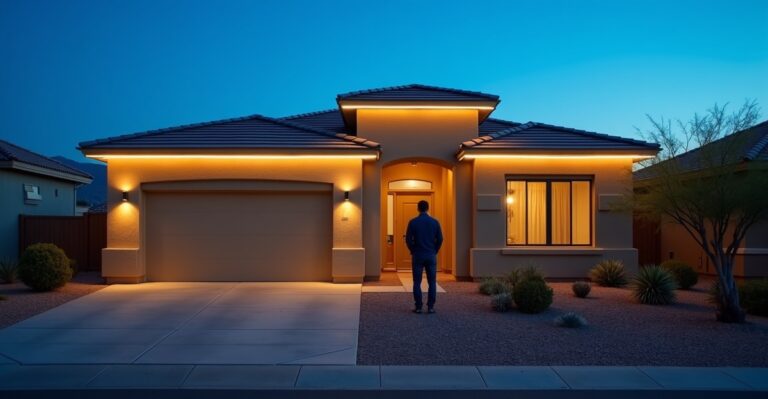
LED lights that don’t attract bugs produce little to no UV light, which means fewer insects show up. On top of that, LEDs run cool. No heat, no bug magnet.
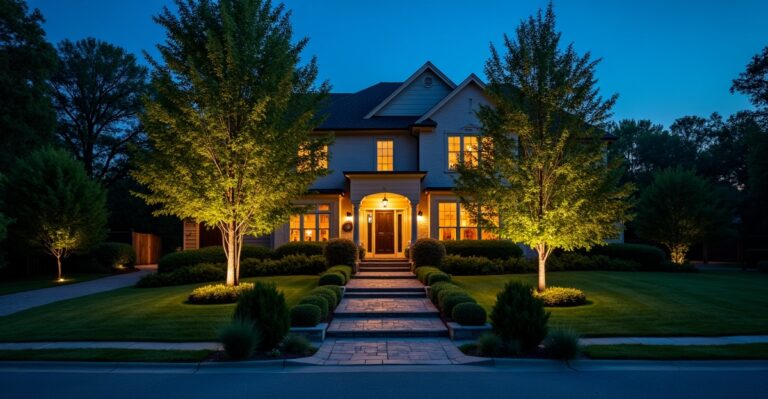
We get the most benefit with warm white LEDs between 2700K and 3000K. These softer, golden tones are far less attractive to insects than those bright, bluish-white LEDs often used in security lights or older installations.
Even better, many LED systems now come packed with smart options. You can dim them, set schedules, or shift their color temperature depending on the season or time of day. Studies show LEDs generate roughly 80% less UV than traditional bulbs, as documented in U.S. Department of Energy comparisons of LED and incandescent lighting, so switching offers real insect relief.
For an outdoor light that repels bugs and illuminates beautifully, LEDs are the top choice. You can explore more about how LEDs handle heat in intense climates like Arizona.
The Role of Light Color: Not All Hues Attract Equally
Not all light colors carry the same bug appeal. Curious what outdoor light color doesn’t attract bugs? In fact, just shifting the light’s hue can make a big difference.
Cool whites and blue-toned lights sit at shorter wavelengths. These are easier for most insects to see—so they swarm like moths to the proverbial flame. On the other end, Ever wondered, does red LED lights attract bugs? Colors like red, amber, and warm white register much less on a bug’s radar.
Research backs this up, especially in dry areas. Amber lighting—popular in desert climates—attracts the fewest insects. That’s because bugs can’t “see” these longer wavelengths very well.
If we want outdoor lights that don’t attract bugs, it pays to go warm or amber. Look for options that are:
- Warm white (under 3000K)
- Amber-tinted
- Specifically labeled as “bug lights”
Wondering what outdoor lights don’t attract bugs? Choosing lighting color that repels bugs doesn’t mean compromising quality. With today’s options, we can strike the right balance between visibility and comfort.
Lighting Myths About Bugs—Busted
“All lights attract bugs.”
Not true. Permanent lighting built with modern LEDs and warmer color tones repels significantly more bugs than old-school bulbs. Choosing the right fixtures helps too.
“White light is better for visibility.”
Technically yes—but “better” depends on the goal. With smart controls, we can keep visibility high without flooding spaces in harsh, bug-attracting white light. Options like dimmers or scheduled lighting help strike that balance.
“Bug zappers are the best solution.”
Bug zappers can kill lots of insects—but they often miss the biggest nuisances like biting mosquitoes. Sometimes, they draw even more bugs close by. Good lighting choices work proactively, reducing the attraction in the first place.
We don’t have to choose between beauty and function. Using thoughtful lighting design, we create inviting spaces that stay clear of the clutter—both human and insect.
Designing Outdoor Lighting with Bugs in Mind
Outdoor lighting design to minimize insect attraction starts with smart planning. It’s not just about which bulb we buy—it’s also how and where we use it.
Lighting Tips to Keep Bugs Away
A few changes in our setup can lead to major improvements:
- Use shielded fixtures: Direct light downward to reduce scatter and reflections that attract bugs from a distance.
- Avoid lighting near entry points: Keep porch lights, accent fixtures, and pathway lighting spaced away from doors and windows if possible.
- Install dimmers or timers: Lower brightness during dusk and early evening, when airborne insects are most active.
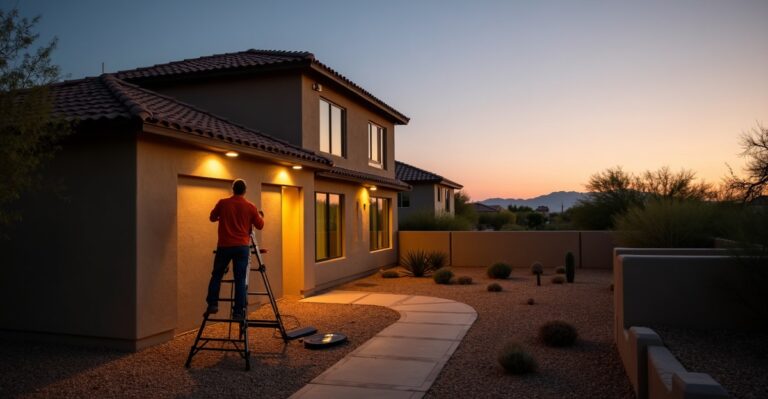
- Control lighting zones: With under-eave lighting or other smart systems, we can light where needed—and not where bugs are likely to linger.
Combining thoughtful fixture placement with smart controls can reduce bug attraction in a big way. And it helps save energy in the process.
What This Means For Arizona Homes and Businesses
Arizona’s bug season hits hard—especially when the monsoon rolls through. Hot weather and sudden humidity bring out moths, beetles, and flying ants in swarms. For anyone lighting up a patio, storefront, or backyard, bugs can become more than a nuisance.
Permanent lighting in hotter regions needs to do double duty. It must stand up to extreme weather and help reduce pest attraction. That’s where modern designs shine.
Most local bugs are drawn to UV and high-intensity blue light. Older bulbs pour that out in spades. But smart installations using LED and amber tones change that story. By shifting hue, reducing intensity during peak hours, and using strategic placement, we can stay ahead of the swarms.
We design residential outdoor lighting and commercial outdoor lighting that works for you, not the bugs. And yes—it’s possible to create a dreamy Arizona backyard without lighting up a buffet line for insects.
If you’re curious whether lighting upgrades make a difference, check out how permanent lighting works with your roofline or explore the eco-friendly benefits of LEDs.
With the right light, the evening feels calm, clean, and quietly bright—without the bugs.
Frequently Asked Questions
Permanent outdoor lights do not automatically attract more bugs than regular lights. The attraction depends on bulb type, brightness, and color temperature. Permanent lighting systems that use warm-toned LEDs emit very little UV light and heat, which insects are drawn to. When properly designed, permanent lights can attract fewer bugs than traditional porch or flood lights.
Warm white or amber LED permanent lights attract the fewest insects. LEDs under 3000K produce minimal ultraviolet light, which most insects rely on for navigation. Unlike incandescent or fluorescent bulbs, these LEDs also emit very little heat. Choosing shielded fixtures further reduces visibility to insects and limits swarming around outdoor living areas.
Yes, color temperature plays a major role in bug attraction. Cooler, blue-toned lights are more visible to insects and tend to attract large numbers of them. Warmer colors like soft white, amber, or red sit outside most insects’ visual range. Permanent lighting systems with adjustable color temperatures help minimize bugs while maintaining usable nighttime visibility.
Permanent lights can be installed strategically to reduce bug attraction. Shielded fixtures that direct light downward limit glare and long-distance visibility. Placing lights away from doors, windows, and seating areas also helps. Using dimmers or timers to lower brightness during peak insect activity can significantly reduce the number of bugs gathering nearby.
Permanent LED lights are especially effective for bug control in hot climates. Traditional bulbs release heat that attracts thermosensitive insects, while LEDs remain cool during operation. Combined with warm color temperatures, permanent LED systems reduce insect activity even during humid seasons. This makes them a practical lighting choice for patios, storefronts, and outdoor gathering spaces.