How Permanent Lights Compare to LED Strips
When we compare permanent lights vs LED strips, we’re choosing between a professionally installed, year-round exterior lighting system and a flexible DIY accent option built for faster indoor upgrades. The differences show up in installation, durability, appearance, long-term cost, and performance on rooflines in extreme climates like Arizona.
Key Takeaways
- Permanent outdoor lighting uses track-mounted hardware with professional installation, and we align it cleanly into soffits, while LED strips typically use adhesive backing and mount directly to the surface.
- Permanent systems create smooth, evenly spaced light across rooflines, while outdoor LED strips often show visible diodes and exposed wiring.
- Durability varies greatly. We build permanent lighting to handle UV exposure, intense heat, wind, and storms, while adhesive strips can sag, fade, or fail outdoors.
- LED strips carry a lower upfront cost, but permanent lighting delivers stronger long-term value with less maintenance and fewer replacements.
- LED strips fit indoor accents and short-term projects well, while permanent lighting acts as a lasting exterior upgrade for homes and commercial properties.
The Real Difference at a Glance: Permanent Lights vs LED Strips
Permanent outdoor lighting and LED strip lights serve two very different purposes. One is a long-term exterior solution professionally installed along a roofline. The other is a flexible, adhesive-backed light tape often used for quick indoor accents.
Permanent lights are track-mounted systems custom-fitted to soffits and eaves. They’re built for year-round use and designed to blend into the home during the day. Many homeowners first learn about permanent Christmas lights and are surprised to discover they function as everyday architectural lighting, game-day color displays, and elegant accents long after the holidays end.
LED strip lights, by contrast, are usually peel-and-stick products. Most are DIY-installed. Indoor versions are common under cabinets, behind TVs, or along shelves. Outdoor-rated strips do exist, yet they’re typically surface-mounted and remain visible after installation.
The key contrast is simple: temporary décor versus a long-term exterior upgrade. This isn’t just a product comparison. It’s a difference in purpose.
Below is a clear side-by-side look:
| Category | Permanent Outdoor Lighting | LED Strip Lights |
|---|---|---|
| Installation | Professionally installed, track/channel mounted | DIY adhesive backing, plug-in power |
| Appearance | Color-matched track blends into soffits | Visible strip and wiring |
| Durability | Built for heat, UV, wind, and storms | Varies; often basic water resistance |
| Customization | App control, scheduling, scenes | Basic remote or limited app control |
| Maintenance | Low-maintenance fixed system | Adhesive failure, reattachment common |
| Lifespan | Engineered for long-term use | Shorter consumer-grade lifespan |
| Upfront Cost | Higher initial investment | Lower entry cost |
| Long-Term Value | Acts like a property upgrade | Often replaced every few years |
| Best Use | Rooflines, homes, commercial buildings | Indoor accents, short-term décor |
Installation, Appearance, and Everyday Use
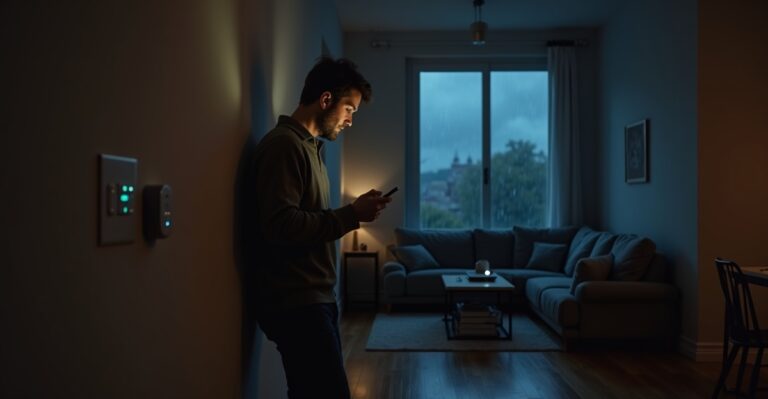
LED strip installation is usually simple. Peel the backing. Press it into place. Plug in a transformer. That simplicity makes them popular for bedrooms, kitchens, and garage projects.
Outdoors, though, the picture changes. Adhesive mounting struggles in heat and dust. Surface wiring often remains exposed. Over time, the strip can sag or detach.
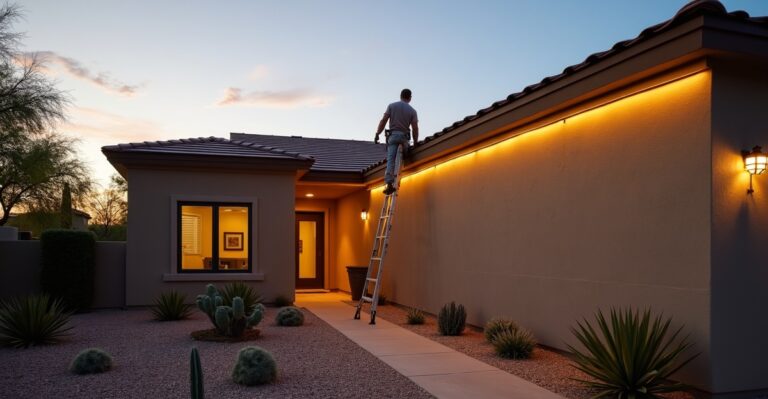
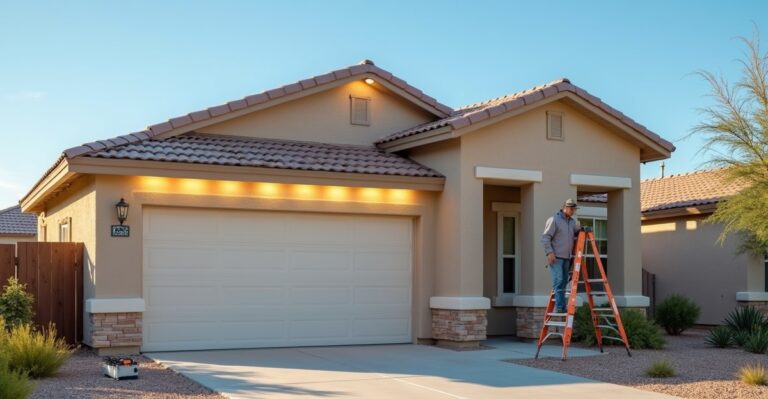
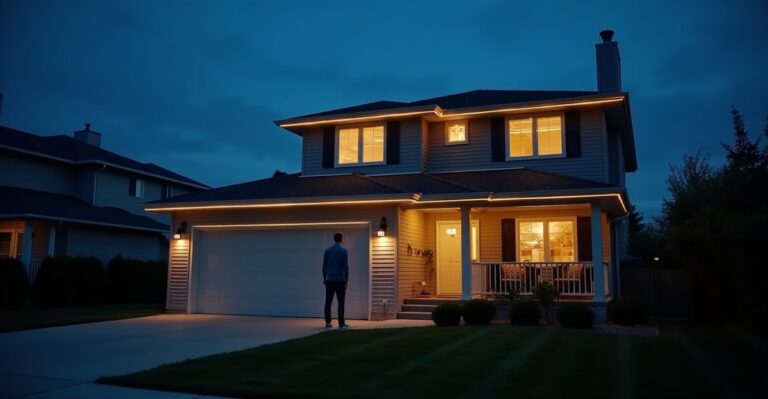
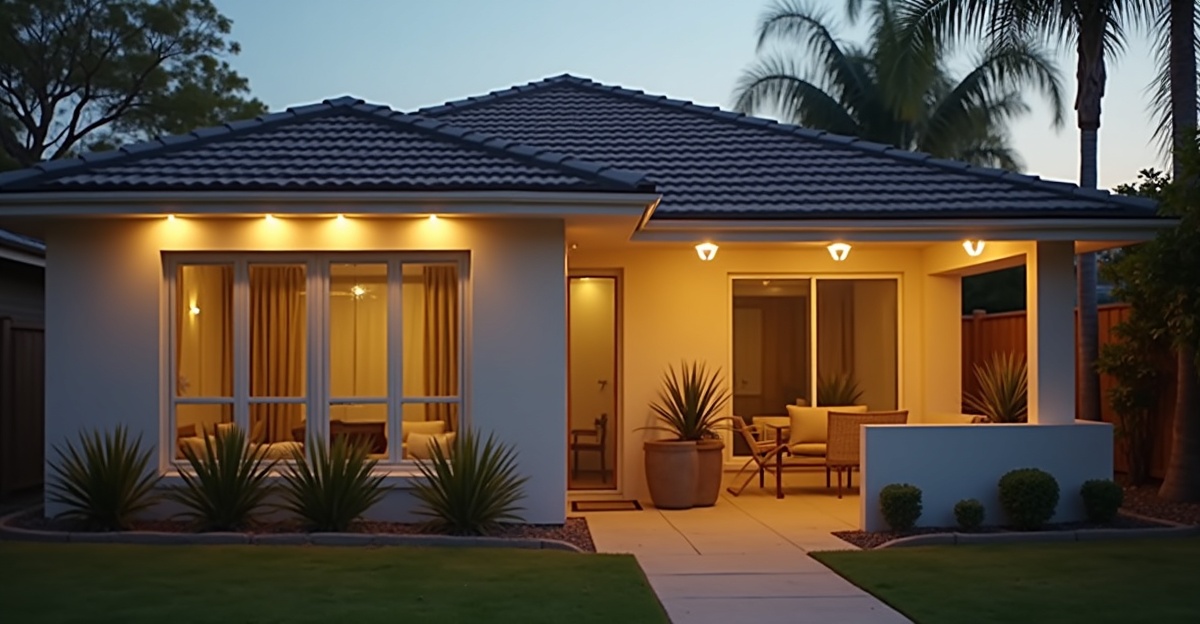
Permanent outdoor lighting works differently. We custom-fit the system along the roofline and secure it in a mounting track. Wires stay hidden. During the day, the system nearly disappears into the soffit.
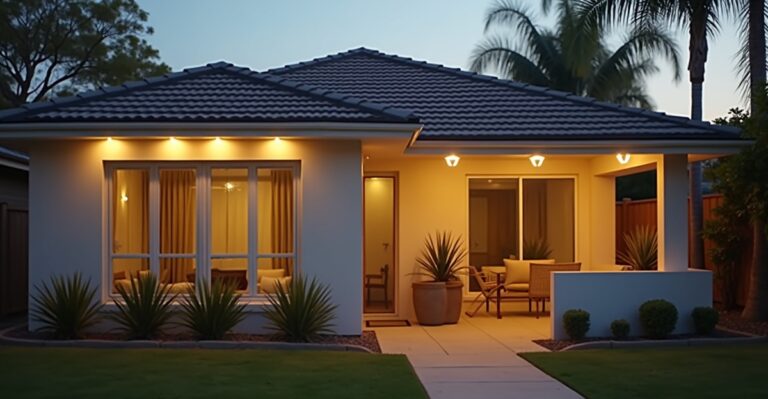
Placement also affects how the light looks at night. Many LED strips create dotted points of light on exterior walls. Permanent systems use spaced, angled LEDs that wash the surface evenly. The effect is smooth and polished instead of patchy.
Color control sets them apart as well. Modern systems rely on advanced RGB technology. If we want to understand what sets them apart, this guide on RGB smart lighting explains how color mixing and app-based controls create cleaner, more vibrant results.
Everyday Moments Made Easier
Here’s how permanent systems fit into daily life:
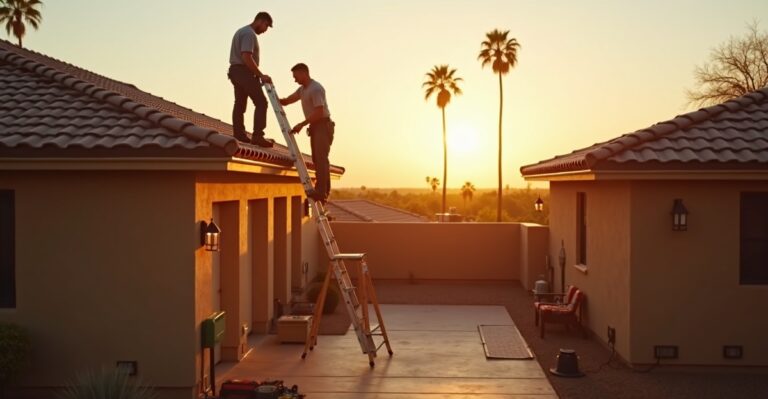
- Holiday lighting without climbing ladders
- Game-day team colors at the touch of a button
- Soft backyard glow for weekend gatherings
- Subtle architectural lighting every evening
LED strips still have their place. They make sense for renters, quick DIY projects, or interior accent lighting. For a media room or cabinet shelf, they’re practical and affordable. For roofline lighting that stays up year-round, permanent systems deliver a very different experience.
Durability in Arizona’s Climate: Heat, UV, and Monsoon Storms
Arizona weather is extreme. Summer heat pushes materials to their limits. UV exposure fades plastics. Monsoon storms bring wind-driven rain and dust.
LED strip lights often fail at the adhesive. Extreme heat softens the glue. The strip begins to peel. UV rays can discolor the casing. If connections aren’t sealed well, water can creep in during a heavy storm.
Many products reference IP ratings. These ratings measure resistance to dust and water. A higher rating helps, yet it doesn’t guarantee long-term performance in full sun on a roofline. Not all outdoor-rated strips are built for constant UV exposure and temperature swings.
Permanent systems take a different approach. Quality installations use UV-resistant housings, sealed connections, and secure mounting tracks. Components are chosen specifically for exterior use. That matters when temperatures climb and sudden storms roll through.
Over time, that durability translates into fewer repairs and less frustration. Instead of reattaching sections every season, the system stays put and performs as expected.
Cost Breakdown: Upfront Investment vs Long-Term Value
LED strip lights win on initial price. Many setups cost under a few hundred dollars, depending on length and quality. For small-scale projects, that entry point makes sense.
Permanent outdoor lighting carries a higher initial investment. Professional installation often runs several thousand dollars, depending on home size and roofline complexity. That difference can feel significant at first glance.
The real comparison happens over time.
DIY strips may need re-adhesion within a year or two. Sections might burn out. Transformers fail. Entire runs sometimes get replaced after a few seasons outdoors. Each repair brings added cost and time.
Temporary holiday lighting adds another expense. Buying new strands, replacing clips, and spending weekends on ladders all adds up. Many homeowners discover the math shifts over five to ten years. A professionally installed system becomes a lasting upgrade rather than a recurring seasonal purchase.
For a deeper look at long-term advantages, this article on the benefits of permanent lighting vs temporary lights explains how convenience and durability impact ownership costs.
Permanent lighting often increases curb appeal and perceived property value. It stays with the home. That changes how we view the investment.
For Homes and Businesses: Where Each Option Makes the Most Sense
Residential properties benefit from year-round exterior lighting that improves curb appeal and adds convenience. With professionally installed residential outdoor lighting, homes glow softly every evening without extra effort. Security lighting, accent lighting, and holiday lighting all work from one system.
LED strip lights excel indoors. Under-cabinet lighting, shelving accents, garage workbenches, and temporary patio décor are strong use cases. They’re flexible and accessible for quick projects.
Commercial properties bring another layer. Storefront visibility matters. Brand colors matter. Eliminating seasonal ladder work matters. Permanent systems installed as part of commercial outdoor lighting help businesses attract attention while reducing seasonal labor costs. Property managers also reduce liability tied to repeated temporary installations.
Each tool fits a different job. A strip taped along an edge serves a purpose. A home glowing evenly across its roofline creates a statement.
Choosing the Right Lighting for Your Property
Budget plays a role. If funds are tight or the goal is a short-term solution, LED strip lights can be a practical starting point.
Long-term plans change the equation. If we expect to stay in the home, care about curb appeal, and want smart automation, permanent systems often make more sense. App scheduling, preset scenes, and automation bring lighting into everyday life. Still, we should also weigh the disadvantages of smart lighting so expectations stay realistic.
It helps to picture the roofline at dusk. Imagine subtle architectural accents most nights. Picture bold colors on holidays. Visualize hosting friends with a warm glow wrapping the home.
We specialize in permanent exterior systems that stay crisp in the Arizona sun. Through our under eave lighting solutions, we create lighting that blends into the structure by day and shines with purpose by night.
Every property is different. A small patio project may call for a simple strip. A full exterior transformation deserves a permanent solution installed with care. If a clear recommendation would help, we can always start a conversation through our lighting consultation page and explore what fits best for the home or business.