How Permanent Lights Compare to String Lights
When we compare permanent vs string lighting, the differences show up in installation, durability, long-term cost, and how often we truly enjoy the glow. Permanent lights require professional installation in discreet tracks and deliver year-round performance with smart controls. String lights offer a DIY option, but we often deal with seasonal setup, replacements, and limited color and feature options.
Key Takeaways
- Permanent lighting involves professional installation in concealed tracks, while string lights require DIY setup with clips, hooks, and extension cords each season.
- String lights cost less upfront, but permanent systems typically provide stronger long-term value by reducing yearly replacements and labor.
- Permanent lights rely on weather-sealed, UV-rated components built for harsh climates like Arizona, while string lights can fade, crack, or fail over time.
- Smart features such as app control, scheduling, and millions of color options make permanent lighting ideal for year-round use.
- String lights suit renters and short-term needs, but permanent lighting strengthens long-term curb appeal and delivers consistent performance for homes and businesses.
Key Differences at a Glance: Permanent vs String Lighting
Permanent vs string lighting often looks similar from a distance. Up close, the experience is completely different.
The comparison below highlights the real differences between LED string lights vs permanent lights, so we can move from curiosity to clear understanding.
| Feature | Permanent Outdoor Lighting | String Lights |
|---|---|---|
| Installation | Professionally installed in concealed tracks under eaves | DIY hanging with clips, hooks, staples, and extension cords |
| Upfront Cost | Higher initial investment | Lower upfront purchase price |
| Lifetime Cost | One-time install with long lifespan | Yearly purchases, replacements, and repairs |
| Maintenance | Minimal; sealed LED modules | Replacing burnt-out bulbs and damaged strands |
| Durability | UV-rated, weather-sealed systems | Seasonal wear and tear |
| Customization | App-controlled color changes, millions of options | Limited preset bulb colors |
| Smart Features | Smart outdoor lighting systems with scheduling and automation | Manual plug-in timers |
| Climate Resistance | Engineered for Arizona outdoor lighting conditions | Plastic clips fading and cracking in extreme heat |
| Ideal Use | Year-round holiday lighting and commercial permanent lighting | Short-term, renter-friendly décor |
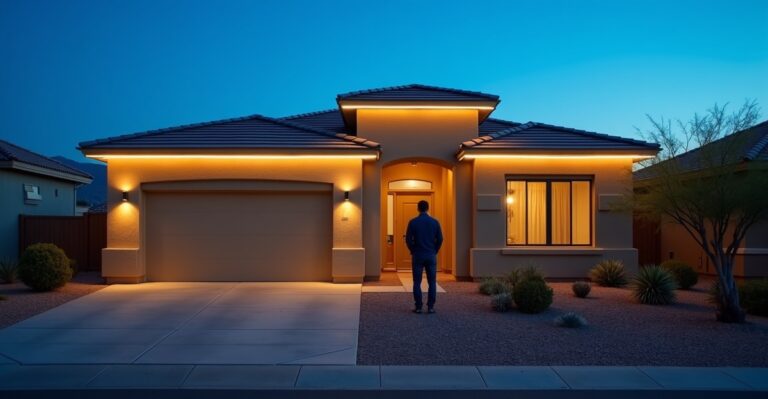
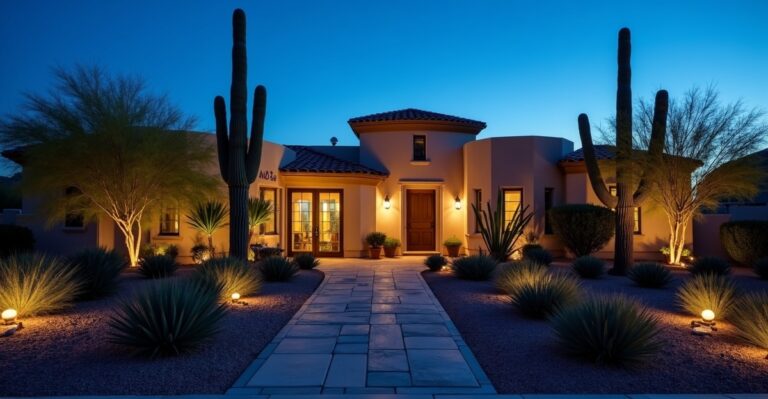
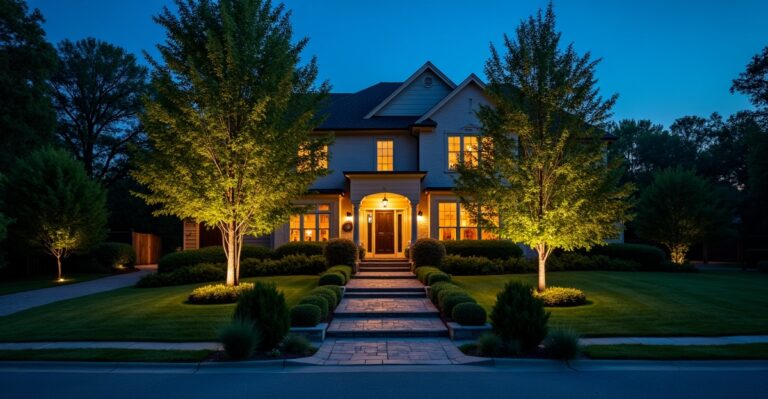
Permanent lighting is built into the structure of the home using low-profile tracks like under eave lighting systems. During the day, it’s discreet. At night, it shines.
String lights are simple and accessible. They work well for a quick setup, a weekend party, or a rental property. Yet they also bring familiar frustrations—climbing ladders each season, storing tangled strands, dealing with burnt-out bulbs, and working around limited color options.
Cost Over Time: Upfront Investment vs Long-Term Value
The cost of permanent lighting is higher upfront than traditional string lights. That’s true. We believe in saying that clearly.
Permanent holiday lighting is a home improvement. String lights are seasonal décor.
With string lights, the cycle tends to repeat:
- Buying new strands every year
- Replacing clips damaged by UV exposure
- Swapping out half a strand in December when one section fails
- Spending hours installing and removing everything
Those costs add up in dollars and time. For a closer look at the math, we break it down in our guide on whether permanent lights are cheaper than rehanging.
Permanent systems are installed once and built for longevity. Most come with warranties and professional support. There’s no annual scramble to find working strands three days before the holiday party.
For many Arizona homeowners with household incomes above $90,000, the decision centers on curb appeal and low-maintenance upgrades. They want a home that stands out in the neighborhood without adding another weekend chore. Permanent lighting supports that goal. It becomes part of the property’s value and visual identity, especially since curb appeal improvements strongly influence buyer perception and home value.
String lights remain a smart choice for tight budgets or temporary needs. Still, for long-term homeowners who are tired of last-minute holiday setup, a permanent system often brings clarity and consistency year after year.
If we’re curious what permanent lighting would look like on a specific home, a consultation can help compare real numbers for that property and lifestyle.
Installation & Maintenance: Ladders Once a Year or Done Once for Good?
Installation is one of the biggest differences in permanent vs string lighting.
Permanent outdoor lighting is professionally installed in discreet tracks hidden under the roofline. As part of a complete residential outdoor lighting system, the wiring is secured, aligned, and sealed. During the day, most people won’t notice it’s there.
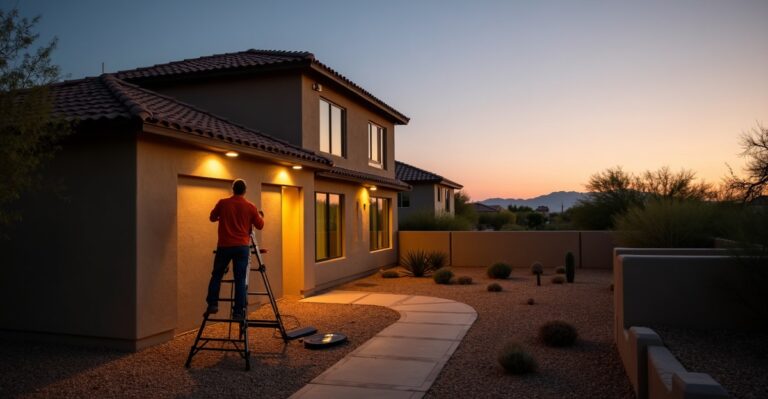
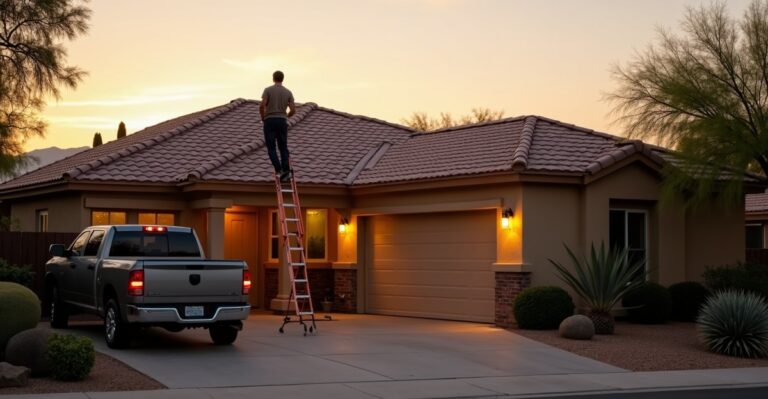
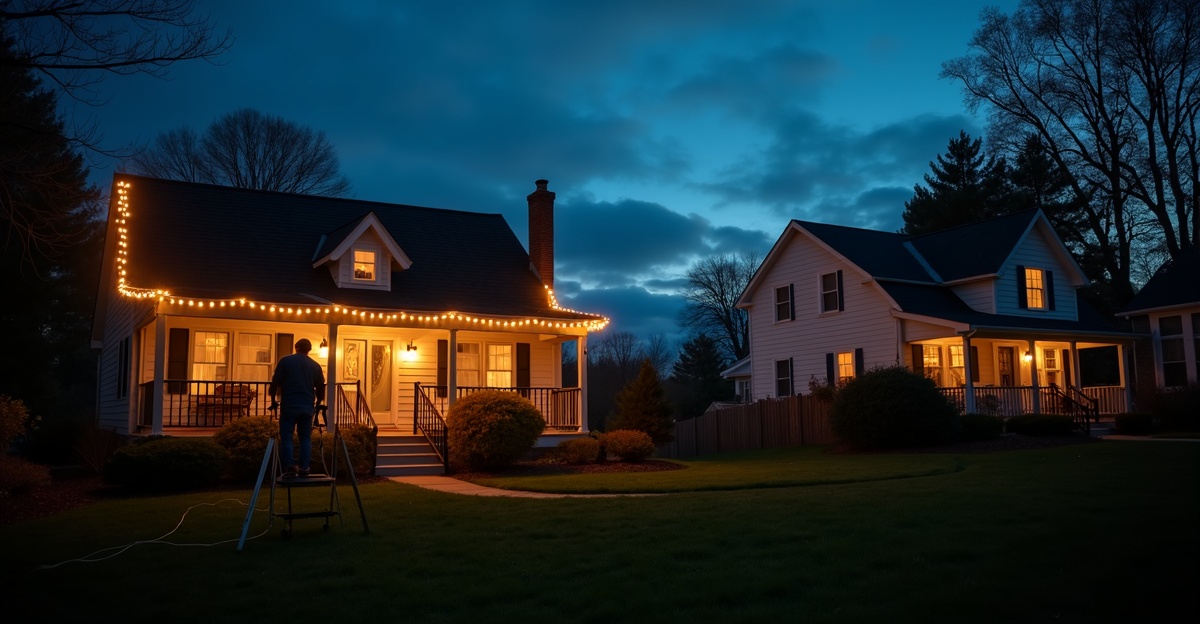
String lights are typically DIY. We use hooks, clips, staples, and extension cords. We measure, climb, adjust, and troubleshoot. Then we do it all again next year.
That annual routine means climbing ladders each season. It also means packing, labeling, and storing tangled strands in bins that take up garage space. Permanent lighting ends that cycle. We flip a switch on a phone instead of hauling out boxes from storage.
Maintenance also looks different. Permanent systems use sealed, individual LED modules, which are known for long lifespans and high energy efficiency compared with traditional lighting. If one node has an issue, it usually doesn’t take down the entire run.
With string lights, a single failure often affects a full section. We spend evenings tracing wires or replacing whole strands because of one faulty bulb.
Removability and flexibility matter too. Quality permanent systems are HOA-friendly and low-profile during the day. They can be adjusted, serviced, or expanded if we remodel or add on to the home.
Smart outdoor lighting systems go further. They replace manual timers with app control, scheduling, and automation. Lights turn on at sunset. Colors change with a tap. That convenience changes how often we actually use the system.
Durability in Arizona’s Climate: Heat, UV, and Monsoon Storms
Arizona weather doesn’t take it easy on outdoor materials. Triple-digit heat lingers for months. UV exposure is intense. Monsoon winds bring dust and sudden downpours.
Permanent outdoor lighting is engineered for that environment. Systems built for Arizona outdoor lighting use UV-rated housing and sealed components. Wiring is secured inside tracks rather than hanging loose along the roofline.
Standard LED string lights use thinner wiring and plastic clips. Over time, those clips can fade and crack in extreme heat due to UV radiation degrading many outdoor plastics over time. Colors may dull. Repeated removal and reinstallation increases wear. Each season adds another layer of stress.
Durability matters for homeowners who want a clean, consistent roofline. It also matters for commercial permanent lighting projects. Storefronts and office buildings rely on lighting for visibility and brand presence. They can’t afford systems that sag, flicker, or fail mid-season.
That doesn’t mean string lights have no place. They work well for short-term events, temporary displays, or indoor spaces. Yet for long-term exterior performance in Arizona, permanent systems are built with the climate in mind.
Customization & Smart Features: From One Holiday to Year-Round Glow
Lighting today is about flexibility.
Permanent systems offer millions of color options in one setup. Through app-based scheduling, we can program warm white for everyday curb appeal. Then, in seconds, switch to red, white, and blue for the Fourth of July. Birthdays, game days, and seasonal themes are all covered without touching a ladder.
That’s why many homeowners choose permanent lights for year-round holiday lighting. We explore options in our guide to the best permanent Christmas lights for year-round use.
Traditional string lights are simpler. We pick a color when we buy them. If we want a different look, we swap out the entire strand. Basic timers may turn them on and off, but customization is limited.
Permanent systems bring lighting into everyday living. Soft amber for patio dinners. Subtle white for architectural accents. Bright colors for celebrations. Small businesses can display brand colors instantly, reinforcing identity without new hardware.
It shifts lighting from decoration to tool. Instead of one holiday glow, we create a year-round atmosphere with smart outdoor lighting systems that adapt to different moments of life.
Curb Appeal, Property Goals, and Which Option Fits Your Life
The right choice depends on lifestyle and property goals.
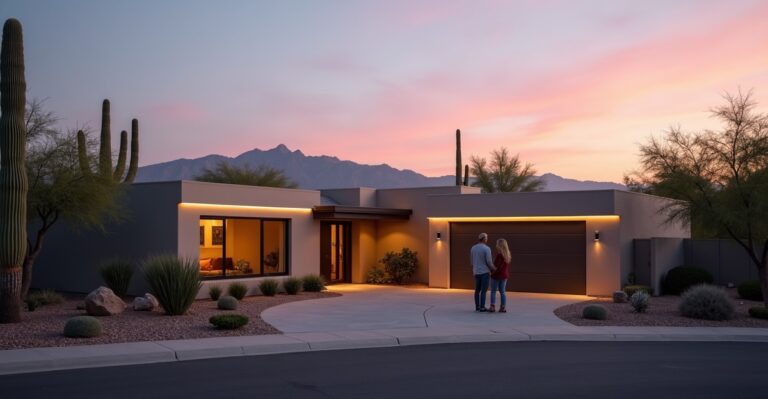
For homeowners, permanent lighting fits tech-forward families who value convenience. It supports outdoor entertaining and patio ambiance. It boosts curb appeal in competitive suburban neighborhoods, especially where polished exteriors matter.
Many find it helpful to read more on whether permanent outdoor lights are worth it before deciding. That broader view helps connect features to long-term property plans.
For small business owners, customizable exterior lighting creates a consistent and eye-catching presence. A storefront that glows in brand colors stands out at night. It signals professionalism and attention to detail.
String lights remain suitable for budget-conscious buyers, renters, or event-only needs. They offer flexibility without a long-term commitment. For some properties, that simplicity is exactly right.
Permanent systems, however, come with professional installation, warranties, and local expertise. They’re built for homeowners and business owners who want reliability, clean lines, and lighting that works every day of the year.
For anyone weighing permanent vs string lighting, the next step is seeing it on the actual property. We can explore options, compare costs, and design a system that fits real goals. Scheduling a consultation through our lighting consultation page makes it easy to decide what shines brightest for the home or business.
Frequently Asked Questions
Permanent lighting is a professionally installed system mounted in discreet tracks along a home’s roofline, designed for year-round use and smart control. String lights are temporary decorative strands typically installed with clips or hooks and removed after the season. Permanent systems offer durability, automation, and customization, while string lights are a simpler DIY option for short-term events or holiday decorating.
Permanent outdoor lights often provide better long-term value despite higher upfront costs. They are designed to last for many years, reducing the need for annual purchases, replacements, and installation time. Many systems also include smart controls, scheduling, and weather-resistant components, making them a convenient solution for homeowners who want consistent outdoor lighting without seasonal setup.
Yes, permanent lighting systems are designed for year-round use and can be customized for different holidays, events, or everyday accent lighting. Most systems allow users to change colors and patterns through a mobile app. This makes it easy to switch from warm white architectural lighting to themed colors for holidays like the Fourth of July, Halloween, or special celebrations.
Permanent lighting systems generally require very little maintenance because they use sealed LED modules and weather-resistant wiring. If a single module fails, it typically does not affect the entire lighting run. In contrast, traditional string lights often require replacing burnt-out bulbs, damaged strands, or broken clips after repeated seasonal installation and exposure to weather.
String lights are usually the better option for renters or short-term decorative needs. They are inexpensive, easy to install without professional help, and can be removed without permanent modifications to the property. Permanent lighting systems are typically better suited for homeowners or businesses looking for a long-term exterior lighting solution that enhances curb appeal and convenience.