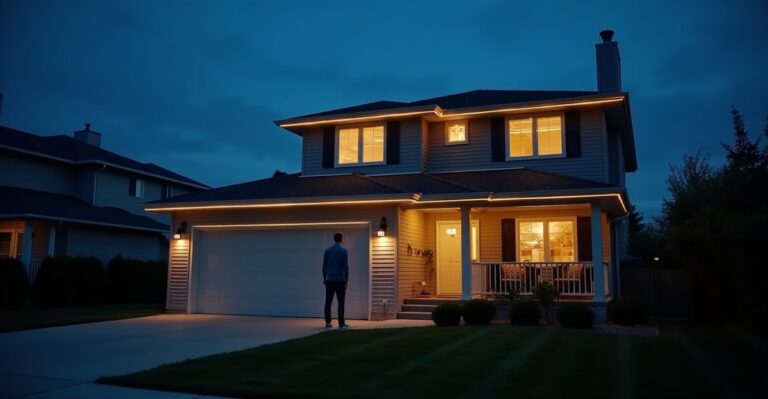
What are the disadvantages of smart lighting?
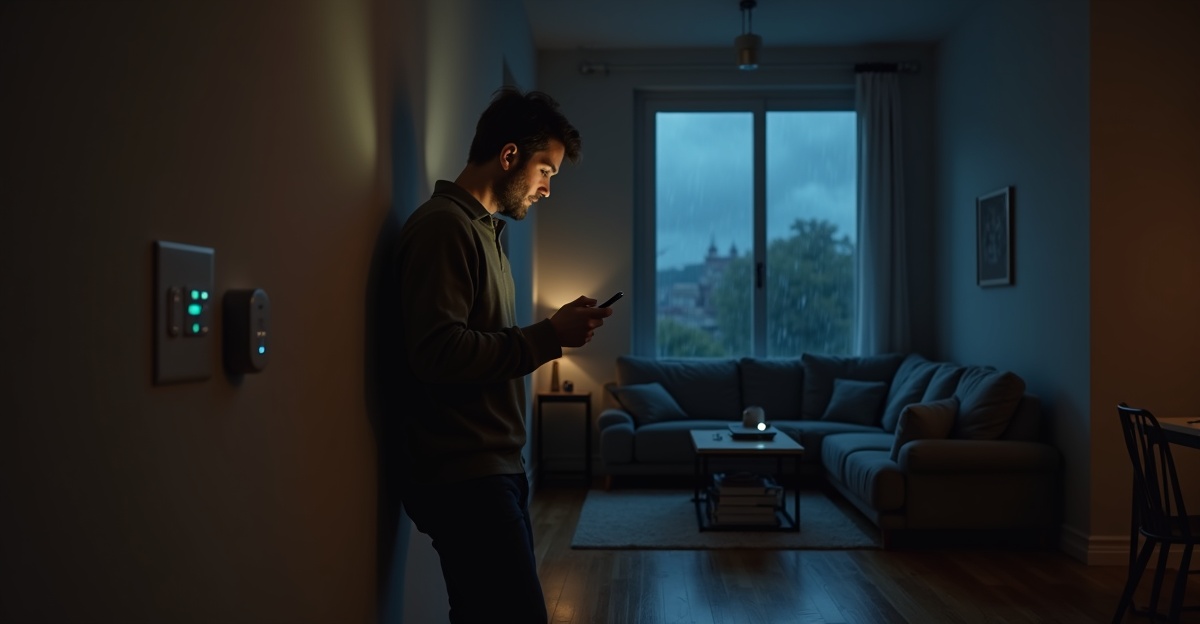
Smart lighting disadvantages include higher upfront costs, Wi-Fi dependency, compatibility limits, and ongoing maintenance that can affect daily performance and long-term value. Before we install a system, we need to understand how smart lighting disadvantages can influence reliability, durability in harsh climates, privacy, and overall ease of use in a home or business.
We’ve worked with homeowners and commercial clients who initially focused on features and convenience. Experience has shown us that long-term performance matters just as much. Upfront pricing, network stability, and product quality all shape the real return on investment.
Key Takeaways
- Higher initial investment is common, especially when adding hubs, professional installation, or commercial-grade outdoor components.
- Many systems depend heavily on Wi-Fi and mobile apps, which can lead to disruptions during internet outages, power interruptions, or software updates.
- Compatibility gaps between brands and platforms can create integration challenges and confusion from managing multiple apps.
- Outdoor environments, particularly extreme heat and severe storms, can reduce the lifespan of lower-quality materials and internal electronics.
- Smart lighting often brings a learning curve and potential privacy concerns due to account registration and cloud-based controls.
Higher upfront costs often surprise first-time buyers. We must account for smart switches, specialty bulbs, hubs, upgraded routers, and sometimes licensed electricians. Commercial properties face even higher costs due to scale and code requirements.
Internet dependency presents another practical limitation. Smart lights rely on stable connectivity to function at full capacity. Connectivity issues can disable schedules, automations, or remote access. A basic switch still works during an outage. Many smart systems don’t.
Compatibility also creates friction. Brands promote open ecosystems, yet real-world integration can fall short. We may need extra bridges or software workarounds to connect lighting with security systems, voice assistants, or building automation platforms. Fragmented control reduces efficiency.
Climate plays a major role in durability. Heat, humidity, salt air, and heavy rain strain electronic components. Lower-grade fixtures degrade faster outdoors. We recommend verified weather ratings and higher-quality housings for exterior installs.
Privacy and data handling deserve attention as well. Cloud-connected lighting collects usage data and requires account setup. We should review privacy policies and secure our networks properly. Strong passwords and updated firmware reduce risk.
Smart lighting offers convenience and advanced control. Clear expectations and careful product selection help us avoid common drawbacks. With the right planning, we can reduce these disadvantages and protect long-term value.
Do not modify or enhance the wording; the text must remain identical except for the HTML markup.
Do not convert the first sentence or introductory text into a heading — it must remain a normal paragraph (<p>).
The Real Drawbacks You Should Know Before Installing Smart Lighting
Smart lighting disadvantages are the practical downsides that can affect cost, performance, and daily use. Disadvantages of smart lights often show up in three main areas: price, reliability, and long-term upkeep.
Most homeowners and business owners research smart lighting pros and cons because they’re really asking one thing: are smart lights worth it for our property? That question makes sense. Lighting shapes how a home feels, how a storefront stands out, and how safe a space appears at night.
The most common smart home lighting drawbacks usually involve:
- Higher upfront investment
- Dependence on Wi-Fi or apps
- Compatibility issues between brands
- Ongoing maintenance and occasional tech headaches
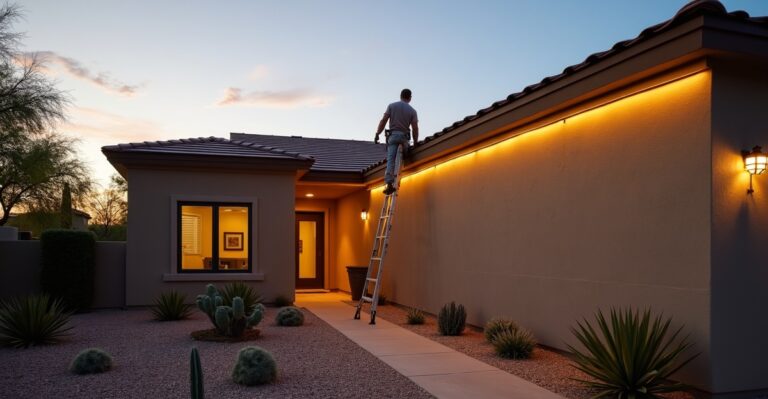
We’ve all seen the scenarios. Wi-Fi drops and the lights won’t respond. An app freezes right before guests arrive for a party. A single failed bulb sits along a high roofline, out of reach without a ladder.
Understanding these smart lighting problems before installation gives us real clarity. Hype fades quickly. Confidence comes from knowing both the strengths and the trade-offs.
Higher Upfront Cost and Ongoing Expenses
Smart lighting cost is one of the most talked-about disadvantages of smart lights. The price gap between standard bulbs and smart systems can be significant.
A traditional LED bulb is inexpensive and easy to swap. Smart bulbs cost much more per unit. Many systems also require hubs, bridges, or dedicated controllers to function correctly. Those components add to the total.
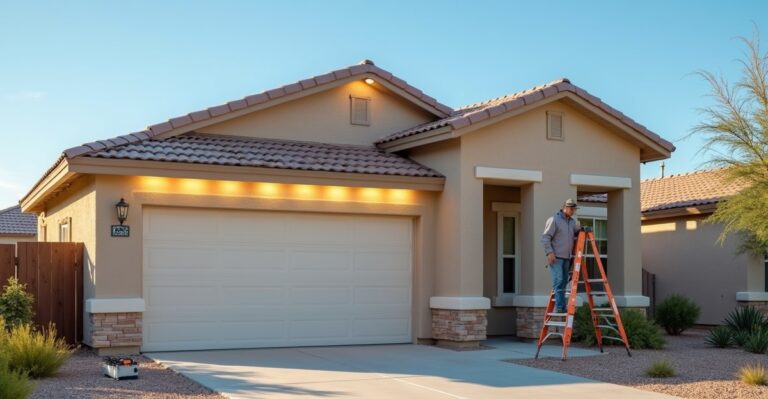
Professional installation increases the investment further. With permanent lighting, labor matters. Running clean wiring, installing tracks under eaves, and configuring controls takes planning and skill.
There’s also a difference between consumer DIY systems and professional installations:
- DIY systems usually cost less upfront but may use lightweight materials and individual smart bulbs that require more frequent replacement.
- Professional permanent systems involve higher initial pricing but rely on commercial-grade components and integrated wiring built for long-term use.
Hidden costs can surprise people, too. Some apps charge for advanced features. Controllers may need replacement over time. Outdoor systems exposed to harsh weather can require repairs.
Here in Arizona, the sun is intense. UV exposure can break down low-quality plastics. Extreme heat can stress cheaper electronics. Outdoor lighting needs materials that withstand months of high temperatures without cracking or fading.
For many homeowners with household incomes above $90,000, the decision isn’t simply about the lowest price. It’s about long-term value, curb appeal, and property impact. The question shifts from “What’s cheapest?” to “What will hold up and look great for years?”
Wi-Fi Dependency and Technology Failures
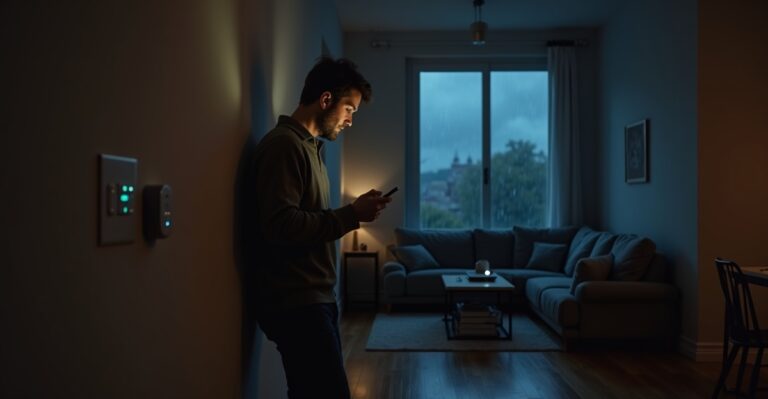
Wi-Fi smart lighting problems are among the most frustrating smart lighting disadvantages. Many consumer systems depend entirely on internet connectivity.
If the internet goes down, control may stop. Lights can become unresponsive in the app. Commands may lag if the signal is weak. Older routers sometimes struggle to manage dozens of connected bulbs.
Software introduces another layer of uncertainty:
- App updates may change the interface overnight.
- Login issues can block access.
- Cloud outages can temporarily disable remote control.
Picture this: a monsoon storm rolls through. Power flickers. Motion lights fail to trigger because the router hasn’t fully restarted. Holiday lights glitch right before friends arrive to see your display.
Smart lighting reliability is a real concern, especially for outdoor and security use. When lights are tightly tied to Wi-Fi, any network hiccup can ripple through the system.
That’s why it’s important to understand whether permanent smart lights require Wi-Fi before investing. Some professional-grade systems use more stable control methods and retain basic functionality even if the internet drops.
It’s also helpful to know how permanent lights handle power outages. No technology is immune to disruption, but system design strongly affects how quickly things return to normal.
Compatibility Limits and Integration Headaches
Compatibility issues are another major smart lighting problem. Not all smart lights work seamlessly with every platform.
Some systems support Alexa. Others work with Google. Fewer integrate smoothly with Apple HomeKit. Mixing brands often leads to multiple apps, fragmented controls, and inconsistent performance.
Before buying, we need clear answers to questions like do permanent lights work with Alexa or Google. Without planning ahead, expanding later can become complicated.
Common integration challenges include:
- Needing additional hubs or controllers when adding new zones
- Older products struggling to sync with newer platforms
- Color and brightness mismatches between different brands outdoors
DIY installations often rely on extension cords, plug-in timers, and exposed connectors. Small inconsistencies become noticeable at night.
In contrast, professional permanent smart lighting is designed as a unified system from the beginning. Controllers, wiring, and zones are planned together, reducing friction down the road and improving long-term smart lighting reliability.
Maintenance, Lifespan, and Arizona Climate Factors
LEDs last a long time, but they’re not indestructible. Maintenance remains one of the quieter smart lighting disadvantages.
Replacing a failed bulb along a high roofline isn’t simple. Reprogramming after a factory reset takes time. Diagnosing whether a problem is wiring, software, or connectivity can test anyone’s patience.
Arizona amplifies these challenges. Extreme heat can shorten the lifespan of low-quality components. Prolonged sun exposure may degrade plastic housings. Monsoon storms bring heavy rain and wind that expose weak connections.
DIY kits often aren’t built with commercial-grade materials. Over time, clips loosen, wiring shifts, and components fade.
Professional systems typically use discreet tracks mounted under eaves with weather-resistant components engineered for exterior conditions. Material quality directly affects repair frequency and long-term performance.
For projects like residential outdoor lighting or commercial outdoor lighting, durability should never be an afterthought. It determines whether the system still looks sharp five summers from now.
Learning Curve, Privacy Concerns, and Decision-Making Simplicity
Smart systems promise convenience, but there is a learning curve. Setting schedules takes time. Creating scenes requires experimentation. Troubleshooting alerts can feel overwhelming at first.
Privacy concerns also surface. Many systems collect usage data and require account registration with cloud-based access. For some homeowners, that connection raises questions about data security and platform stability.
Too many app features can create frustration instead of ease. Instead of flipping a switch, we scroll through menus. Instead of simple control, we manage updates and notifications.
Smart Lighting Pros and Cons
Before deciding, it helps to see both sides at a glance:
- Pros: convenience, automation, customizable colors, improved curb appeal
- Cons: higher cost, Wi-Fi dependency, compatibility challenges, maintenance needs, learning curve
Looking at both sides makes the big question easier to answer: are smart lights worth it for our property?
For many, the answer is yes—especially after understanding the benefits of smart lighting systems and how they reduce day-to-day effort, as explained in how permanent smart lighting reduces hassle.
Clear expectations lead to better decisions. To see how permanent systems look on real homes and buildings, explore options at Big Pig Smart Lighting or learn more about our team. When questions come up, it’s easy to contact us for straightforward guidance tailored to your goals, budget, and property.