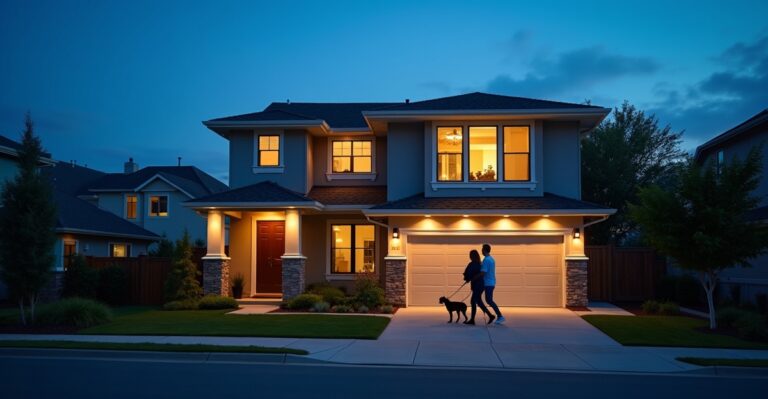
Do burglars avoid houses with lights on?
We know that lighting can influence burglary risk, but placement and strategy matter more than leaving a single bulb on. Research shows that proper lighting can discourage break-ins, yet most burglaries happen during the day and target homes that appear empty rather than simply dark. Criminals look for easy access and low visibility, so we focus on reducing opportunity instead of relying on constant light alone.
Key Takeaways
- Most residential burglaries occur between 10 a.m. and 3 p.m., which means signs of occupancy carry more weight than darkness by itself. We prioritize cues that show activity, such as varied lighting and visible movement.
- A single porch light left on every night becomes predictable and can suggest no one is home. We recommend varying lighting patterns so the property never looks static.
- Strategic lighting reduces hiding spots, increases visibility, and raises perceived risk when placed along gates, fences, driveways, and entry points. We position fixtures to expose approach paths and remove cover.
- Motion sensors, layered perimeter lighting, and smart schedules create realistic activity and eliminate the shadows intruders rely on. We often integrate these tools with cameras and alerts for added deterrence.
- Lighting works best as one strong layer in a broader home security plan, not as a standalone solution. We combine lighting with locks, surveillance, landscaping control, and visible security signage to strengthen overall protection.
What the Research Really Says About Lights and Burglary
Lights can discourage crime, but they aren’t magic. We need to look at what the data actually shows before deciding that leaving a light on is the answer.
FBI burglary statistics consistently show that most residential burglaries occur during the day, often between 10 a.m. and 3 p.m. That surprises many homeowners. It tells us something important: darkness alone isn’t the main driver. Many break-ins happen when homes appear unoccupied, not simply when they’re dark.
So, do lights deter burglars? Yes—when they’re used strategically. Does leaving lights on prevent break ins? Not by itself.
A single porch light glowing every night becomes background noise. Experienced burglars look for patterns. They notice predictable lighting, overflowing mail, empty driveways, and no visible activity. If the same light is on at the same time every night, it can actually signal that no one is home.
Lighting home security works best as one strong layer in a broader plan. It reduces hiding spots. It increases visibility. It creates uncertainty for anyone thinking about stepping onto your property. But it should be part of a system, not a standalone solution.
How Burglars Choose a Target (And Where Lighting Fits In)
Burglars usually choose low-risk, low-effort homes. They don’t want attention. They don’t want delays. They want easy access and minimal visibility.
Most assess properties based on a few simple factors:
- Visibility from the street and neighboring homes
- Easy access points like side gates, back doors, and first-floor windows
- Concealment created by shrubs, tall fencing, or deep landscaping
- Signs the home is vacant
In Arizona, that last point matters. Seasonal travel is common. Snowbirds come and go. Long summer evenings and larger suburban lots can create darker side yards and back corners. HOA rules can also affect what type of exterior lighting is allowed. All of this shapes how we approach Arizona home security tips.
Poor lighting creates shadows. Shadows create cover. A dark side yard or rear patio gives someone space to move without being seen. That’s where perimeter lighting for homes makes a real difference.
We like to think in terms of proactive versus reactive lighting home security strategies. Reactive lighting floods the yard after something goes wrong. Proactive lighting plans ahead. It removes hiding places before someone ever tests a door handle.
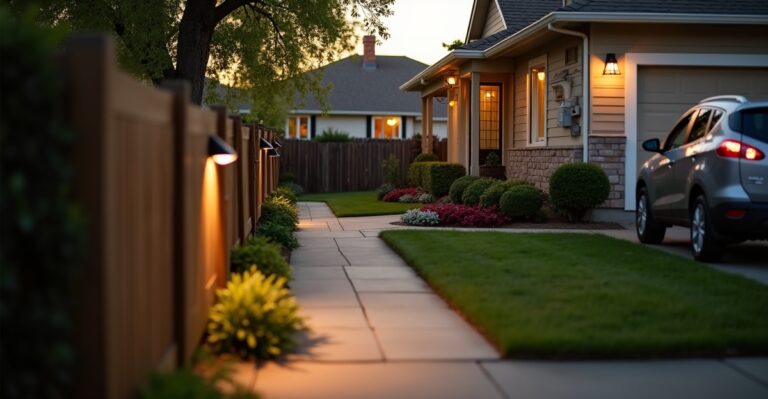
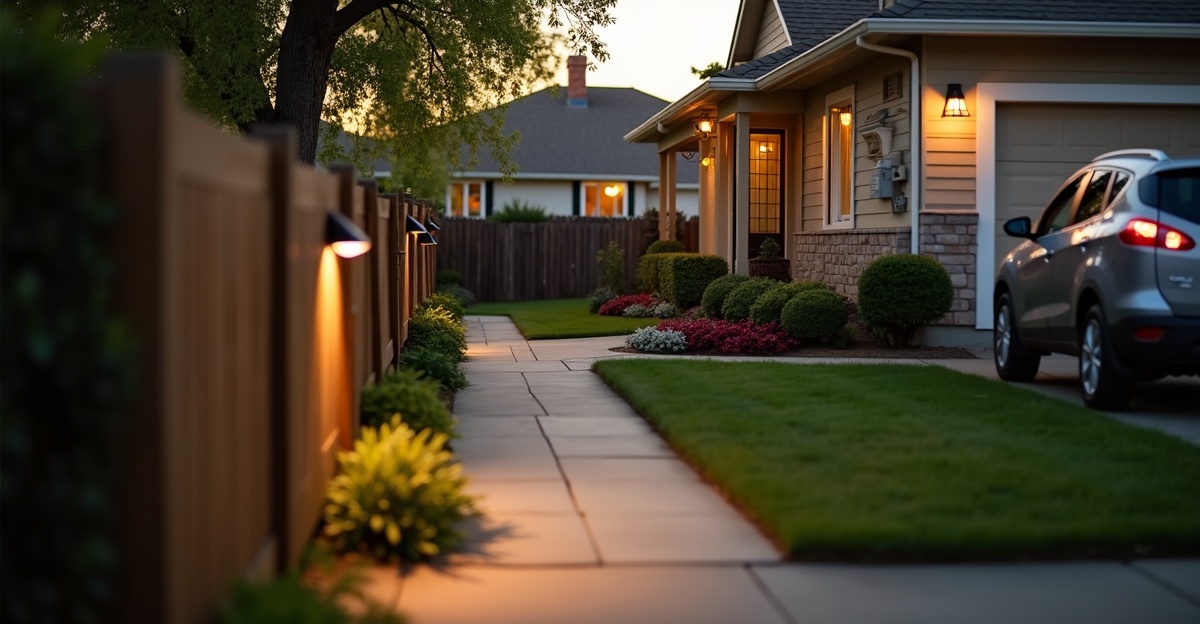
When exterior lighting is positioned with intention—along fences, near gates, under eaves, around driveways—it increases visibility from multiple angles. That visibility raises the perceived risk. And higher risk usually pushes a burglar to move on.
If we want a deeper look at how lighting influences safety, our breakdown of smart outdoor lights and security explores that connection in detail.
Why Strategic Lighting Works Better Than “Leaving a Light On”
Old-school advice says to flip on the porch light and call it good. That approach is predictable. It’s static. And once someone scopes the house, it’s easy to ignore.
Strategic outdoor security lighting works differently.
Motion sensor lights activate when movement is detected. That sudden burst of illumination removes cover in an instant. Picture someone stepping into a dark side yard and a light snapping on like a spotlight. It’s immediate. It’s attention-grabbing. It changes the equation.
Layered perimeter lighting for homes adds another level of protection. We illuminate driveways, walkways, garages, side yards, and backyard entries. That means there’s no single “dark side” of the property.
Smart scheduling adds realism. Instead of one lamp glowing all night, indoor and outdoor lights can turn on and off in patterns that mimic actual living. That’s especially helpful during vacations. Lights shift naturally in the evening. Some fade off before bed. Others glow at unexpected intervals. It feels lived-in.
App-controlled smart home lighting systems give complete control from anywhere. We can increase brightness for a delivery. We can trigger a scene if an alert comes through. We can coordinate lighting with other devices, as explained in our guide on how lighting works with security systems.
Some homeowners ask if permanent lighting can replace those large flood fixtures mounted over the garage. In many cases, modern systems offer better control and cleaner design, as we explain in permanent lighting vs flood lights.
Well-planned outdoor security lighting isn’t about making the house brighter than a stadium. It’s about placing light exactly where it matters.
Actionable Home Security Lighting Tips You Can Use Right Away
Small changes can make a big impact. Here’s how we can strengthen lighting home security without overcomplicating it.
Practical Home Security Lighting Tips
- Install motion sensor lights near back doors, garages, and dark corners.
- Remove deep shadows around side yards and fencing.
- Trim landscaping that blocks existing light.
- Use timers or smart plugs to vary indoor lighting patterns when away.
- Illuminate house numbers so first responders can see them clearly.
These burglary prevention tips improve safety and appearance at the same time. The goal isn’t to flood every surface with harsh light. Too much glare can actually reduce visibility. Instead, we layer light gently and evenly.
Driveways deserve special attention. Even lighting reduces both crime risk and tripping hazards. We explain that approach in driveway safety lighting.
Curb appeal lighting and security don’t have to compete. In fact, they work beautifully together. A well-lit home looks cared for. It signals attention and presence. That alone can encourage the wrong person to keep walking.
Beyond Safety: How Smart Lighting Transforms Curb Appeal and Convenience
Lighting home security does more than deter crime. It changes how we experience our homes.
Evening gatherings feel safer when patios and pathways glow with balanced light. Kids can run outside without disappearing into shadows. Guests see steps, edges, and gates clearly. That quiet confidence matters.
Permanent outdoor lighting also elevates curb appeal lighting year-round. Rooflines and architectural details stand out. Holidays become effortless with app-based color changes. There’s no climbing ladders or stringing temporary lights.
For homeowners, that means beauty and control in one system. For small businesses, the benefits expand further. Commercial outdoor lighting improves visibility, reinforces brand presence, and reduces maintenance with long-term solutions.
Many families start with security in mind, then discover the broader benefits of smart lighting systems. Convenience. Energy efficiency. Flexibility. Peace of mind during travel. It all connects.
When lighting is integrated under eaves or along architectural lines, such as with under eave lighting, fixtures remain discreet. The result is clean during the day and powerful at night.
A Smarter, More Confident Way to Protect Your Home
Fear shouldn’t drive home improvement decisions. Confidence should.
Permanent outdoor lighting is not a guarantee against burglary. No single tool can offer that. What it does provide is a strong, proactive layer within a thoughtful lighting home security strategy.
We design systems specifically for Arizona homes. Larger lots, HOA requirements, and desert landscaping all affect placement and brightness levels. Our team handles planning, installation, and long-term reliability so everything complies and performs as it should.
With professionally installed outdoor security lighting, we remove guesswork. We balance safety with design. We create light that feels natural and intentional.
Every property is different. That’s why we offer customized plans through our residential outdoor lighting services. We look at access points, shadows, visibility lines, and daily living patterns. Then we build a system that fits.
If it’s time to strengthen your lighting home security strategy, we can walk through options together. Explore ideas, request a custom plan, or reach out directly through our contact page. The right lighting won’t just brighten your home. It will change how it feels after dark.