Christmas Lights Not Working? Common Causes and Troubleshooting Steps
Power-source issues can stop Christmas lights before a fault reaches the strand. A tripped GFCI outlet, breaker, timer, or smart plug may interrupt power. We start safe troubleshooting by unplugging the lights. Then, we test each strand in a working outlet and inspect fuses, bulbs, wiring, and outdoor connections for damage or moisture.
Key Takeaways
- Confirm that the outlet has power. Reset tripped GFCI outlets and check the breaker before inspecting the lights.
- Temporarily bypass timers, photocells, and smart plugs. This helps us identify accessories that interrupt power.
- Test one strand at a time. Inspect plug fuses, bulbs, sockets, and wires for loose, damaged, or corroded parts.
- Replace strands with exposed wires, melted plugs, cracked insulation, repeated fuse failures, or unidentified internal LED faults.
- Stop using the display and contact an electrician if breakers repeatedly trip, outlets overheat, or we notice burning smells, arcing, or water damage.
Start Here: Safely Find the Fault in Minutes
Christmas lights not working? We should start at the power source, then isolate each part of the display. Many Christmas lighting problems come from an outlet, GFCI, timer, or smart plug rather than a failed bulb.
Before we touch a strand, we must unplug it. This applies before replacing bulbs, opening a fuse compartment, inspecting sockets, or handling any damaged component.
Quick Christmas Light Troubleshooting Checklist
We can find the fault quickly by working through this order:
- Check whether the outlet has power.
- Reset the GFCI outlet and check the breaker.
- Temporarily bypass the timer, photocell, or smart plug.
- Test one light strand at a time in a known working outlet.
- Inspect plugs, inline fuses, bulbs, sockets, and wires.
- Check outdoor connections for water, corrosion, and damaged insulation.
- Replace the strand or call an electrician if a safety concern is present.
We must stop using a strand immediately if it has cracked insulation, exposed wire, melted plugs, loose plug blades, scorch marks, a hot outlet, a burning smell, or signs of arcing.
Stop and call an electrician if a breaker keeps tripping, an outlet still does not work after reset, house wiring has water damage, an outlet overheats, or we notice burning smells or arcing. These conditions can indicate a wiring fault that holiday-light repairs cannot safely address.
Why the Outlet, GFCI, Breaker, Timer, or Smart Plug May Be the Problem
We should confirm that the outlet has power before inspecting every bulb. Plug in a known working device, or use a properly rated outlet tester. If the outlet has no power, check for a tripped GFCI outlet or tripped breaker.
Exterior outlets often connect to GFCI protection located somewhere else. The reset button may be in a garage, basement, bathroom, kitchen, or near the electrical panel. We should check the home’s circuit labels. If we cannot identify the protected circuit, an electrician can trace it safely.
A tripped breaker is not a random interruption. It may point to overload, moisture, a short circuit, or a damaged strand. We should disconnect every decoration on that circuit before resetting the breaker. If it trips again, we must leave it off and investigate the display or contact an electrician.
Timers, photocells, and smart plugs can also cause outdoor holiday lights not working. To isolate the issue, we can plug the lights directly into a verified working outlet. For a smart plug, check its power, schedule, Wi-Fi connection, app status, and manual override. Homeowners considering automated exterior displays can see how app-controlled lights work on a home.
We should never overload an outlet, remove a grounding pin, or exceed the manufacturer’s end-to-end connection limit. A timer not working is inconvenient; an overloaded circuit is a safety issue.
Test Each Strand and Check the Plug, Fuses, Bulbs, and Wiring
For effective Christmas light troubleshooting, we should test each strand directly in a working outlet before reconnecting several sets. This simple step identifies the failed strand and prevents guesswork.
Many plug-in Christmas light sets have one or two small fuses inside a sliding compartment in the male plug. The fuse compartment is usually a small labeled door on the plug face or side, close to the blades. We should unplug the strand, slide open that compartment carefully, and inspect the fuses.
A blown Christmas light fuse can result from overload, a damaged wire, or a faulty socket or bulb. Replacing a fuse may restore power, but it does not always correct the original cause. We must use only the exact fuse type and rating printed on the plug or package. We must never bypass a fuse or install a higher-rated substitute.
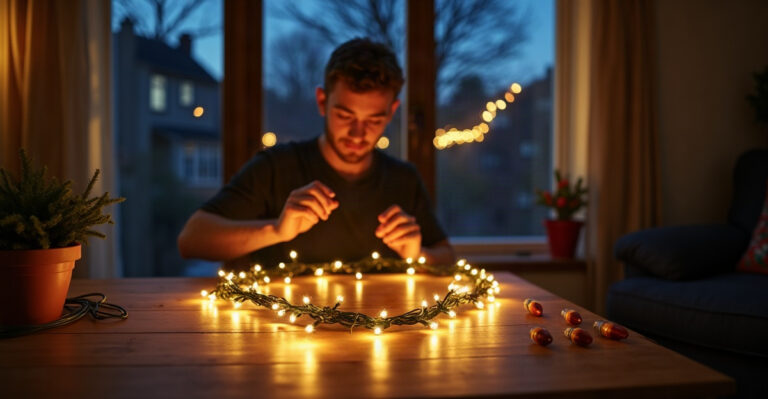
Next, inspect the full length of the set. Check plugs, sockets, and wires for loose connections, cracked insulation, exposed wire, melted plastic, corrosion, scorch marks, and pinched sections. Doors, windows, staples, foot traffic, animals, and lawn equipment can all damage light wiring.
A Christmas light tester can help locate faults on compatible incandescent mini-light strings. We should follow the tester manufacturer’s instructions, since compatibility with LED products varies. If wires or plug components show damage, replacement is the safer choice.
Incandescent vs. LED Lights: What to Check Before Replacing a Strand
Incandescent mini lights: A loose, missing, or burned-out bulb can interrupt part or all of some series-wired strands. We should check for loose bulbs, darkened glass, broken filaments, and damaged bases. Replacement bulbs must match the original set.
LED lights: LED Christmas lights not working may involve a plug fuse, loose connection, controller, rectifier, or internal component. Many LED bulbs are sealed and not intended for individual repair. We should check obvious external faults first, then replace the set if the internal problem is unclear.
Can one bad bulb make a whole string of Christmas lights go out? It can happen with certain incandescent wiring designs, but it is not true for every set. Product construction varies by manufacturer. We should avoid assuming that one replacement bulb will solve all Christmas lighting problems.
For pre-lit Christmas tree lights not working in only one section, we should inspect the connectors between trunk sections. Many trees use separate powered sections that must be fully assembled and securely plugged together. We should also check section-specific fuses and control boxes where present. Concealed wiring inside tree branches can be difficult and unsafe to repair. Manufacturer replacement parts or support are often a better answer than DIY electrical work.
Why Outdoor Holiday Lights Fail More Often
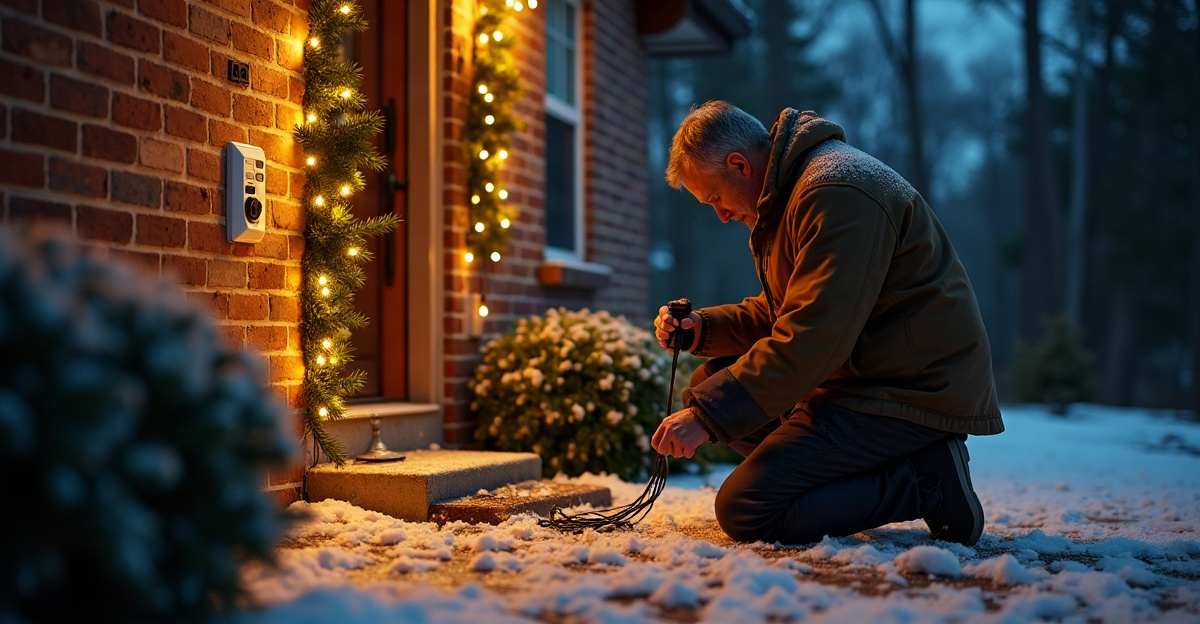
Outdoor holiday lights face rain, snow, dust, temperature swings, and physical damage. Water can enter plugs, sockets, extension-cord connections, timers, and controllers. Corrosion on plug blades or connectors can interrupt power even when the outlet works.
If outdoor Christmas lights are not working but the outlet has power, we should inspect every connection for moisture and corrosion. We should also look for cut or crushed insulation caused by doors, windows, staples, animals, foot traffic, or yard equipment.
We recommend outdoor-rated Christmas lights, extension cords, splitters, timers, and weatherproof connection covers for exterior displays. Connections should stay elevated and protected in outdoor connection boxes or weatherproof outlet covers, following manufacturer instructions. They should never lie directly on wet ground.
Indoor Christmas lights should never be used outside, even under a covered porch, unless the manufacturer specifically rates them for outdoor use. For additional guidance on wet-weather performance, see how permanent lighting performs in rain.
Persistent outdoor circuit failures can signal moisture exposure, an overloaded circuit, damaged decorations, or a house-wiring issue. We should stop resetting the circuit repeatedly and arrange qualified electrical service where needed.
When to Replace Christmas Lights, Call an Electrician, and Prevent Next Season’s Problems
We should replace Christmas lights rather than repair them when wires are exposed or brittle, plugs are melted or corroded, sockets are cracked, fuses repeatedly blow, or a sealed LED strand has an unknown internal fault. The same applies when the circuit repeatedly trips after faulty strands have been removed.
Why do Christmas lights keep tripping the breaker? The likely causes include too many connected loads, moisture, damaged wiring, a short circuit, or a faulty light set. We should disconnect everything before resetting the breaker. If it trips again, we need an electrician.
Why did Christmas lights suddenly stop working? Power loss, a tripped GFCI outlet, a breaker, timer failure, blown plug fuse, loose bulb, moisture, or wire damage can all cause an abrupt outage.
How do we know if a Christmas light fuse is blown? After unplugging the strand and opening the plug compartment, we may see a broken internal fuse element or discoloration. We should replace it only with the exact specified fuse.
Can we use indoor Christmas lights outside under a covered porch? No, unless the manufacturer clearly rates the product for outdoor use.
For next season, we should test every strand before installation, store lights dry and loosely coiled, inspect cords and accessories before reuse, follow connection limits, and keep exterior plugs elevated, protected, and dry. Where accepted locally, we should use approved electronics or lighting recycling programs rather than placing lights in standard recycling bins without checking local rules.
For homeowners who want fewer seasonal cords, less setup, and fewer recurring light failures, permanent roofline lighting offers a convenient automation and design option. Permanent outdoor lighting does not replace necessary electrical repair, but it can reduce reliance on temporary strands and extension cords.
This article should be reviewed by a qualified electrical professional or experienced lighting installer before publication, particularly the breaker, GFCI, fuse, and outdoor-use sections.