Best Energy Efficient Smart Lighting Ideas for Homes
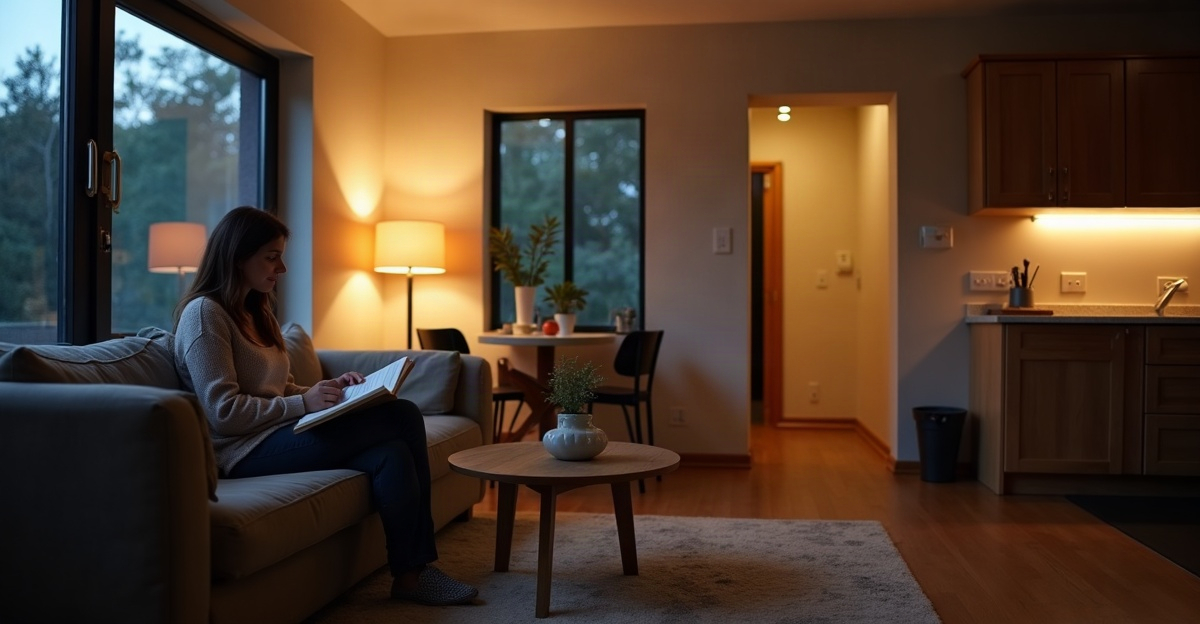
Energy-efficient smart lighting performs best when we pair dimmable LED fittings with practical controls. These controls reduce unnecessary run time and avoid full-brightness use. We can cut lighting electricity use with room-specific sensors, schedules, daylight-responsive settings, zoning, and task lighting while maintaining comfort and safety.
Key Takeaways
- Replace inefficient lamps with high-quality dimmable LEDs. Then add smart controls where we most often leave lights on unnecessarily.
- Use occupancy or vacancy sensors in pass-through and low-use areas. These spaces include hallways, utility rooms, garages, stairways, and selected bathrooms.
- Zone larger rooms and add task lighting. We can light worktops, desks, reading areas, and mirrors without running all general lighting at maximum output.
- Match automation to each room. Use daylight harvesting in bright kitchens and home offices, while keeping manual controls in living rooms, bedrooms, and areas where people sit still.
- Check compatibility between LEDs, dimmers, switches, hubs, wiring, and wireless systems before purchase. Use qualified professionals for wired, outdoor, or bathroom-zone installations.
How Energy-Efficient Smart Lighting Reduces Wasted Electricity
Energy-efficient smart lighting combines low-energy LED lamps or fittings with controls that prevent unnecessary operation. LEDs need less power to produce useful light than older lamp types, while smart controls limit how long lights remain on and how brightly they operate.
The strongest smart-lighting energy savings usually come from LED lighting and smart controls working together. A smart bulb alone is not automatically an efficient solution if it stays at full brightness for hours in an empty room. Equally, an efficient LED can still waste electricity if it is left on unnecessarily.
Savings vary between homes. Existing lamp types, the number of lights, daily use, daylight levels, occupancy patterns, automation settings, and manual overrides all affect results. Poorly configured controls can waste electricity or frustrate residents. We recommend a system that suits the property layout, household routines, design priorities, and preferred level of control rather than the most feature-heavy setup.
A few terms make planning easier. Lumens measure visible light output. Watts measure electrical power use. Dimming reduces light output when full brightness is unnecessary. Occupancy sensing turns lighting on when it detects presence, then turns it off after a selected period. Vacancy sensing normally requires manual switch-on but turns lighting off after the space is empty. Daylight harvesting reduces artificial light when daylight provides enough illumination.
For a broader view of connected lighting advantages, see our guide to smart lighting benefits.
Smart Lighting Ideas That Make the Biggest Difference at Home
Start by replacing halogen, incandescent, and other inefficient lamps with quality dimmable LED lighting. Then add controls where they will prevent the greatest amount of wasted use.
Occupancy sensors work especially well in hallways, cupboards, utility rooms, garages, and selected bathrooms. They switch lights on when movement or presence is detected and switch them off after a set run-on time. Vacancy sensors suit rooms where automatic switch-on could be intrusive, because residents turn lights on manually and the sensor handles switch-off.
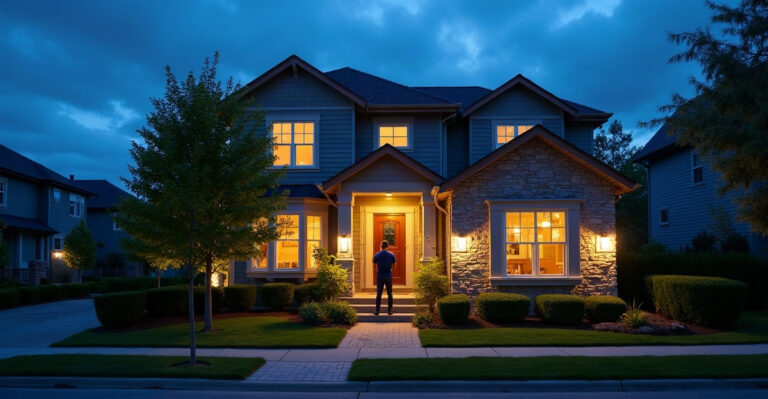
Lighting schedules suit predictable routines. We can schedule porch lighting, evening exterior illumination, and children’s bedtime routes without leaving lights running all night. Daylight harvesting is useful in bright kitchens, conservatories, and home offices because it reduces artificial light as natural daylight increases.
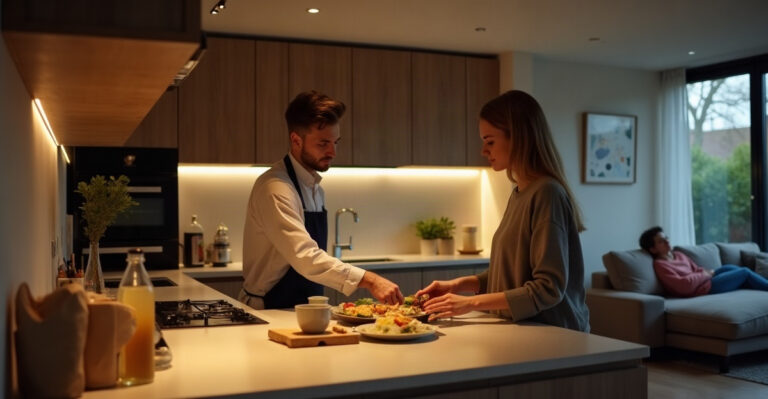
Zone larger rooms so only the active area is illuminated. Use task lighting over worktops, desks, reading chairs, mirrors, and preparation areas instead of lighting an entire room at maximum output. Dimmed evening scenes also use less energy than full-output general lighting, while preserving comfort and atmosphere.
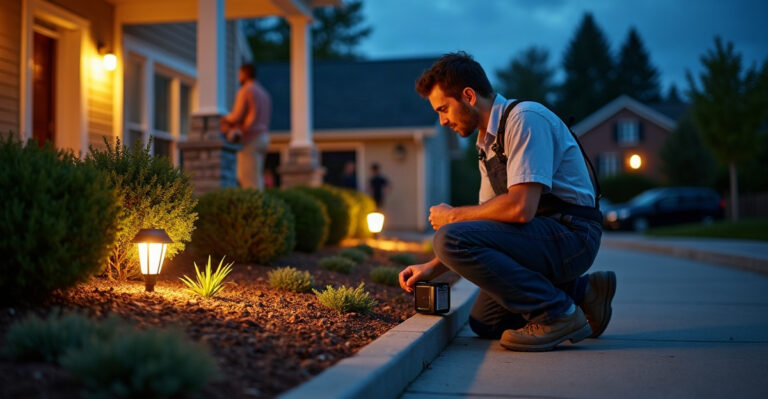
Smart LED bulbs offer a simple upgrade where existing fittings allow them. Smart dimmers, switches, relays, sensors, and integrated LED fittings can provide a more consistent result in renovated or newly built homes. For exterior spaces, dusk-to-dawn settings, schedules, and carefully adjusted sensors create efficient smart outdoor lighting. Our guide to daylight-matched schedules can help us set useful timings.
Room-by-Room Smart Lighting Ideas for Lower Energy Use
| Room/area | Recommended smart-lighting idea | Where it saves energy | What to watch out for |
|---|---|---|---|
| Entrance/hallway | Occupancy sensor, timed switch-off, or low-level night lighting | Stops lights being left on in pass-through areas | Set a practical run-on time so lights do not switch off too quickly |
| Kitchen | Dimmable LED downlights, separate zones, under-cabinet task lights, daylight-responsive controls | Avoids lighting the full kitchen when only worktops are in use | Check glare, colour rendering, and dimmer compatibility |
| Living room | Dimmed scenes, reading lamps, zones, manual controls | Reduces full-output use during evenings | Avoid motion sensors where people sit still |
| Bedroom | Bedside task lights, night routes, schedules, manual scenes | Prevents high-output lighting for brief night-time trips | Keep physical controls within easy reach |
| Bathroom | Selected occupancy or vacancy sensing, mirror task lights, low-level lighting | Limits operation during short visits | Bathroom-zone work may require a qualified electrician |
| Home office | Desk task lighting, daylight harvesting, manual dimming | Reduces reliance on general lighting | Avoid sensors that switch off while someone is working still |
| Utility room | Occupancy sensors and bright task lighting | Prevents lights remaining on after short visits | Position sensors for normal movement paths |
| Garage | Occupancy sensors, timers, zoned LED fittings | Controls an intermittently used space | Select fittings and sensors suited to the environment |
| Garden/outdoors | Dusk-to-dawn settings, schedules, motion sensors | Prevents overnight operation | Avoid over-sensitive sensors and neighbour-facing glare |
| Stairways | Occupancy sensors, low-level lighting, timed switch-off | Improves safety without high-output lighting | Provide adequate illumination and a manual override |
For exterior projects, our residential outdoor lighting options can combine efficient LED fittings with reliable controls. It is also useful to understand permanent outdoor lighting use before choosing schedules and scenes.
Comfortable, High-Quality Lighting Without Over-Lighting a Room
Energy efficiency should never reduce visual comfort, ambience, safety, or ease of use. We select brightness by lumens rather than watts alone. Lumens tell us how much visible light a lamp produces, while watts tell us how much electrical power it consumes.
Colour temperature describes whether light appears warm or cool. Warmer tones generally suit bedrooms and living spaces. Neutral or cooler tones can support task-focused areas such as kitchens, bathrooms, and home offices. Colour rendering also matters where accurate colour perception helps, including wardrobes, food preparation areas, bathrooms, artwork displays, and detailed work areas.
Glare control is essential. Good fitting placement, suitable beam angles, shielding, diffusers, and indirect light reduce harsh reflections and uncomfortable bright spots. Layered lighting combines ambient, task, and accent lighting so every fitting does not need to operate at maximum brightness.
Dimming makes this approach practical. Confirm that each lamp, driver, and dimmer is compatible before installation. Motion control remains best for lower-occupancy and pass-through spaces. Living rooms, bedrooms, studies, and entertaining areas usually need a balanced mix of automation and direct manual control.
Choosing the Right Smart-Lighting Approach for a Retrofit, Renovation, or New Build
A smart lighting retrofit can start with smart bulbs, plugs, portable lamps, and selected wireless smart-lighting controls. This suits straightforward upgrades where fittings and lamp bases are compatible and fixed wiring will remain unchanged.
A smart lighting renovation gives us the chance to install smart switches, dimmers, wired sensors, zoned circuits, upgraded fittings, and properly positioned controls before finishes are complete. Planning task lighting and sensor locations early prevents compromises later.
For a smart lighting new build or major refurbishment, we recommend a complete lighting plan with layered lighting, dedicated circuits, control locations, and automation infrastructure. A wired smart-lighting system can provide coordinated whole-home control. Wireless systems can also work well, provided signal coverage and device compatibility are confirmed.
Smart-lighting compatibility deserves close attention. Smart bulbs can lose their connected functions if a standard wall switch routinely cuts their power. Not every LED lamp works with every dimmer. Some products need a smart-lighting hub or bridge, while others connect through Zigbee, Thread, Wi-Fi, Bluetooth, or another platform. Voice assistant and smart-home integration also varies. We should confirm compatibility before purchasing multiple products.
Before We Buy: Reliability, Compatibility, and Installation Checks
A well-planned system remains simple for residents, guests, children, and less technical household members. Essential lighting should have intuitive physical controls alongside app, voice, and automated options. It should also remain practical if Wi-Fi is unavailable, a phone battery is flat, or a cloud-connected service is disrupted.
Before We Buy Checklist
Check these points before finalising home automation lighting:
- Existing fittings and compatible lamp bases
- Neutral wiring at switches where relevant
- LED lamp, driver, and dimmer compatibility
- Whether a hub or bridge is required
- Wireless signal strength throughout the property
- Preferred controls: wall switch, app, voice, sensor, or schedule
- Integration requirements and future expansion plans
- Professional specification or installation requirements
Changing a compatible lamp can be a simple DIY task. Wired switches, dimmers, relays, sensors, integrated fittings, bathroom-zone lighting, outdoor circuits, and whole-home systems may require specification and installation by a qualified electrician or lighting professional. We should never compromise electrical safety for convenience.
Big Pig Smart Lighting can support homeowners and project professionals with lighting plans, product specification, system design, automation planning, and installation support. For help with a project, contact our lighting team.