Outdoor Accent Lighting Ideas for Rooflines and Homes
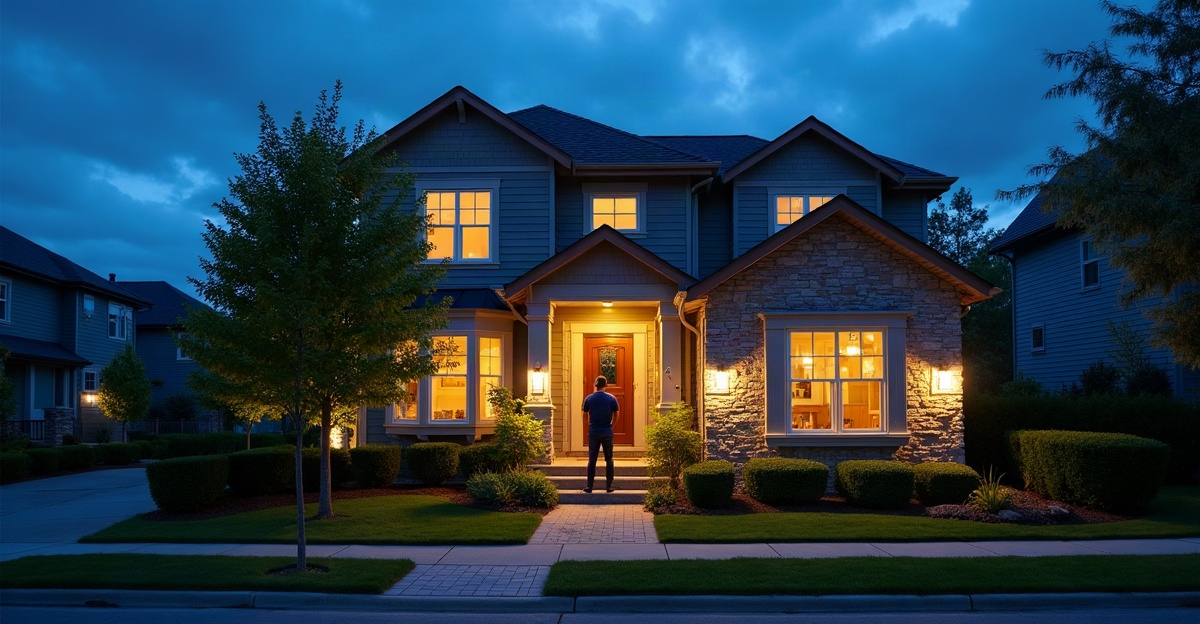
Outdoor accent lighting for rooflines and homes builds curb appeal by highlighting eaves, gables, entries, and landscape features with intention. We avoid tracing every architectural edge. A balanced plan combines warm-white lighting for daily visibility and ambiance with dimmable or color-capable zones for holidays, events, and occasional displays.
Key Takeaways
- We use roofline, soffit, and fascia lighting to define the home’s silhouette while keeping fixtures and wiring unobtrusive.
- We prioritize warm-white, low-glare lighting for nightly use. This approach reveals architectural details without overpowering windows, streets, or nearby homes.
- We coordinate roofline, entry, pathway, and landscape lighting as a unified composition. No single feature should appear overly bright.
- We match fixture types to each application: sconces for entries, pathway lights for walkways, uplights for texture, and smart roofline systems for programmable accents.
- We plan power access, weather-rated components, mounting methods, local requirements, and maintenance needs before choosing or installing exterior lighting.
Roofline and Home Accent Lighting Ideas That Create Immediate Curb Appeal
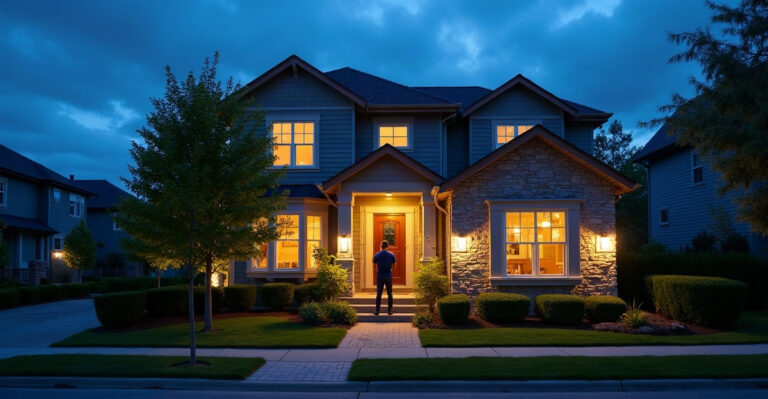
Outdoor accent lighting ideas work best when they guide attention to the parts of a home that already deserve notice. We recommend highlighting selected architectural features instead of tracing every edge with light.
Roofline and eave lighting creates a finished silhouette after dark. Discreet fixtures placed beneath the eaves can define the home’s shape while remaining nearly invisible during the day. For more inspiration, explore these roofline lighting ideas and consider professionally installed permanent roofline lighting for year-round control.
Soffit and fascia lighting serves a different purpose. It casts controlled light downward to reveal siding, trim, and exterior walls without creating a visible line of bright points. Our guide to under-eave lighting explains why this approach often feels cleaner than traditional fixtures.
Gables, dormers, and roof peaks benefit from selective accents. A carefully placed highlight can add height and depth to the façade. Lighting every peak, edge, and angle usually makes the architecture appear busy rather than refined.
Garage-door and driveway lighting frames the approach to the home. Wall fixtures, carefully aimed downlights, and pathway lights can improve evening visibility while keeping the garage from becoming the brightest feature on the property.
Entryway and porch lighting should make doors, steps, house numbers, and transitions easy to see. Sconces provide practical illumination near the door, while subtle overhead or soffit lighting can reveal columns, trim, and porch ceilings.
Patios and decks need a softer approach. Low-level lighting, step lights, and controlled overhead accents make outdoor spaces feel usable without overpowering conversation areas. We can also use outdoor mood lighting to create flexible scenes for entertaining.
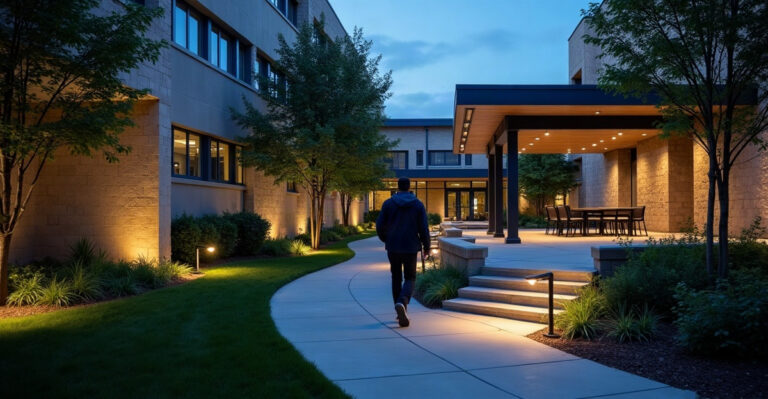
Landscape uplighting complements the home from ground level. Light trees, planting beds, columns, stonework, and selected façade textures, but do not compete with roofline lighting. Review practical outdoor lighting placement principles before positioning fixtures.
For project photography or planning visuals, we recommend showing three distinct scenes: a warm-white nightly setting, a restrained holiday color display, and a selective design that illuminates only the eaves, entry, and one landscape feature. These comparisons make the value of visual restraint clear.
Create a Balanced Everyday Look Before Adding Color
Warm white should handle most nightly exterior lighting. It flatters common building materials, feels welcoming, and supports the home’s architecture without turning the exterior into a display.
Use dimmable lighting or lower-output settings for routine evenings. Brightness should reveal form, texture, and pathways without causing glare in windows, streets, or neighboring properties. Placement and beam direction matter as much as output. Color temperature, mounting method, siding color, brick texture, stone finishes, and roof overhangs all affect the final appearance.
Coordinate roofline, entry, and landscape lighting as one composition. If the roofline is bright, keep uplights and pathway fixtures restrained. If stonework is the focal point, use softer eave lighting so the façade remains balanced.
Color works best as an occasional feature for holidays, celebrations, events, and game-day displays. Controlled color zones can create a festive result while allowing the home to return to a calm warm-white scene afterward. For ideas, see these exterior accent lighting examples.
Architecture should guide fixture selection:
- Modern homes benefit from clean lines, limited fixture visibility, and restrained warm-white illumination.
- Traditional homes often look best with warm light at entries, gables, porch details, and garage areas.
- Brick and stone façades respond well to grazing or uplighting that reveals texture without harsh hotspots.
- Coastal-style homes call for soft illumination and weather-rated, corrosion-resistant components suited to local conditions.
Responsible lighting also considers light pollution, neighborhood expectations, operating hours, and nearby properties. A polished design feels intentional without becoming intrusive.
Choose the Right Lighting Type for Each Exterior Feature
Outdoor home accent lighting ideas should match the feature being illuminated. Roofline lights, uplights, sconces, and pathway fixtures perform different jobs and should not be treated as interchangeable.
| Exterior Lighting Type | Best For | Everyday Use | Seasonal Flexibility | Installation Considerations |
|---|---|---|---|---|
| Roofline or eave accent lighting | Defining eaves and curb appeal | Excellent for subtle warm white | High with color-capable systems | Requires accurate placement and concealed wiring |
| Soffit and fascia lighting | Downward illumination and architectural definition | Strong choice for nightly use | Moderate to high | Mounting must suit soffit and trim materials |
| Gable and dormer highlights | Roof peaks and upper-level character | Best used selectively | Moderate | Needs careful aiming and safe roof access |
| Architectural uplighting | Stone, brick, columns, trees, and texture | Effective at low brightness | Moderate | Manage glare, cable routing, and fixture aiming |
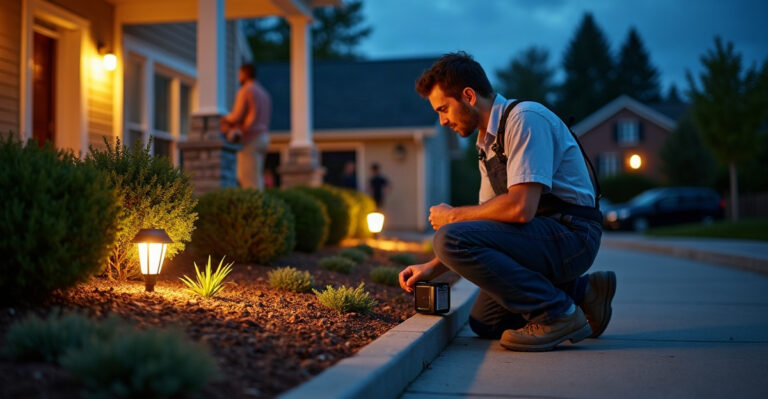
| Pathway and landscape lighting | Walkways, beds, and movement areas | Useful for regular evening visibility | Limited to moderate | Plan spacing, power, and planting changes |
| Wall sconces and entry lighting | Doors, porches, garages, and task visibility | Highly practical | Limited | Requires appropriate mounting and electrical connections |
| Floodlights and security lighting | Broad-area visibility | Use selectively | Low | Can create glare and overpower decorative lighting |
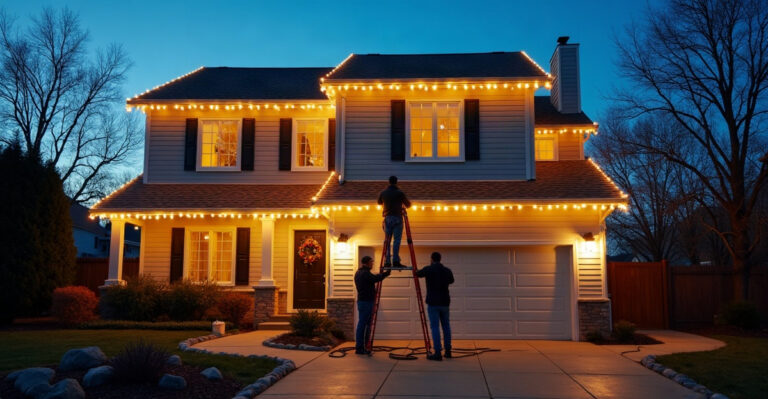
| Temporary holiday string lights | Short-term seasonal displays | Limited | High | Needs repeat setup, removal, and storage |
| Permanent smart lighting | Discreet programmable roofline illumination | Strong year-round option | High | Benefits from planning, secure mounting, and controls |
No single approach fits every property. The right choice depends on appearance goals, control preferences, permanence, budget, installation complexity, and long-term maintenance. Results also depend on product selection, operating habits, installation quality, lighting design, and local conditions.
Use Smart Controls for Everyday, Seasonal, and Event Lighting
Permanent smart lighting is one option for homeowners who want a discreet system that can shift from warm-white evenings to occasional color displays. It does not replace pathway lights, sconces, or landscape fixtures, but it can simplify roofline control.
Zones let us control areas independently, such as the roofline, garage, patio, or front entry. Scenes save preferred looks, including “Everyday Warm White,” “Holiday,” or “Guests Arriving.” Scheduling sets when lights turn on, dim, change color, or switch off. Automation uses those schedules to reduce daily adjustments. App control and integrations can add convenience, although compatibility varies by system and home setup.
A well-planned system supports daily life beyond holiday decorating. We can set warm white for nightly curb appeal, add colors for holidays and game days, brighten the driveway and entry before guests arrive, or schedule selected areas for evening visibility. Our smart architectural lighting guide shows how controlled scenes can emphasize key features without visual clutter.
Plan Power, Placement, Durability, and Installation Before Buying
A successful lighting project starts with a clear plan. Before selecting fixtures or controls, review this checklist:
Exterior Lighting Planning Checklist
- Which architectural features should stand out?
- Is the goal subtle curb appeal, seasonal color, evening visibility, or a combination?
- Where is reliable power available?
- How will cables, controllers, and mounting hardware remain concealed?
- Is roof access safe and practical?
- Are components rated for local weather conditions?
- Who will install, service, and maintain the system?
- Do HOA rules, municipal ordinances, electrical codes, or neighborhood expectations apply?
Weather-rated components, secure mounting, concealed cables, accessible power, and service access all affect the finished result. Climate-appropriate materials matter as well, particularly in coastal, high-wind, wet, or temperature-variable locations.
Simple solar or plug-in fixtures may suit smaller projects. Permanent roofline systems, electrical work, multi-story access, concealed wiring, and integrated smart controls often warrant professional planning and installation. Explore our permanent light installation options if you want a coordinated system built around your home’s architecture.
Local rules may affect placement, brightness, color, operating hours, and installation methods. We recommend confirming these requirements before installation. To discuss a lighting plan, request a design consultation with our team.
Common Questions About Outdoor House Accent Lighting
What is the best color temperature for outdoor house accent lighting?
Warm white is generally the preferred choice for nightly use. The best appearance still depends on the home’s materials, style, and surrounding lighting.
How bright should roofline lighting be?
Keep roofline lighting subtle and dim it where possible. Avoid direct glare into windows, streets, and neighboring properties.
Can permanent outdoor lights be used year-round?
Many permanent systems support year-round use when properly selected, installed, and maintained for local conditions.
What is the difference between roofline lights and landscape lighting?
Roofline lighting emphasizes upper architectural lines. Landscape lighting focuses on pathways, planting beds, trees, ground-level features, and façade uplighting.
Are permanent outdoor lights worth it for holiday lighting?
That depends on desired seasonal flexibility, year-round use, budget, installation complexity, and maintenance expectations. For homes that want both daily warm-white scenes and holiday color options, permanent systems can be a practical choice.
Do I need professional installation for roofline accent lighting?
Professional help can be especially valuable for permanent systems, electrical work, multi-story homes, roof access, concealed wiring, and integrated smart controls.
Are there rules about outdoor lighting brightness or colors?
HOA rules, municipal ordinances, electrical codes, and neighborhood expectations may affect brightness, color, operating hours, placement, and installation methods.