Smart Lighting Design Ideas for a Modern Luxury Home
We begin smart lighting design for a modern luxury home with the atmosphere we want, the activities we support, and the architectural features we highlight. We then select controls and automation. Layered ambient, task, and accent lighting, paired with quality dimming and discreet fixtures, creates comfortable spaces. These spaces can shift smoothly from daytime routines to evening entertaining.
Key Takeaways
- We plan lighting around comfort, visibility, material finishes, and architectural details instead of relying on technology or colour effects.
- We combine ambient, task, and accent lighting to create depth, reduce glare, and avoid overly bright ceiling grids.
- We select warm, neutral, or tunable white light for each room’s purpose. We also specify high colour rendering and smooth, flicker-free dimming.
- We use simple scenes, schedules, sensors, and zones to support daily routines. We keep manual wall controls available for everyone.
- We coordinate fixtures, wiring, controls, concealed lighting details, and maintenance access early in every new build or renovation.
Luxury Lighting That Feels Effortless: Start With Light, Not Technology
Smart lighting design begins with how a home should feel at every hour. We plan for comfort, atmosphere, clear visibility, architectural emphasis, and simple everyday use before choosing an app, keypad, sensor, or control platform.
Luxury smart lighting should stay discreet. The technology should work reliably in the background, while the lighting makes rooms feel calm, considered, and easy to live in. A successful scheme does not depend on colourful effects or complicated voice commands. It gives us the right light in the right place, with controls that feel natural.
The strongest plans begin with the desired atmosphere, practical needs, and architectural features. We then select controls that support those decisions. A room-by-room system can deliver excellent results without requiring a complex whole-home automation platform. That flexibility makes smart lighting design suitable for focused upgrades, renovations, and complete new builds.
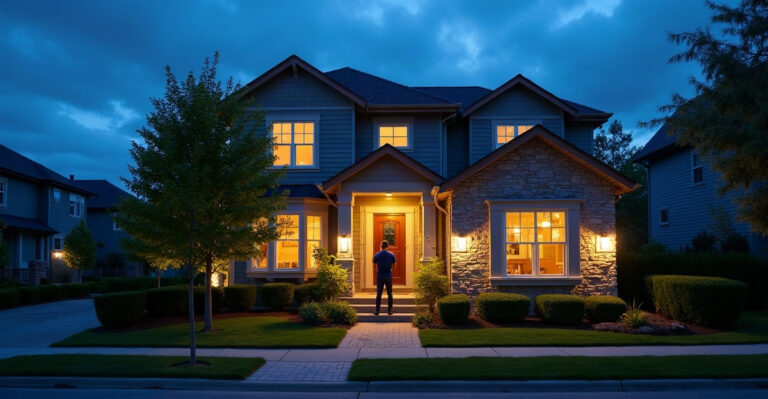
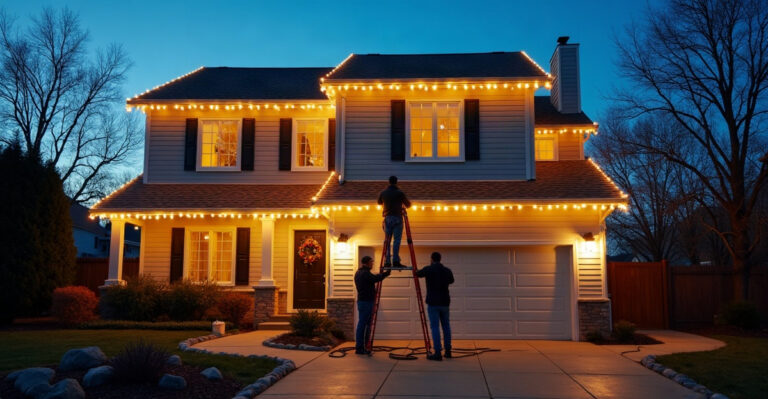
Permanent exterior lighting can also support a refined home after dark. Our permanent lighting ideas show how subtle, integrated illumination can extend the architecture beyond the interior.
Create Depth With Ambient, Task and Accent Lighting
A refined interior needs layers of light. Relying on a grid of bright ceiling spots can make a room feel flat, overly bright, and visually busy. Instead, we combine ambient, task, and accent lighting so each room can shift easily from daytime activity to relaxed evenings or entertaining.
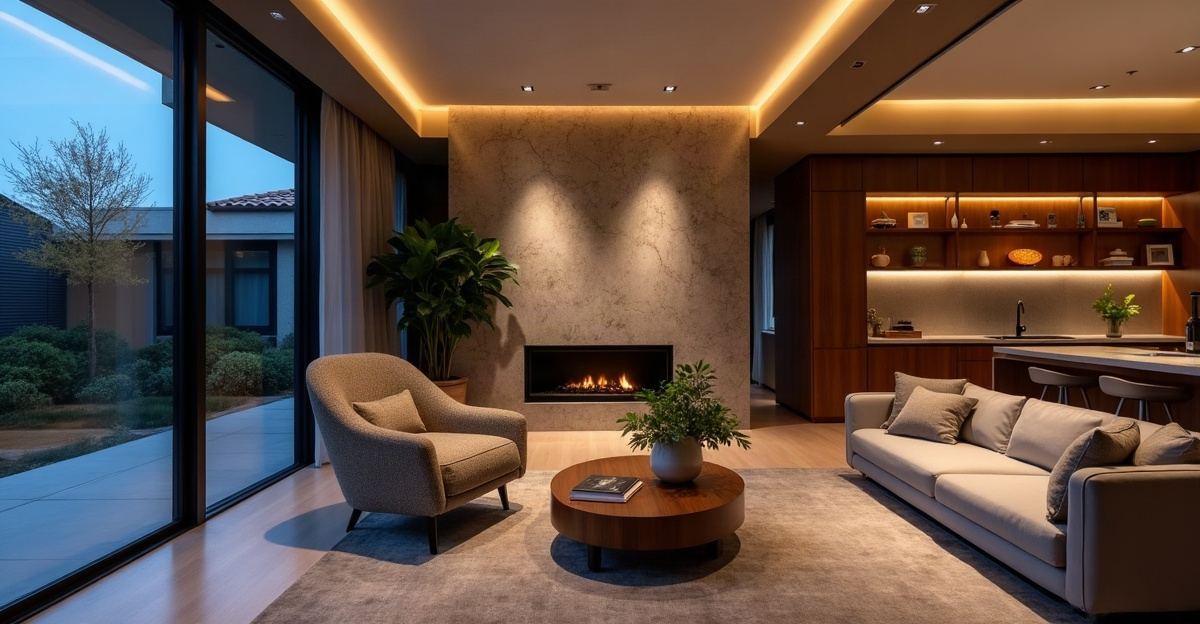
Ambient lighting provides comfortable general illumination. Indirect cove lighting, carefully spaced downlights, wall lights, and ceiling-integrated sources can create an even base layer without drawing attention to the fittings.
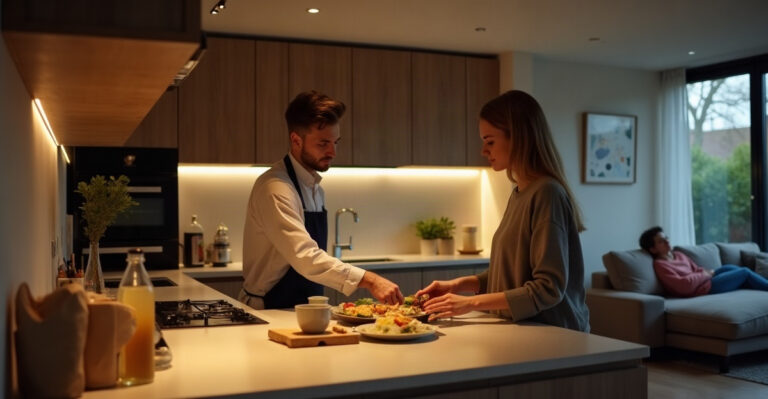
Task lighting delivers focused brightness where activities demand it. Kitchen worktops, dressing areas, reading chairs, desks, bathroom mirrors, and food preparation zones all need direct, useful light. This layer should reduce shadows without creating glare.
Accent lighting adds depth and visual interest. It can highlight artwork, stone, timber, textured walls, display shelving, planting, and architectural details. Our guide to highlighting architecture with smart lights explains how controlled accents can make key design features stand out without overwhelming a space.
Luxury smart lighting with minimalist design often depends on concealed details. Recessed channels, shadow gaps, coves, wardrobe rails, joinery, display shelves, and under-cabinet locations can hold LED light sources out of view. The result feels intentional rather than technical.
Every fitting should support the architecture and how we use the room. More fixtures do not automatically improve a lighting scheme. Better placement, appropriate output, and well-managed layers do.
Choose Light Quality That Complements a Modern Luxury Interior
We design smart lighting around light quality, visual comfort, and the materials within the home. High-quality fittings and controls protect the appearance of finishes, artwork, furnishings, and skin tones while making daily activities easier.
Warm light works well for evening relaxation, bedrooms, dining spaces, and lounges. More neutral white light suits practical daytime tasks in kitchens, bathrooms, offices, and dressing areas. Tunable white lighting can adjust between these tones over the day, making it a strong option for timeless residential schemes.
RGB colour-changing lighting has a place in selected media rooms, entertaining areas, and exterior settings. It should not be the main expression of luxury. Restrained use creates a more enduring result.
High colour-rendering quality is equally important. Fixtures with strong colour rendering show paint, textiles, artwork, food, and finishes accurately. We also consider dimming performance carefully. A light should dim smoothly, remain stable at low levels, and avoid visible flicker. Dim-to-warm fittings can create especially inviting evening scenes.
Beam angle, fixture spacing, and aiming matter as much as fixture selection. Poorly aimed downlights can create harsh pools of light, while incorrect spacing can leave rooms unevenly lit. Glare control deserves special attention in open-plan rooms, bedrooms, bathrooms, hallways, and TV areas. A room can appear bright enough while still feeling uncomfortable because exposed sources or reflections are in the wrong place.
Before installation, we confirm that fixtures, drivers, dimmers, and controls will work together. This prevents disappointing dimming, unstable operation, and costly changes later.
Use Rooms and Scenes to Make Everyday Living Easier
Smart functions should simplify daily routines. Scenes, schedules, occupancy sensing, daylight response, remote access, and wider smart-home integration can all help, but every feature should earn its place. Our approach to smart lighting zones shows how separate areas can respond to different routines without making controls difficult.
Useful scenes remain simple. A morning scene can bring bedrooms and bathrooms up gently while giving the kitchen practical brightness. Entertaining can combine warm ambient light with a highlighted dining table and artwork. An evening wind-down scene can dim the main lighting, retain illuminated joinery, and leave low-level circulation light. Away mode can operate selected interior or exterior lights responsibly. Night pathways can provide glare-controlled guidance to bathrooms, kitchens, and stairs.
Room-by-Room Smart Lighting Plan
- Living room: Prioritise layered, glare-controlled light. Combine wall washing, joinery lighting, floor lamps, and carefully placed downlights instead of a bright ceiling grid.
- Kitchen: Use shadow-free worktop lighting, dimmable ambient light, pendants or decorative focal lighting over an island, and subtle evening scenes.
- Dining area: Centre the lighting around the table, include smooth dimming, and add accent light around the room to create depth.
- Bedroom: A luxury smart lighting bedroom design should include bedside reading lights, warm pre-sleep scenes, wardrobe illumination, low-level night lighting, and blackout coordination where appropriate.
- Bathroom: Use flattering mirror lighting, safe wet-area-rated fittings, practical task illumination, and low-level guidance for night use.
- Hallways and stairs: Motion-responsive pathway lighting works well here. Keep transitional spaces softly lit rather than excessively bright.
- Home office: Provide focused task lighting, screen-friendly glare control, and adaptable illumination for video calls and concentrated work.
- Exterior spaces: Layer pathways, entrances, terraces, planting, and façade accents while respecting neighbours, glare, and local requirements. We can combine residential outdoor lighting, discreet outdoor accent lighting, and controlled outdoor mood lighting for a polished result. Our ideas for minimalist outdoor lighting and modern outdoor lighting design offer further inspiration.
Make Controls Simple for Every Member of the Household
Manual wall controls remain essential. Family members, guests, and household staff should be able to turn lights on, off, and down without a phone, internet connection, voice assistant, or instructions.
The right control mix depends on the home and its occupants. Elegant keypads can provide scene access at entry points. Familiar dimmer switches work well for everyday adjustments. Motion or occupancy sensors suit circulation areas, wardrobes, and utility spaces. Apps, voice control, and central smart-home interfaces can add convenience without replacing physical controls.
Essential lighting should never depend on an internet connection, mobile phone, or voice assistant. Reliability also depends on verified ecosystem compatibility, stable network infrastructure, ongoing update support, professional integration where needed, and manual overrides. Our overview of permanent lighting and smart homes explains how connected exterior systems can remain practical and easy to operate.
LED fixtures, occupancy sensors, daylight-responsive controls, and schedules can reduce wasted energy. Actual savings vary based on fixture selection, design, occupancy patterns, control settings, and how the home is used.
Plan Early to Avoid Compromises During a New Build or Renovation
Early coordination protects the design. During a new build or major renovation, architects, interior designers, electricians, joiners, builders, lighting specialists, and smart-home integrators can align decisions before ceilings close and joinery is installed.
We coordinate wiring strategy, whether centralised or wireless, alongside electrical loads, drivers, dimmers, fittings, and control compatibility. Switch and keypad locations need careful planning around entrances, bedsides, circulation routes, and daily routines. Ceiling recesses, shadow gaps, coves, and concealed LED details must also be agreed before construction.
Joinery lighting, wardrobe lighting, under-cabinet illumination, and display shelving should form part of the interior and electrical plans from the start. Exterior work also benefits from early planning, especially for under-eave lighting, permanent roofline lighting, and integrated outdoor security lighting.
We also allow for accessible power supplies, ventilation, maintenance access, future upgrades, dependable Wi-Fi or network coverage, firmware updates, control-system support, and local installation requirements.
Questions to Ask Before Choosing a System
Use this checklist to guide early discussions:
- What activities happen in each room at different times of day?
- Which architectural features, artwork, finishes, or joinery deserve emphasis?
- Where is task lighting genuinely necessary?
- What should operate automatically, and what should remain manual?
- How simple must controls be for children, guests, and household staff?
- Which fixtures, drivers, dimmers, and controls have confirmed compatibility?
- How will the system operate if internet access is unavailable?
- Who will provide commissioning, updates, support, and maintenance?
For a renovation or new build, we recommend speaking with a qualified lighting and smart-home professional early. Our permanent light installation service can help translate architectural and interior plans into a coordinated lighting design. To discuss a project, contact our lighting team.