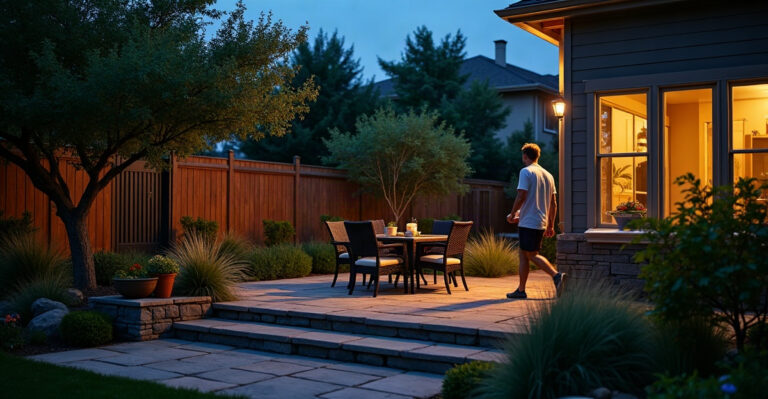
Unique Outdoor Christmas Lights to Make Your Home Stand Out
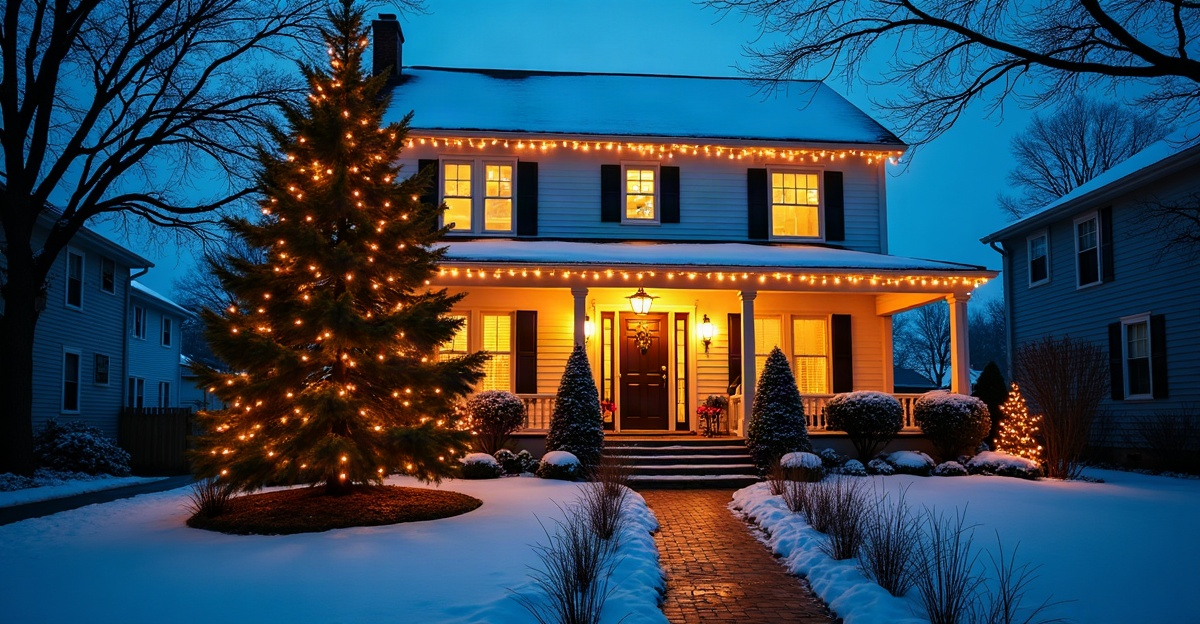
Unique outdoor Christmas lights help our home stand out through a cohesive design with layered lighting, coordinated colors, and one clear focal feature. We can use smart controls, architectural accents, and well-placed pathway or landscape lights to create a polished display. This approach also helps us manage brightness, energy use, and neighborhood impact.
Key Takeaways
- Start with a theme that complements our home’s architecture. Use contrast between lit and unlit areas to avoid a crowded appearance.
- Build depth with ambient lighting, architectural accents, pathway lights, and one statement feature, such as a wrapped tree or illuminated porch display.
- Use smart lighting zones, scenes, schedules, and dimming to coordinate colors and simplify daily operation.
- Choose temporary lights for seasonal flexibility, or choose permanent lighting for discreet, year-round color control and less installation work.
- Prioritize outdoor-rated equipment, protected power connections, safe cable routing, and respectful brightness levels.
Start With a Clear Christmas Lighting Theme
The best unique outdoor Christmas lights usually start with one clear idea instead of several unrelated decorations.
Choose a theme that fits the home’s style. A traditional property may look best with warm white lights, wreaths, and softly illuminated trees. A modern home may suit clean roofline lighting, controlled color changes, and simple landscape accents.
A coordinated residential outdoor lighting plan can also help seasonal lighting work with existing exterior fixtures instead of competing with them.
Pick a Consistent Color Palette
Limit the number of colors used across the property.
Popular combinations include:
- Warm white and gold
- Red and warm white
- Red and green
- Blue and white
- Soft multicolor
- Single-color displays with changing scenes
Repeating the same colors across the roofline, trees, porch, and landscaping creates a more intentional appearance.
Too many unrelated colors can make even a large display feel unorganized.
Create One Main Focal Point
A memorable holiday display does not need every surface covered in lights.
Instead, select one feature that becomes the center of attention.
This could be:
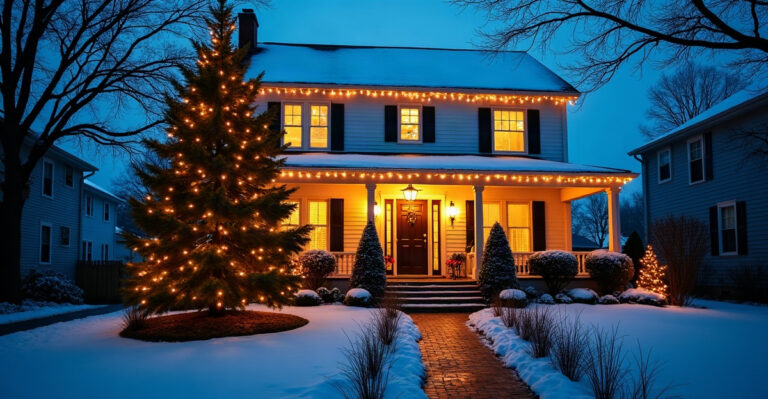
- A large wrapped tree
- An illuminated porch
- A decorated entrance
- A glowing roofline
- A lighted archway
- A prominent landscape feature
Once the main focal point is established, surrounding lights can support it without competing for attention.
Use Accent Lighting Around the Main Feature
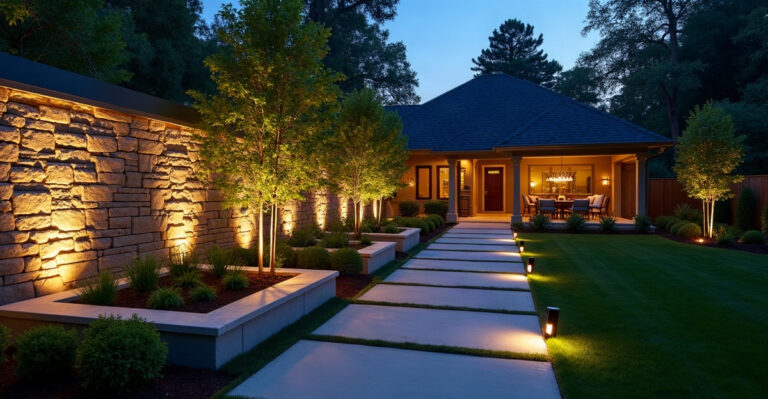
Outdoor accent lighting can help connect permanent landscaping with seasonal decorations.
For example, subtle lighting around nearby trees, stonework, or garden beds can create depth behind a brightly decorated porch.
The result can feel more complete without adding another large holiday decoration.
Highlight the Roofline and Architecture
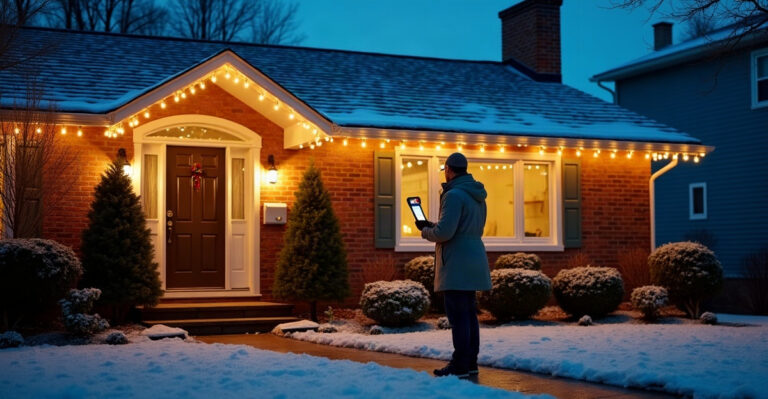
Roofline lighting is one of the easiest ways to give a home a recognizable holiday appearance.
Follow the architecture instead of placing lights randomly. Peaks, eaves, dormers, columns, and entryways can all become part of the design.
Consistent spacing also matters. Uneven bulbs or sagging strands can distract from an otherwise attractive display.
Consider Under-Eave Lighting
Under-eave lighting can create clean lines along the house while keeping fixtures less visible during the day.
Permanent systems can also support different colors and scenes throughout the year.
For Christmas, roofline colors can match the rest of the display. Outside the holiday season, the same lighting may support general exterior accent lighting or special occasions.
Use Trees and Landscaping to Add Depth
Trees can become dramatic holiday features when lighting follows their natural shape.
Wrapping a trunk creates a different look from covering branches. Tall trees may become strong vertical focal points, while smaller shrubs can provide softer background illumination.
Avoid lighting every plant.
A few selected trees often create more visual impact than covering the entire yard.
Combine Uplighting and Decorative Lights
Existing landscape uplighting can work with Christmas decorations.
For example, warm uplighting beneath a large tree can add depth while string lights wrap the trunk or lower branches.
This combination helps the feature look interesting from several viewing angles.
Add Creative Lighting Along Walkways
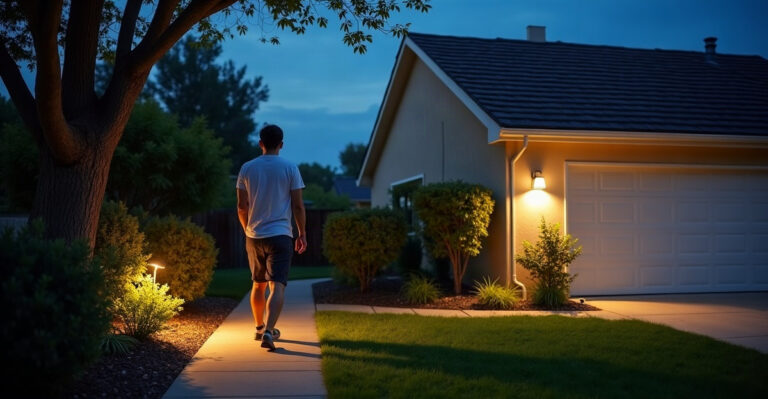
Walkway lighting can serve both practical and decorative purposes.
Instead of lining both sides of a path with identical fixtures, create softer pools of light that guide people toward the entrance.
Seasonal colors can also be introduced through nearby landscaping or decorative accents.
Keep fixtures and cables away from the walking surface whenever possible.
Make the Entrance Feel Special
The route toward the front door should lead naturally into the main display.
Lighting can highlight:
- Steps
- Porch columns
- Railings
- Planters
- Door frames
- Nearby shrubs
The entrance should feel bright enough to welcome guests without becoming the brightest area on the property.
Create a Holiday Mood With Layered Lighting
A good holiday display uses different lighting levels.
Bright roofline lighting can provide structure. Landscape lights can add depth. Smaller decorative fixtures can create detail around porches, trees, and gathering spaces.
Outdoor mood lighting can support this layered effect by adding softer illumination around seating areas, landscaping, and outdoor entertainment spaces.
Keep Some Areas Dark
Dark spaces are useful.
They separate illuminated features and prevent the entire yard from blending into one bright surface.
Contrast also makes individual decorations easier to notice.
Instead of lighting every wall, tree, and walkway, choose where darkness can remain part of the design.
Use Smart Controls for Unique Lighting Scenes
Smart controls can make unique outdoor Christmas lights more flexible.
Different lighting zones can operate independently. This makes it possible to create several looks without physically changing the lights.
For example, a system might use:
- Warm white for most evenings
- Red and green for Christmas gatherings
- Soft blue and white for winter scenes
- Animated patterns for special events
- Lower brightness later at night
Dedicated outdoor holiday lights can help homeowners use programmable scenes and colors without reinstalling a complete display every year.
Schedule the Display Automatically
Timers and smart scheduling can turn the lights on around sunset and switch them off later in the evening.
This removes the need to control the system manually every day.
Dimming can also reduce brightness later at night when fewer people are outside.
Choose Between Temporary and Permanent Holiday Lights
Temporary Christmas lights provide flexibility.
Homeowners can change the layout, colors, and decorations each year. This works well for people who enjoy creating a different display every season.
Permanent lighting takes a different approach.
Fixtures remain installed and can support changing colors or scenes through controls. This reduces the need for repeated roofline installation and removal.
The right choice depends on budget, design preferences, property size, and how often decorative lighting will be used.
Keep Outdoor Christmas Lighting Safe
Holiday lighting should look good without creating unnecessary electrical or physical hazards.
Use products rated for outdoor conditions and follow the manufacturer’s installation requirements.
Pay attention to:
- Weather-resistant connections
- Outdoor-rated extension cords
- Proper electrical capacity
- Cable routes
- Ladder access
- Wet locations
- Fixture mounting
- Walkway clearance
Avoid placing loose cords across areas where people regularly walk.
Protect Important Areas Without Overlighting
Holiday lighting can work alongside outdoor security lighting, but the two systems should have different purposes.
Security lights should remain focused on entrances, side yards, garages, gates, and other sensitive areas.
Decorative lighting should not interfere with security visibility or create strong glare near cameras.
Avoid Common Christmas Lighting Mistakes
A unique display should feel different because of its design, not because it uses the greatest number of lights.
Common mistakes include:
- Mixing too many colors
- Using several competing focal points
- Making every zone equally bright
- Covering every tree or shrub
- Using different bulb styles without a plan
- Ignoring daytime appearance
- Leaving exposed cords across paths
- Pointing bright fixtures toward neighbors
- Running the display at full brightness all night
A more controlled design often creates a stronger visual impression.
Review the Display After Dark
Always inspect the finished lighting from several locations after sunset.
View it from:
- The street
- The driveway
- The sidewalk
- The front entrance
- Inside the home
Look for glare, dark gaps, uneven colors, visible cables, and areas that compete for attention.
Small changes in aiming or brightness can make a large difference.
Big Pig Smart Lighting can help create a coordinated holiday lighting design that works with a property’s architecture, landscaping, and existing exterior lighting.
For help creating unique outdoor Christmas lights for your home, contact us to discuss your lighting goals and property.
Frequently Asked Questions About Unique Outdoor Christmas Lights
How can I make outdoor Christmas lights look unique?
Start with a clear theme, limited color palette, and one main focal point. Add supporting roofline, landscape, pathway, or porch lighting instead of using unrelated decorations across the entire yard.
What colors work best for outdoor Christmas lights?
Warm white creates a classic appearance, while red and green provide a traditional Christmas look. Blue and white can create a winter theme. The most important factor is keeping the colors coordinated across the display.
Are permanent Christmas lights worth considering?
Permanent lighting may be useful for homeowners who decorate every year or want programmable exterior lighting for several holidays and events. Temporary lights may be better for people who prefer changing the physical design each season.
How can I make Christmas lights look good without using too many?
Focus on a few important areas, such as the roofline, front entrance, one large tree, and selected landscaping. Leaving darker spaces between illuminated areas creates contrast and can make each feature stand out more.
How long should outdoor Christmas lights stay on each night?
Many homeowners run displays during evening hours and turn them off later at night. Timers, schedules, and smart controls can automate this process while reducing unnecessary overnight lighting.