Garden Lighting Ideas to Brighten and Transform Your Yard
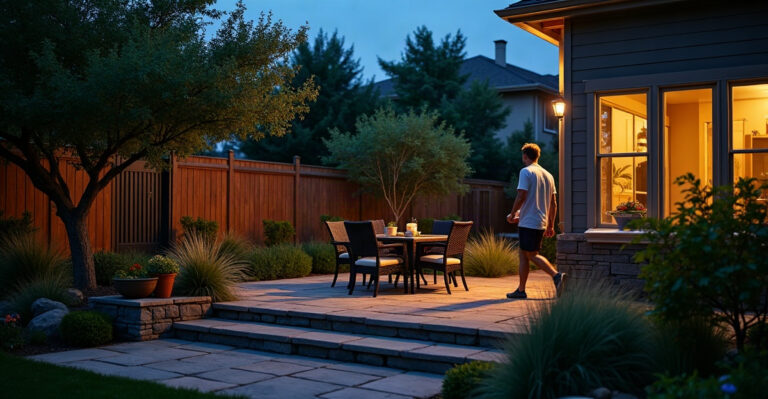
Garden lighting works best when we layer low-glare illumination across routes, entrances, patios, and a few focal features. We combine safety, comfort, weather-rated fixtures, and separate control zones to create an inviting yard without excessive light.
Key Takeaways
- We start with paths, steps, gates, driveways, and entrances to improve visibility and reduce trip risks.
- We combine ambient, task, accent, and safety lighting, while preserving darker areas for contrast, comfort, and wildlife protection.
- We use shielded, downward-facing fittings and aim each light away from windows, neighbouring properties, and the sky.
- We choose warm, dimmable lighting for patios and dining areas, then add focused task lighting for grills and food-preparation spaces.
- We use smart zones, timers, dimmers, and carefully placed motion sensors to manage run time and match each area’s purpose.
Plan a Layered Garden Lighting Scheme That Keeps the Night Comfortable
Effective garden lighting ideas do not mean making every corner bright. We create layers of light that support safety, evening use, and visual interest while keeping enough darkness for comfort, contrast, and wildlife sensitivity.
Start with routes and entrances, then light the places where people spend time. From there, highlight one or two features that give the garden character. Separate controls let us adjust each area without flooding the whole yard with light. For a deeper approach, explore layered outdoor lighting.
Each layer has a clear role. Ambient lighting provides a soft overall glow. Task lighting gives focused illumination for cooking, dining, steps, gates, and practical work. Accent lighting directs attention to trees, planting, walls, sculpture, or architecture. Safety lighting reveals paths, level changes, entrances, and uneven surfaces. Security-supporting lighting improves visibility around driveways, gates, and access points, but it does not replace a complete security system.
Garden Lighting Planning Checklist
Before selecting fittings, we recommend working through these decisions:
- Identify routes, steps, gates, and entrances that need clear visibility.
- Decide how the garden will be used after dark, from quiet dining to entertaining.
- Choose one or two focal features instead of lighting every plant.
- Map power access and establish whether professional installation is required.
- Select fixtures that suit the exposure level and weather conditions.
- Test brightness and aiming angles before fixing final positions where possible.
- Group fittings into useful control zones.
- Add timers, schedules, or sensors only where they solve a real need.
Use shielded or downward-facing fittings wherever practical. Aim each light away from windows, neighbouring properties, and the sky. Avoid harsh bright patches, which can make surrounding areas appear darker and less comfortable. A few protected dark areas usually create a calmer and more balanced result.
Light Paths, Steps, Entrances, Gates, Driveways, and Boundaries Safely
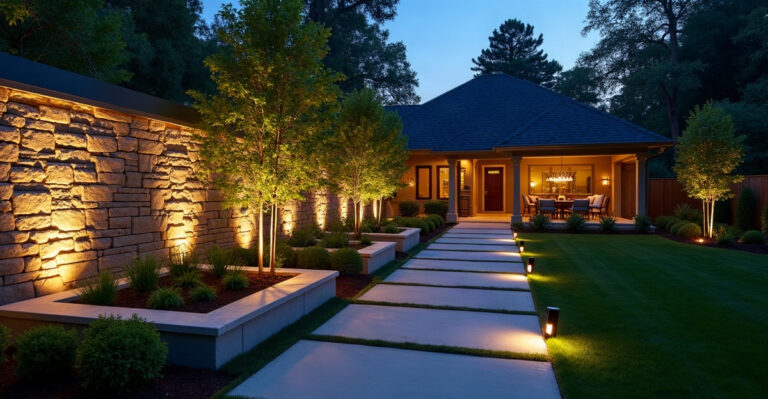
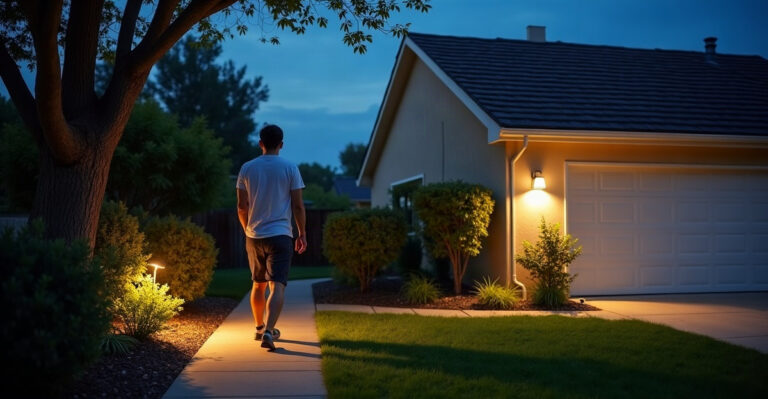
The best outdoor garden lighting ideas make movement easier without causing glare, trip hazards, or unnecessary light spill. For walkways, low-glare bollards, recessed markers, and shielded path lights work well. Position them to reveal the route ahead rather than shining into people’s eyes.
Steps, deck edges, retaining walls, and uneven surfaces need more deliberate treatment. Step lights and carefully aimed downlights can define each change in level. Keep fixtures clear of walking routes, and avoid creating isolated pools of brightness that leave the surrounding path difficult to read.
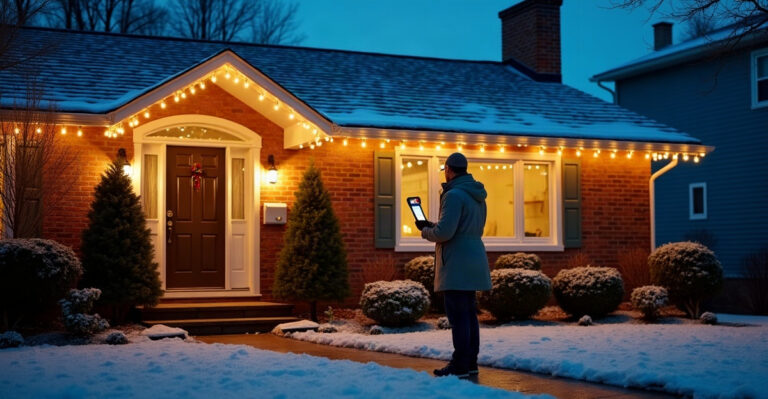
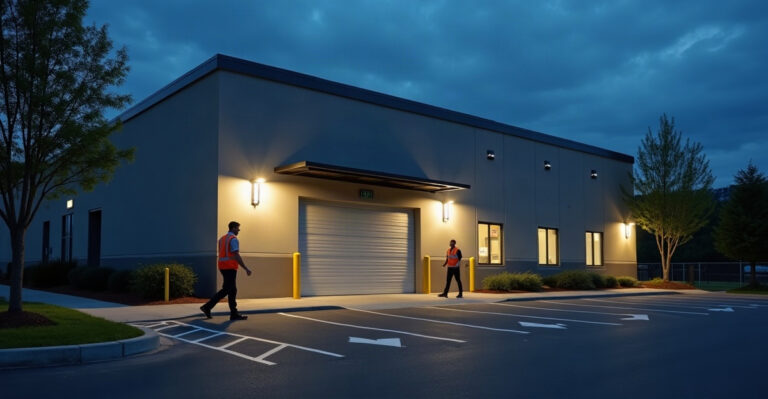
Front entrances, gates, and driveways benefit from controlled lighting that supports visibility and curb appeal. Motion sensors can be useful around access points, but we should adjust their range, duration, and aiming carefully. Poorly positioned sensors can activate unnecessarily and disturb nearby homes. Consider outdoor security lighting for a planned approach to access areas.
| Fixture type | Best use | Lighting purpose | Placement tip | Potential drawback to avoid | Smart-control compatibility |
|---|---|---|---|---|---|
| Path lights | Walkways | Safety | Space along one or both sides | Glare at eye level | High |
| Bollards | Long paths and driveways | Safety and ambient | Use shielded, low-output fittings | Overcrowding the route | High |
| Spike spotlights | Planting and trees | Accent | Aim from outside main sightlines | Visible glare from the source | High |
| Uplights | Walls and focal trees | Accent | Set back from the feature | Lighting every feature | High |
| Wall lights | Doors and patios | Task and safety | Mount where light falls downward | Harsh exposed lamps | High |
| Step lights | Stairs and level changes | Safety | Light the tread, not faces | Deep shadows between steps | Medium |
| Deck lights | Deck edges | Safety and ambient | Fit flush or under rails | Bright points in sightlines | Medium |
| String lights | Pergolas and dining zones | Decorative ambient | Keep runs neat and supported | Using them as sole task lighting | High |
| Downlights | Structures and planting | Task or accent | Aim down from height | Flat, over-lit surfaces | High |
| Motion-sensor lights | Gates and access points | Security-supporting | Set a narrow detection zone | Frequent false activation | High |
These garden landscape lighting ideas work best as part of a coordinated scheme rather than as isolated fittings.
Make Patios, Decks, Dining Areas, and Pergolas More Inviting After Dark
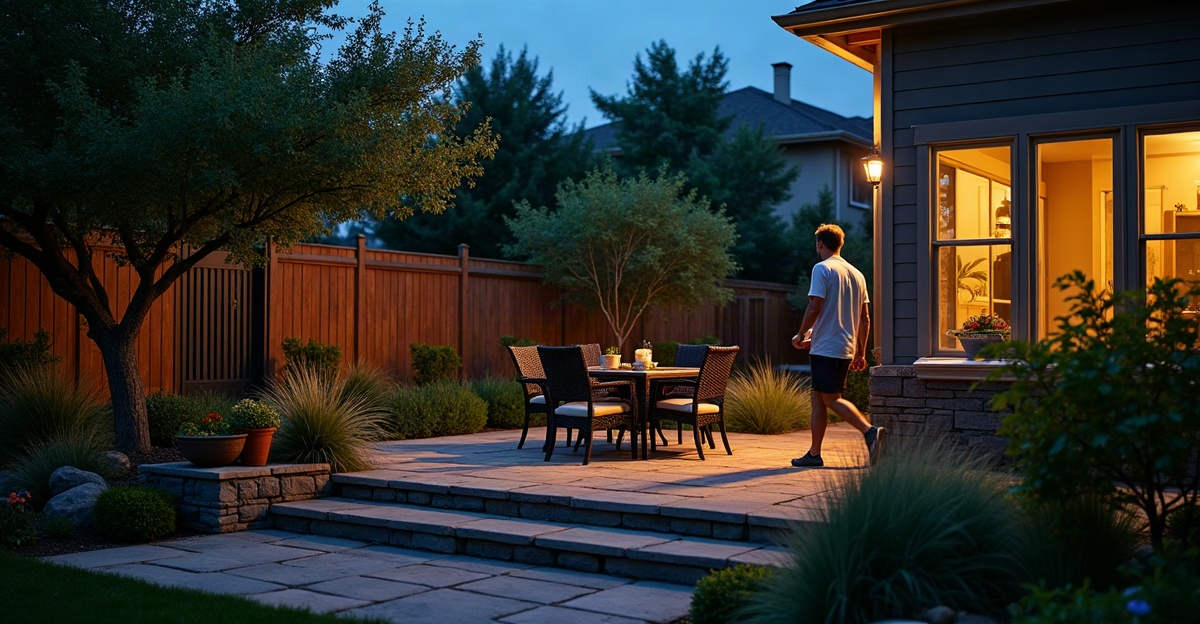
Patios and decks need warm, dimmable light that supports conversation without making guests feel exposed. We layer soft ambient illumination with focused task lighting at grills, outdoor kitchens, food-preparation areas, and dining tables.
Downlighting from a pergola, roof structure, or mature tree can create a gentle moonlit effect. Under-cap lighting and discreet marker fittings define seating walls, deck perimeters, and retaining walls without adding visual clutter. Wall lights work well near practical zones if their light source stays shielded from view.
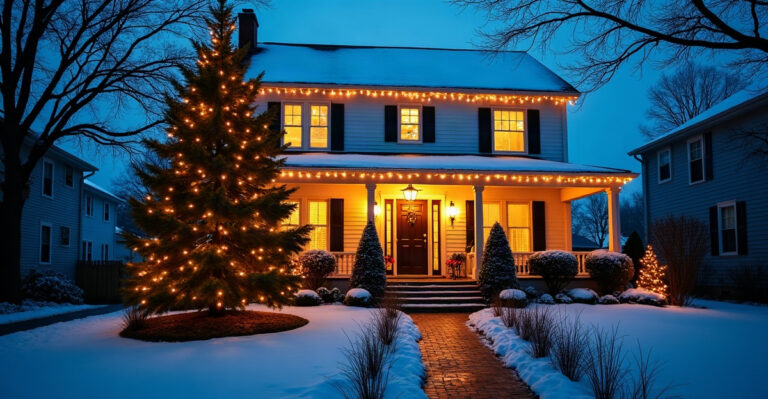
String lights add atmosphere above a dining area or pergola, but they should support rather than replace safety and task lighting. Small yards often benefit from a few carefully placed fittings and warm light on one feature. Larger gardens can use separate patio, dining, path, and planting zones to make the space feel connected without lighting every area at once. For softer entertaining scenes, see our outdoor mood lighting options.
Dimming matters here. Brighter settings help with food preparation and clearing up. Lower settings create a relaxed setting for dining or conversation. Separate zones prevent a practical work area from dictating the brightness of the whole garden.
Highlight Trees, Planting, Walls, Architecture, and Water Features With Restraint
Accent lighting adds depth and texture, but restraint creates the strongest effect. We recommend highlighting one or two focal features, such as a specimen tree, textured wall, sculpture, or feature planting. Darker spaces around them make those elements stand out naturally.
Uplighting reveals trunks, canopies, wall texture, and architectural details. Use it sparingly and keep the source out of direct view. Downlighting from trees, pergolas, or structures produces a softer effect that resembles natural moonlight. Our guide to highlighting landscaping offers further direction on focal-point placement.
Water features require extra care. Use only submersible or water-rated fittings that are suitable for the installation. Position lights to avoid direct glare reflected from the water surface. Permanent pond lighting and complex water-feature work should follow product guidance and receive professional advice.
Gardens change. Shrubs grow, trees develop denser canopies, and seasonal planting can block a fitting or alter its beam. Review aiming periodically as the landscape matures. For project imagery, we recommend annotated garden plans, original diagrams, and real installation photography that shows fixture placement as well as the finished night-time effect. Image descriptions should state what the image shows rather than repeating keywords.
Choose Outdoor Fixtures by Brightness, Light Quality, Weather Protection, and Power Needs
Understanding a few technical terms helps us choose fittings with confidence. Lumens measure light output, but there is no universal lumen target for gardens. Placement, beam angle, surface reflectance, and garden size all affect perceived brightness.
Colour temperature is measured in kelvin. Warmer light generally feels relaxed and welcoming in planting and entertaining areas. Cooler light can appear crisper, though it may feel harsher in a garden. Beam angle describes the spread of light: narrow beams suit focal points, while wider beams cover broader surfaces.
An IP rating indicates how well a fitting resists dust and water. Select a rating suitable for the exact location, whether that is a sheltered patio, exposed garden bed, driveway, front entrance, or pond area. Low-voltage landscape lighting can offer installation flexibility, but it still needs suitable components, correct design, and safe installation. Zoning separates paths, patios, planting, and entrances so each area can operate independently.
Choose durable outdoor-rated fittings that can be cleaned, adjusted, and maintained. More brightness rarely produces a better result. Low-level layers, careful beam direction, and controlled contrast usually feel more comfortable.
Permanent wiring, mains connections, buried cables, transformers, new circuits, and fixed installations should be assessed and completed in line with local regulations by a qualified electrician or appropriate professional. An experienced lighting designer or smart-lighting professional can also help us plan fixture locations before installation begins. For help comparing power options, read solar or wired landscape lights.
Use Smart Controls for Useful Zones, Schedules, Scenes, and Automation
Smart garden lighting is an optional upgrade, not a requirement for every project. It becomes valuable when a garden has several use areas or needs different settings throughout the evening. We can set separate zones for paths, patios, planting, entrances, driveways, and water features.
Scenes can support dining, entertaining, arriving home, or late-night safety. Timers and schedules keep lights running only when needed. Dimming adjusts atmosphere and reduces excessive brightness. Motion sensors work best when used selectively around gates, driveways, and access points.
LED fittings and smart controls can reduce wasted run time through schedules, dimming, zoning, and timers. Actual savings depend on the existing system, operating habits, design, and usage duration. Lighting improves atmosphere, usability, visibility, and curb appeal, but it does not guarantee energy savings or provide complete security.
Maintain the system by cleaning accessible fittings, inspecting equipment after severe weather, checking for plant growth that blocks light output, and revisiting aiming as trees and shrubs mature.
Garden Lighting FAQ
What is the best lighting for garden paths?
Low-glare path lights, bollards, recessed markers, and shielded downlights are strong choices. The best option depends on route width, surface type, and nearby planting.
How can we light a garden without making it too bright?
Use low-level layered lighting, shield fittings, focus on routes and focal points, and retain darker areas between lit features.
What colour temperature is best for outdoor garden lighting?
Warmer light usually suits patios, planting, and relaxed entertaining areas. Cooler light may suit selected practical zones where a crisper appearance is preferred.
Are smart lights suitable for outdoor use?
Yes, provided fittings and control equipment are rated for outdoor conditions and installed correctly.
What IP rating do outdoor garden lights need?
The required rating depends on exposure. Open gardens, driveways, and water-feature areas generally need greater protection than sheltered locations.
Can garden lighting be installed without wiring?
Some solar and battery options can work for limited applications, but performance varies with location, weather, charging conditions, and intended use.
Do we need an electrician to install garden lights?
A qualified electrician or appropriate professional should handle permanent wiring, mains connections, buried cable, new circuits, transformers, and fixed installations in line with local requirements.
How do we stop garden lights from disturbing neighbours?
Aim fixtures downward, shield the light source, avoid bright boundary lighting, use timers, and set motion sensors carefully.
For a whole-garden scheme, renovation, or smart-home integration, speak with Big Pig Smart Lighting about professional lighting design, outdoor zoning, automation, and installation planning.