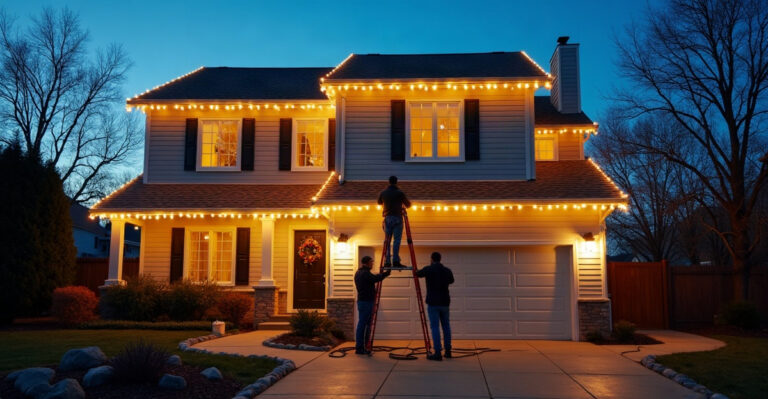
Best Ways to Highlight Landscaping with Outdoor Lighting
Do not modify or enhance the wording; the text must remain identical except for the HTML markup.
Do not convert the first sentence or introductory text into a heading — it must remain a normal paragraph (<p>).
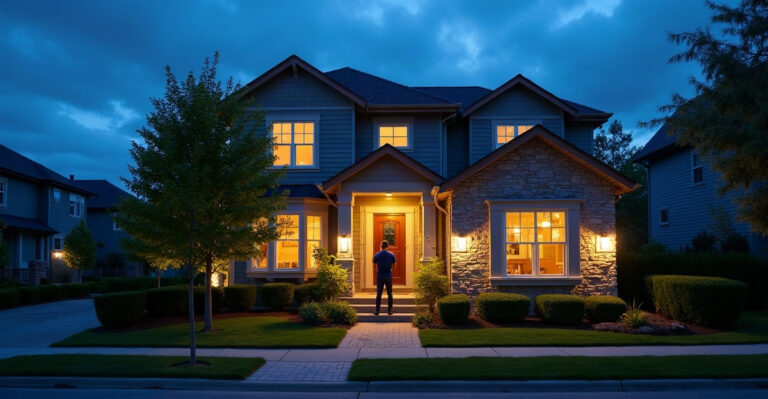
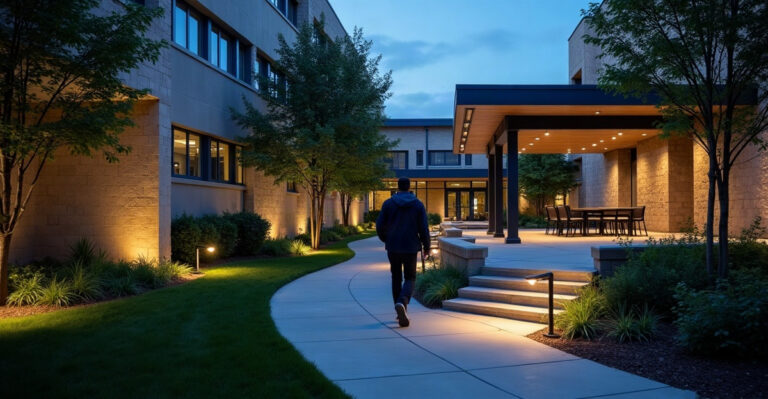
The best ways to highlight landscaping with outdoor lighting start with a clear, deliberate plan. We focus on strong focal points and build layered landscape accent lighting that blends ambient, task, and accent illumination. By combining proven techniques like uplighting, grazing, and moonlighting with the right fixtures, beam spreads, smart controls, and safety planning, we create depth, usability, and lasting performance without flooding the space with excessive light.
Key Takeaways
- We identify and prioritize focal points, then layer ambient, task, and accent lighting to establish structure and visual depth.
- We apply focused techniques such as uplighting, downlighting, grazing, silhouetting, and moonlighting to introduce dimension and controlled drama.
- We select fixtures, beam spreads, and lumen outputs based on feature size, viewing distance, and desired brightness to prevent glare and flat, washed-out effects.
- We integrate smart controls like timers, dimmers, and motion sensors to increase efficiency, flexibility, and property security.
- We balance visual impact with safety, energy efficiency, glare management, and simple maintenance to ensure dependable, long-term performance.
Start with a Clear Lighting Strategy: Assess Focal Points and Layer the Light
Effective landscape accent lighting starts with clarity. We begin by identifying focal points that deserve attention after dark.
These often include mature trees, specimen plants, architectural façades, retaining walls, water features, patios, pathways, and outdoor entertaining areas. Highlighting everything creates clutter. Prioritizing key elements creates impact.
We follow a simple framework:
Assess focal points → Layer lighting (ambient, task, accent) → Integrate control strategy.
Each layer serves a distinct purpose within landscape illumination.
Ambient lighting provides the overall glow. It supports orientation and general visibility without drawing attention to a specific object.
Task lighting focuses on function. It supports safe movement across pathways, stairs, and entries, and improves usability in seating and dining areas.
Accent lighting highlights texture, height, and architectural detail. If a review of what is accent lighting helps clarify this concept, we use it to create contrast and visual depth that bring a yard to life at night.
Good lighting does not chase brightness. It enhances aesthetics, improves functionality, increases safety, and builds ambiance at the same time. Strong garden lighting ideas always consider how these layers work together.
A practical first step keeps planning focused. We sketch the yard at night and mark must-see features. Those zones receive priority in budget and fixture placement. That strategy usually delivers the greatest visual return with the fewest fixtures.
Well-planned landscape accent lighting is a practical upgrade. It expands usable space, improves navigation, strengthens curb appeal, and adds flexibility through smart controls. It is not a luxury reserved for large estates. It is a modern standard for thoughtful outdoor living.
Use Proven Lighting Techniques to Create Depth and Drama
Technique determines how light interacts with surfaces. Placement and beam direction change everything.
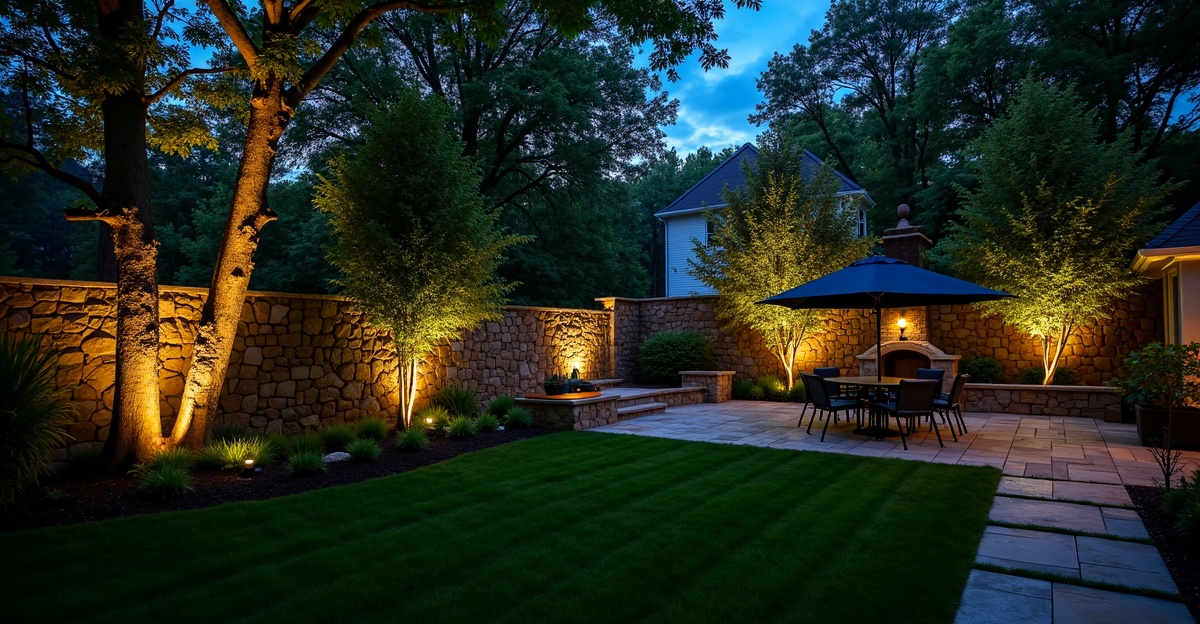
Uplighting places fixtures at ground level and aims them upward. It is ideal for emphasizing tree canopies, columns, and façades. This approach adds height and drama. For trees, we typically start 12–36 inches from the trunk and fine-tune the angle to minimize harsh shadows.
Downlighting mounts fixtures above the space, such as under eaves, pergolas, or within tree branches. It casts light downward for a natural, comfortable effect over patios and seating areas. Proper under eave lighting creates soft coverage without visible glare.
Grazing positions fixtures very close to walls or textured materials. We usually place them within 6–12 inches of the surface to emphasize stone, brick, or wood grain. The tighter the placement, the stronger the shadow detail.
Silhouetting places light between a feature and a vertical surface. A sculptural plant, for example, appears as a dramatic outline against a softly lit wall.
Moonlighting installs fixtures high in trees and directs them downward through branches. The result mimics soft, dappled moonlight across lawns and patios.
Beam angle influences every one of these techniques. A narrow beam works well for tall, narrow features like tree trunks or columns. Wider beam spreads suit broad shrubs, layered plant beds, or expansive façades. Choosing the wrong beam can flatten detail or cause uneven coverage.
We also avoid common mistakes:
- Over-lighting washes out depth and wastes energy.
- Inconsistent color temperature makes a yard feel fragmented.
- Visible glare from exposed light sources reduces comfort and creates visual strain.
Professional landscape accent lighting design controls intensity, direction, and beam spread together. Subtle contrast creates more visual interest than brute brightness.
Choose the Right Fixtures, Beam Angles, and Brightness (Lumens)
Fixture selection supports both design intent and durability.
Spotlights and flood lights highlight trees, architectural details, and vertical elements. Spotlights use narrower beams for precision. Flood lights spread illumination more broadly.
Path lights guide movement along walkways and driveways. They should provide even illumination without harsh glare.
In-ground well lights offer subtle uplighting with minimal visible hardware. They are useful near driveways or tight planting beds.
Step and deck lights improve safety on level changes and gathering areas.
Lumens measure brightness. Higher lumen output produces more light. Smaller shrubs typically require lower lumen output. Large trees and façades demand more lumens, especially when the fixture sits farther away or uses a wider beam spread.
Distance matters. A powerful fixture placed too close can overpower a small plant. A weak fixture placed too far from a tall tree can leave the canopy dark.
Our practical rule is simple: start dimmer than expected, then increase gradually. This prevents the stadium light effect and preserves a comfortable nighttime atmosphere.
Modern LED technology strengthens every layer of landscape illumination. LEDs consume less electricity, last significantly longer than traditional bulbs, and maintain consistent color performance over time. Reduced maintenance keeps operating costs predictable.
Weather resistance also matters. We choose fixtures with appropriate IP ratings for outdoor exposure and position them where maintenance access remains convenient. Lens cleaning and connection checks should never require major yard disruption.
Power source decisions play a role as well. A clear comparison of solar or wired landscape lights helps clarify trade-offs, and reviewing low-voltage vs. high-voltage outdoor lighting supports system planning. In most residential applications, low-voltage systems provide flexibility, efficiency, and easier expansion.
For homeowners planning upgrades or new installations, our residential outdoor lighting solutions align fixture performance with architectural style and long-term reliability.
Integrate Smart Controls for Convenience, Efficiency, and Flexibility
Smart controls bring precision to outdoor lighting systems.
Timers automate on and off cycles. Systems can activate at sunset and power down at a defined time. That consistency improves security and saves energy.
Dimming adjusts brightness based on activity. Lower levels create relaxed evenings. Higher levels support entertaining or late-night use.
Motion sensors activate pathway lighting when movement is detected. This adds a layer of security and reduces unnecessary run time. Integrated outdoor security lighting strengthens protection without keeping full brightness active all night.
App control allows real-time adjustments. Lighting scenes can shift the property from everyday mode to entertaining mode with one command. Integration with broader smart home systems expands control even further.
Smart landscape illumination simplifies changes. We avoid rewiring to adjust schedules or tweak brightness. Software handles those refinements.
Energy efficiency improves naturally. Lights operate only when needed. Dimming reduces power consumption. Seasonal adjustments require only a few taps rather than manual timer resets.
Control systems are not luxury add-ons. They are practical upgrades that improve usability, flexibility, and cost management.
For new construction or renovations, we plan transformer capacity and wiring paths with future expansion in mind. Additional zones, accent features, or patio upgrades should integrate smoothly without major reconstruction.
Balance Beauty with Safety, Sustainability, and Long-Term Performance
A refined lighting design respects neighbors and the broader environment.
Glare control starts with shielding light sources and aiming fixtures carefully. Light should illuminate surfaces, not shine directly into windows or adjacent properties.
Targeted beam angles and dimming reduce excess skyglow. Focused illumination highlights important features while limiting wasted light.
Safety remains a priority throughout any design. Steps and level transitions require even coverage. Pathways and driveways need clear visibility to prevent trips or falls. Subtle, consistent task lighting supports confident movement.
Sustainability stems from thoughtful fixture selection and smart scheduling. LED systems lower electricity use. Controlled run times reduce operating hours.
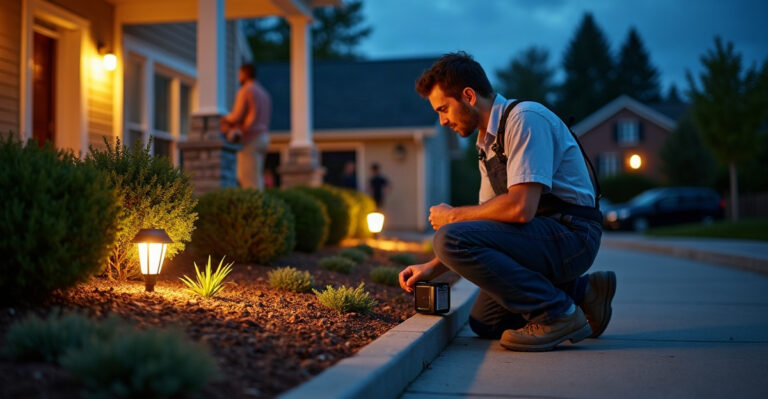
Maintenance planning protects long-term performance. We place fixtures where they can be accessed easily. Periodic lens cleaning prevents debris buildup from reducing output. Electrical connections should be checked regularly to maintain reliability.
Good garden lighting ideas extend beyond inspiration photos. Every lighting decision must support function, aesthetics, and usability at the same time.
A practical next step keeps planning grounded. Walk the property at night and observe where darkness limits usability or hides key features. After identifying priority zones, consulting a professional for comprehensive outdoor accent lighting ensures fixture placement, beam selection, and control integration align with long-term goals. For complex layouts or expansive properties, collaboration provides clarity, efficiency, and lasting performance.
Thoughtful landscape accent lighting transforms outdoor spaces into safer, more usable, and visually striking environments long after the sun sets.