Commercial Lighting Ideas That Attract More Customers
Commercial lighting ideas that attract more customers rely on strategic design principles that shape first impressions, influence perceived safety, and strengthen brand image within seconds of arrival. We combine layered exterior lighting, the right color temperatures, focused storefront displays, and smart controls to guide attention, improve visibility, and create an environment that drives customer engagement.
Key Takeaways
- First impressions depend on storefront brightness, uniform light levels, contrast, and color temperature. We use these elements to reinforce perceived safety and professionalism.
- Layered lighting systems—ambient, task, accent, and security—improve visibility, highlight key features, and strengthen brand presence without causing glare.
- Warm lighting creates comfort in hospitality settings, while cooler lighting improves clarity and focus in retail and office spaces.
- Smart controls, scheduling, dimming, and color tuning give us flexibility, protect consistent brand presentation, and reduce energy use.
- We avoid over-lighting, uneven illumination, poor color selection, and complicated controls that staff struggle to operate, since these issues can discourage customers and weaken brand image.
How Strategic Lighting Influences Customer Behavior and First Impressions
Commercial lighting ideas shape how a business is perceived before a word is spoken or a product is touched. Lighting affects visibility, curb appeal, ambiance, safety, and overall brand perception within seconds of arrival.
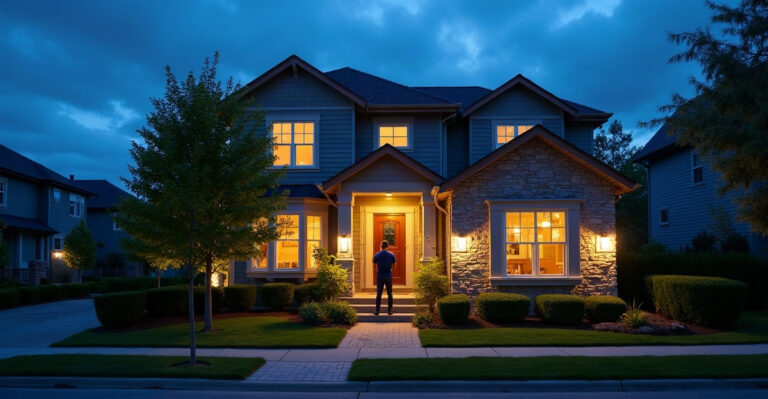
First impressions form quickly. After dark, storefront lighting often becomes the dominant visual cue. A bright, well-lit façade signals safety and professionalism. Dim or uneven lighting can suggest neglect, even if the business itself is high quality.
Effective lighting design follows proven principles:
- Contrast directs attention.
- Focal points guide the eye to key products or architectural features.
- Color temperature sets the emotional tone.
- Illumination levels impact comfort and clarity.
- Uniformity creates consistency, while strategic contrast creates interest.
Warm lighting between 2700K and 3000K supports comfort and relaxation. Restaurants and hospitality spaces benefit from this softer glow because it encourages guests to linger. Cooler lighting between 3500K and 4000K supports focus and clarity, which works well in retail stores and office environments.
Lighting influences customer perception and overall experience, but it does not guarantee higher sales on its own. Strategic implementation strengthens brand presence and encourages engagement. Weak implementation, however, can undermine even the strongest business model.
We approach commercial lighting ideas as a blend of psychology, design, and functionality. The goal is clear visibility, emotional alignment with the brand, and a smooth pathway from sidewalk to sales counter.
Storefront Lighting Design Strategies That Increase Visibility and Foot Traffic
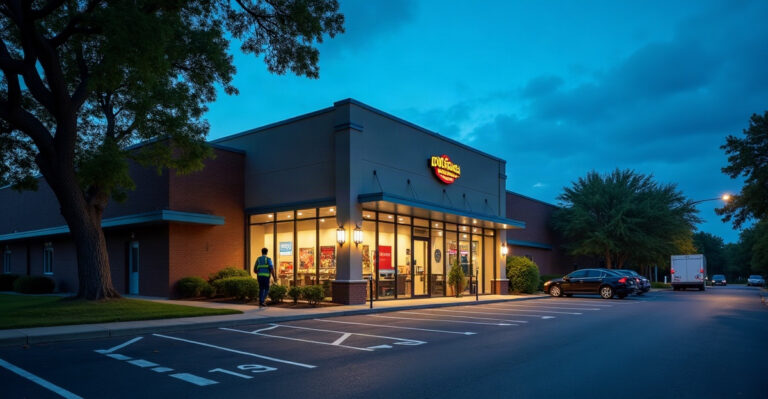
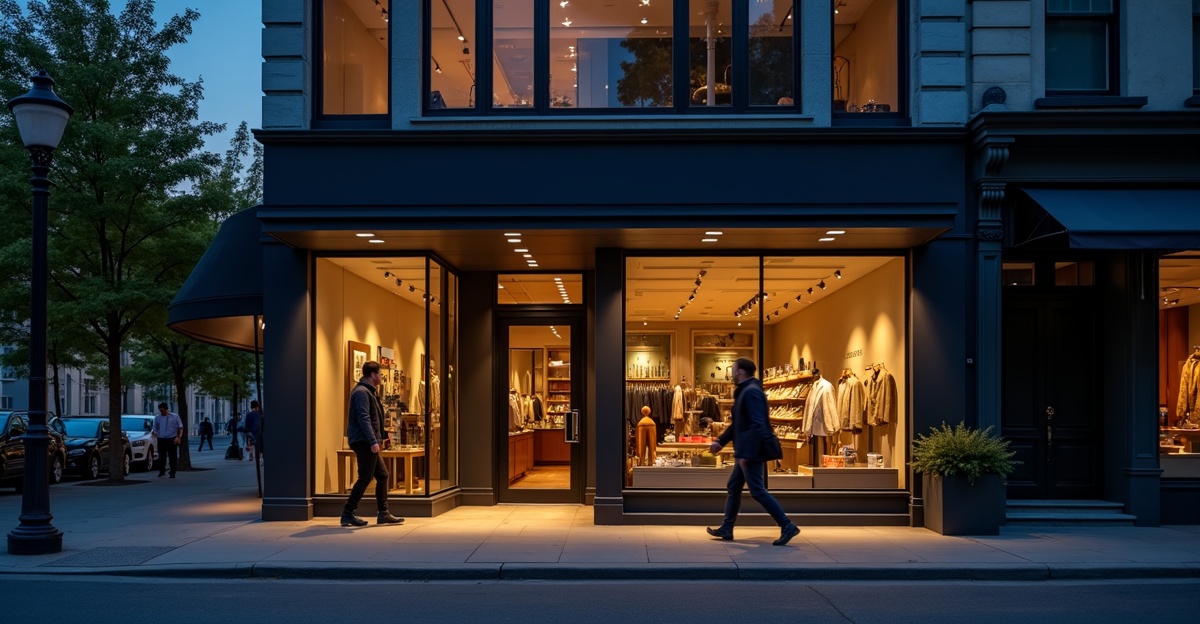
Strong storefront lighting design draws attention from across the street and invites customers closer. The key is balance. The display should stand out without overwhelming passersby.
Window displays benefit from focused accent lighting that creates strong focal points and depth. Highlight hero products at eye level. Angle fixtures carefully to avoid harsh shadows on mannequins or shelving. Shadows that distort products reduce perceived quality.
Layered lighting inside display windows strengthens visual appeal. We recommend combining:
- Ambient base light for overall visibility
- Accent spots to highlight priority items
- Subtle backlighting to create dimension and separation
Each layer plays a specific role. Together, they create depth rather than a flat, washed-out look.
Clear, even sign illumination improves readability from a distance. Avoid bright hotspots or glare that reduces legibility. Consistent brightness across lettering builds credibility and reinforces the brand. For guidance specific to signage, see permanent lighting for commercial signs.
Dynamic lighting effects can also increase attention. Subtle color tuning or programmed intensity shifts help a storefront stand out in a competitive strip or downtown block. Effects should remain controlled and professional. Flashing or overly saturated colors can feel distracting or unrefined.
Installation practices matter as much as design. Exterior-facing systems must comply with local brightness and light spill regulations. Fixtures should direct light onto displays, not into pedestrians’ eyes or neighboring properties.
For business owners evaluating whether long-term installations make sense, explore permanent lighting for businesses to understand how permanent systems support year-round visibility.
Layered Business Exterior Lighting for Ambiance, Safety, and Brand Presence
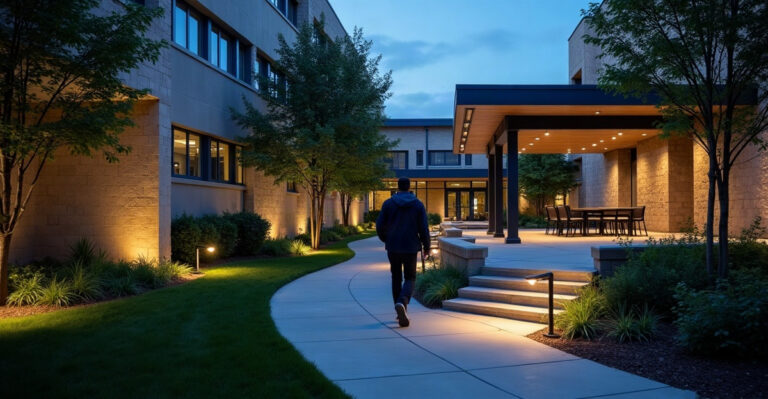
Business exterior lighting should function as a layered system. Each layer supports visibility, safety, and brand expression in a specific way.
Ambient lighting provides overall visibility for building façades and primary exterior surfaces. It creates a consistent baseline level of illumination so the property feels active and open.
Task lighting focuses on functional areas. Entrances, stairs, ramps, payment kiosks, and pathways require clear, directed light to prevent accidents and reduce hesitation.
Accent lighting highlights architectural features, landscaping, and brand elements. This layer builds identity. A thoughtfully lit façade can communicate quality and confidence.
Security lighting covers parking areas, rear access points, and darker corners of the property. Proper placement reduces shadowed zones and increases perceived safety without creating glare.
Balanced illumination levels matter. Over-lighting can create discomfort and visual fatigue. Excessive brightness may also produce glare, reducing visibility instead of improving it.
Clear pathways and well-lit entrances help customers transition smoothly from outdoors to indoors. Consistent lighting levels at entry points prevent abrupt brightness shifts that can temporarily impair vision.
Businesses exploring integrated exterior solutions can review our approach to commercial outdoor lighting and see how layered systems enhance both safety and brand presence. For properties with specific risk areas, adding targeted outdoor security lighting strengthens protection without compromising aesthetics.
Effective business exterior lighting combines ambiance and practicality. Each layer should support the others rather than compete for attention.
Smart Lighting Controls and Automation for Flexibility and Efficiency
Modern lighting systems should adapt to business needs throughout the day. Smart lighting controls make that possible without adding complexity for staff.
Scheduling allows lights to increase gradually at dusk and power down automatically during closing hours. Dimming controls adjust brightness during low-traffic periods, reducing energy use while maintaining a welcoming appearance.
Motion sensors add light only where movement occurs. Daylight harvesting systems reduce artificial illumination when natural light is sufficient. Color tuning allows businesses to shift tone for seasonal campaigns or promotional events.
Restaurants, for example, may adjust color temperature or intensity to support themed nights or holiday promotions. Offices benefit from cooler light during peak working hours and slightly warmer tones during evening transitions.
Automation also simplifies management. Staff do not need to manually adjust multiple zones. Pre-set scenes ensure consistent brand presentation every night.
Energy efficiency improves with intelligent control. LED systems combined with smart scheduling reduce long-term operational costs. They also help businesses meet sustainability goals without sacrificing visibility.
Owners interested in extended patio experiences can explore how permanent lighting supports outdoor dining, and hospitality leaders can review how permanent lighting enhances restaurants to strengthen guest satisfaction year-round.
Smart lighting should feel intuitive. Controls must remain user-friendly so teams can make adjustments confidently without technical training.
Energy Efficiency, Compliance, and Practical Implementation Tips
LED technology remains the foundation of modern commercial lighting ideas. LEDs consume less energy and last significantly longer than traditional lighting sources. Reduced maintenance and replacement intervals translate into lower operating costs over time.
Compliance cannot be overlooked. Local building codes, safety standards, and exterior light spill regulations define maximum brightness levels and acceptable fixture placement. Violations can result in fines or mandatory adjustments.
Installation strategy affects comfort and clarity. Avoid directing light straight into customers’ eyes. Shield fixtures when necessary to control spill. Maintain consistent illumination across entrances to prevent dark gaps that undermine perceived safety.
Different business types require distinct approaches:
- Retail stores benefit from contrast that highlights merchandise.
- Restaurants require warm, layered ambiance that supports relaxation.
- Offices need even illumination that reduces glare on screens.
- Salons and hospitality spaces demand accurate color rendering to reflect true tones.
No single configuration fits every property. We evaluate layout, brand identity, operating hours, and surrounding light conditions before recommending final placement.
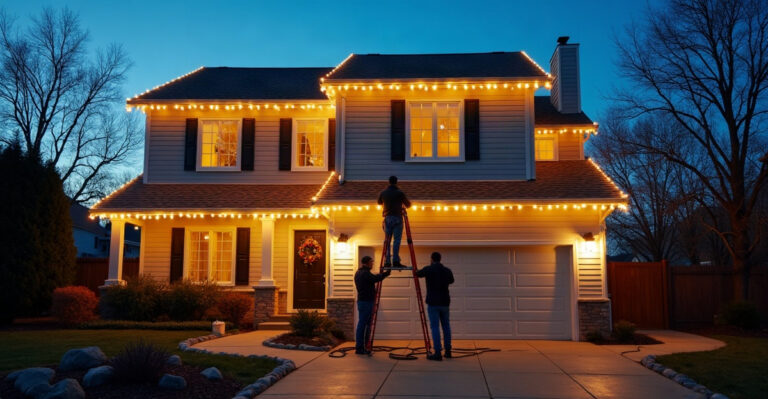
Seasonal flexibility also matters. Systems like outdoor holiday lights can integrate into permanent installations so businesses adapt quickly without temporary setups each year.
If guidance is needed for planning or compliance questions, we encourage reaching out through our lighting consultation team for direct support.
Effective commercial lighting ideas balance aesthetics, functionality, energy efficiency, and compliance. Each factor must support the others to create a cohesive result.
Common Commercial Lighting Mistakes That Deter Customers
Many businesses focus heavily on appearance while overlooking functionality, efficiency, or regulation compliance. Attractive fixtures alone do not ensure effective performance.
Over-lighting ranks among the most common problems. Excessive brightness creates glare, washes out display details, and causes visual discomfort. Instead of drawing customers in, it pushes them away.
Incorrect color temperature can undermine the intended mood. Very cool lighting in hospitality spaces can reduce comfort. Overly warm lighting in certain retail settings may distort product color and reduce clarity.
Uneven illumination creates dark patches that affect perceived safety. Customers often avoid poorly lit entrances or parking areas, even if the business itself is reputable.
Maintenance also impacts brand perception. Flickering fixtures, inconsistent brightness, or burned-out sections suggest inattention. Routine inspections preserve a professional image.
Complex control systems that staff cannot easily manage create frustration. Lighting should support operations, not complicate them. Simple interfaces and clearly defined scenes improve consistency.
Measured, evidence-informed decisions produce the best outcomes. Lighting influences behavior and perception, but it must align with brand goals and operational needs. With strategic planning and disciplined execution, commercial lighting ideas can significantly strengthen customer experience and long-term brand value.