Under-Eave Lighting vs Traditional Exterior Fixtures
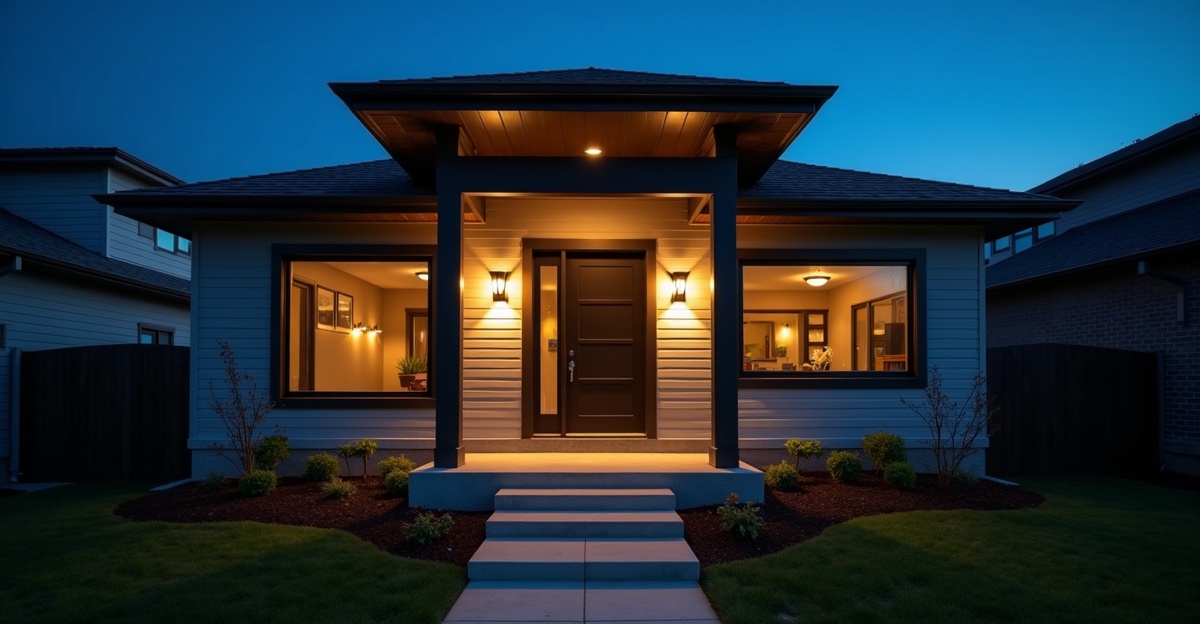
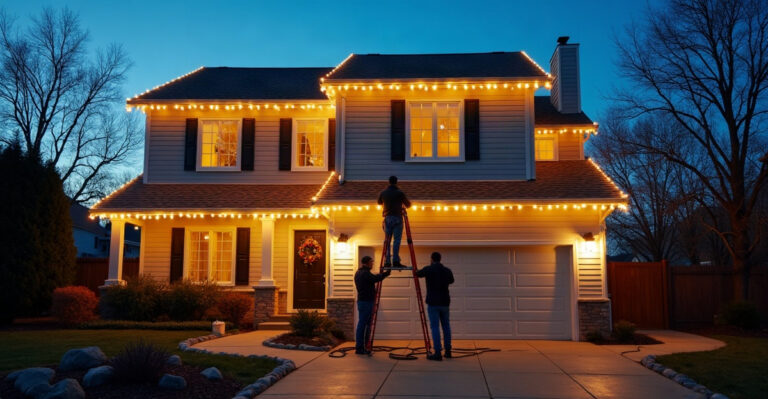
Under eave lighting vs wall lights creates an important decision point in exterior lighting design. Placement shapes beam spread, visual impact, installation strategy, and long-term flexibility. We evaluate soffit lighting and wall-mounted fixtures based on architectural fit, smart control options, maintenance planning, and security coverage so we can match the right system to each property.
Key Takeaways
- Under eave lighting installs beneath the roof overhang for concealed, even downlighting or wall washing, while wall lights mount directly to vertical surfaces and cast controlled pools of light.
- Both systems produce similar lumen output (typically 200–800+ lumens), yet beam angle, spacing, and mounting height ultimately define actual brightness and shadow control.
- We recommend soffit lighting during new construction or major renovations because it supports advanced smart controls, zoning, and future expandability.
- Wall-mounted fixtures typically retrofit easily using existing junction boxes, though advanced smart upgrades or style changes may require full fixture replacement.
- We often specify a hybrid layout—soffit lighting for perimeter consistency and wall lights for entry emphasis—to achieve strong visual balance, security coverage, and performance.
Under eave lighting vs wall lights is one of the most common exterior lighting comparisons we help property owners evaluate. Each system delivers distinct benefits in design, performance, and long-term flexibility.
Under eave lighting—often called soffit lighting—installs beneath the roof overhang. Wall lights mount directly to vertical exterior surfaces. That fundamental placement difference shapes everything from beam spread to maintenance access.
The table below offers a clear side-by-side snapshot.
| Category | Under Eave (Soffit) Lighting | Traditional Wall Lights |
|---|---|---|
| Design Visibility | Low-profile, often recessed or concealed | Decorative fixture visible on façade |
| Brightness Distribution | Even downlighting or wall wash | Focused pools of light, directional |
| Typical Lumen Output | 200–800+ lumens per fixture | 200–800+ lumens per fixture |
| Beam Spread | 15–40° (accent) or 60–120° (wash) | Varies by fixture; often 40–120° |
| Installation Stage | Ideal during new build or major renovation; retrofit possible with planning | Simple retrofit using existing junction boxes |
| Smart Compatibility | Commonly integrated with app control, scheduling, dimming | Available in smart versions; some require fixture replacement |
| Maintenance Access | Ladder access; may require soffit panel work | Generally reachable and individually replaceable |
| General Cost Range | Higher upfront; lower long-term upgrade costs | Lower upfront; upgrades may require full fixture replacement |
Both systems can produce 200–400 lumens for accent lighting or 500–800+ lumens for security and larger areas. The difference lies less in raw brightness and more in distribution, aesthetics, and integration potential.
For homeowners, builders, and designers, the right choice depends on architectural style, renovation stage, and how much flexibility we want over time.
What Is Under Eave (Soffit) Lighting?
Under eave lighting consists of recessed or surface-mounted fixtures installed into the soffit—the horizontal underside of a roof overhang. These lights provide controlled downlighting or wall-washing illumination along the building perimeter.
We integrate them evenly along the roofline to create consistent, glare-reduced lighting. Because fixtures are recessed or flush-mounted, they maintain a clean architectural appearance. Many systems operate on low-voltage wiring, which improves efficiency and allows safer, more flexible layouts. For a deeper look at electrical differences, see low-voltage vs high-voltage outdoor lighting.
Light distribution plays a major role. A narrow 15–40° beam highlights columns or architectural details. A wider 60–120° beam spreads illumination evenly across façades, pathways, or patios. Recessed positioning reduces glare and minimizes harsh shadows.
Installation requires planning. We need adequate soffit depth, space for wiring behind the fascia, and careful attention to insulation and moisture barriers. New construction makes this process straightforward. Retrofit installations on finished homes require more coordination, especially if attic access is limited.
Modern systems frequently support smart integration. We can group zones, set schedules, control brightness, and in some cases adjust color temperature or RGB output through apps or automation platforms. For homeowners researching permanent systems, permanent trim lighting for homes explains how integrated roofline systems function year-round.
Under eave lighting works especially well for:
- Contemporary façades
- Clean roofline illumination
- Subtle perimeter security
- Outdoor entertaining
- Consistent architectural highlighting
Our under eave lighting services focus on creating balanced brightness without visible hardware interrupting the home’s lines.
What Are Traditional Wall-Mounted Exterior Lights?
Traditional wall-mounted exterior lights attach directly to a vertical surface through a standard wall junction box. These fixtures become a visible architectural feature.
Common styles include lantern sconces, coach lights, bulkhead fixtures, and flush mounts. They often reinforce traditional or transitional design themes. On brick colonials or craftsman façades, decorative wall lights can enhance curb appeal and create stylistic consistency.
Performance depends heavily on beam angle and mounting height. Many wall fixtures project light outward or downward, creating pronounced pools of illumination near entry doors, garage bays, or patios. However, improper placement may produce hot spots, glare, or dark gaps between fixtures.
Installation is usually simpler than soffit lighting. Existing homes often have junction boxes near doors or garages, making replacements straightforward. Most units operate on line-voltage circuits tied into standard home wiring.
Wall-mounted lights are ideal for:
- Entry doors
- Garage fronts
- Covered patios
- Decorative emphasis areas
- Clear task lighting near access points
While smart-compatible versions exist, major upgrades may require full fixture replacement rather than simple software or driver updates.
Light Distribution, Aesthetic Impact, and Real-World Use Cases
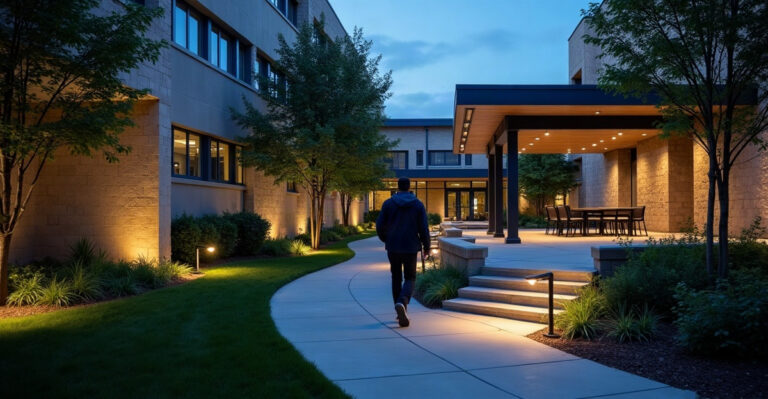
Soffit lighting delivers a wide, uniform wash of light. Because fixtures sit under the overhang, hardware remains less visible, supporting modern and minimalist home designs. For additional inspiration, review minimalist outdoor lighting setups that emphasize clean lines and balanced illumination.
Wall lights create focused illumination and stronger visual contrast. The fixture itself becomes part of the design statement. On traditional façades, this decorative presence can anchor the exterior visually.
Beam spread influences real-world results. Narrow beams between 15–40° accent architectural details like stonework or columns. Wider beams between 60–120° illuminate broader surfaces such as driveways or walkways. Spacing and mounting height directly affect lumen performance, even when fixture output remains within the 200–800+ lumen range.
Security considerations also differ. Are under eave lights effective for security? Yes—when spaced for continuous perimeter coverage, they reduce shadows and dark pockets. Wall fixtures, however, can deliver strong localized brightness near doorways.
For direct security planning, our outdoor security lighting solutions combine uniform perimeter lighting with concentrated entry coverage.
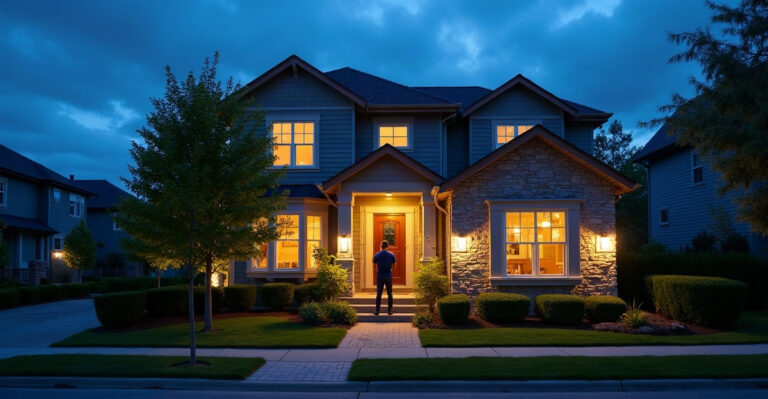
Architectural compatibility matters just as much as brightness. Modern homes often benefit from integrated soffit lighting that preserves simple lines. Traditional designs may align more naturally with decorative wall-mounted fixtures. Many properties benefit from a hybrid approach, combining soffit lighting for perimeter consistency with wall lights at entrance doors for visual emphasis.
Installation Complexity, Smart Integration, and Upgrade Flexibility
Installation timing changes everything. New construction favors soffit lighting because wiring and spacing can be planned before drywall and fascia are completed. Concealed wiring creates a seamless finish.
Existing homes may find wall lights easier to replace using current junction boxes. Retrofitting soffit lighting remains possible but requires evaluation of attic access, soffit depth, and structural clearances.
Structural considerations include:
- Sufficient soffit cavity depth
- Proper insulation clearance
- Moisture protection and weather sealing
- Adequate wall substrate strength for mounted fixtures
Smart integration continues to shift the landscape. Many modern systems support Wi‑Fi, Zigbee, Z‑Wave, or proprietary control platforms. These allow grouping zones, adjusting brightness, setting timers, and activating dusk-to-dawn or motion sensors.
Soffit-based systems often provide stronger long-term flexibility because we can update firmware, integrate new automation scenes, or add additional sections along the roofline. Traditional wall fixtures may require complete replacement if we want color-changing or advanced control features.
Clear terminology improves decision-making. Lumens measure brightness. Beam angle determines how that brightness spreads. IP rating refers to Ingress Protection—the fixture’s resistance to dust and moisture. Low-voltage wiring delivers power at reduced electrical levels, improving safety and efficiency for many residential systems.
For roofline-focused concepts, explore roofline lighting ideas to see how strategic placement transforms night-time curb appeal.
Energy Efficiency, Maintenance, and Long-Term Durability
Most modern exterior fixtures use LED technology. Typical consumption falls between 5–15 watts per fixture, with lifespans ranging from 25,000–50,000+ hours. That significantly reduces operating costs compared to older halogen or incandescent systems.
Low-voltage soffit lighting systems can reduce energy draw further, especially when combined with automated dimming schedules. For homeowners comparing floodlights and integrated systems, permanent lighting vs flood lights helps clarify performance differences.
Weather exposure also affects durability. Soffit lighting benefits from partial protection under the roof overhang, reducing direct exposure to rain and intense UV radiation. Wall-mounted fixtures face more direct environmental stress, especially in coastal climates. Material quality and appropriate IP ratings become critical.
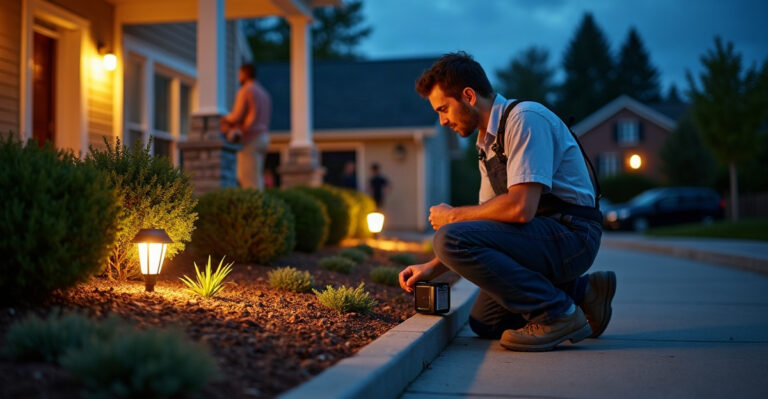
Maintenance access differs as well. Soffit fixtures may require ladder access and occasional panel removal for servicing. Wall lights are generally easier to reach and replace individually. Driver longevity, corrosion resistance, and sealed housings influence long-term reliability in both systems.
Is soffit lighting better than wall lights? The answer depends on architectural style, renovation stage, budget, automation goals, and maintenance preferences. An exterior lighting comparison must weigh visibility, distribution, control options, and durability.
We approach every project with that balance in mind. Whether prioritizing seamless soffit lighting or decorative wall fixtures, the goal remains consistent: reliable performance, cohesive design, and lasting value across the entire property.