Low Voltage Vs High Voltage Outdoor Lighting Explained
Low voltage outdoor lighting versus high voltage comes down to how we deliver power, how we install components, and how we manage electricity across a property. A 12V system uses a transformer to step down standard household current, while a 120V or 230V system connects directly to the main electrical supply. In this guide to Low Voltage vs High Voltage Outdoor Lighting Explained, we outline differences in safety, brightness, installation demands, cost, and ideal use cases so we can select the right setup for a landscape or commercial project.
Key Takeaways
- Low voltage (12V) systems use a transformer, support shallow cable runs, and make expansion simple for pathways, gardens, and patios.
- High voltage (120V/230V) systems connect to dedicated circuits, usually require licensed electricians, and fit large properties or commercial sites.
- Brightness and efficiency depend on LED wattage and fixture design rather than voltage alone, though we must manage voltage drop on longer 12V runs.
- Both systems operate safely with proper outdoor-rated components and correct installation, but high voltage presents greater shock risk if cables become damaged or mishandled.
- Total cost depends on materials, labor, property size, and expansion plans, with 12V systems often simplifying residential installs and high voltage reducing complexity for long distances or heavier electrical loads.
Understanding Outdoor Lighting Voltage Differences: What 12V and 120V/230V Really Mean
Low voltage systems typically operate at 12 volts. High voltage systems usually run at 120 volts in North America or 230 volts in many other regions.
Voltage refers to electrical pressure. It’s the force that pushes electricity through wiring into a fixture so it can produce light. In practical terms, voltage affects how systems are powered, wired, and installed.
In the discussion of low voltage outdoor lighting vs high voltage, the biggest structural difference is how power reaches the fixture. Low voltage systems require a transformer. That transformer steps standard household current (120V or 230V) down to 12V before it travels through landscape cabling.
High voltage systems connect directly to the property’s main electrical supply. There’s no step-down transformer in between the panel and the light fixture.
Neither approach is universally better. The right choice depends on property size, design goals, required brightness, existing infrastructure, and expansion plans. We see both systems perform exceptionally well when matched correctly to the project.
How Each System Is Powered and Installed
Low Voltage System Installation
Low voltage outdoor lighting relies on a transformer. That transformer can be plug-in or hardwired, depending on the setup and local code requirements.
Installations usually involve:
- Mounting the transformer near a GFCI-protected outlet or wiring it directly to a circuit.
- Running low voltage cable through shallow trenches.
- Connecting fixtures with clip-style or sealed connectors.
Cable can often be buried just a few inches below grade, depending on regional standards. The wire gauge must match the load and run length to prevent voltage drop. Longer runs or higher wattage loads require thicker cable.
Many homeowners consider low voltage lighting more DIY-friendly for pathway lights or garden accents—when local regulations allow. However, code requirements vary by region. We recommend checking standards carefully before installing or modifying any system. For those integrating automation, it also helps to review whether an electrician is required for smart lighting in the intended setup.
High Voltage System Installation
High voltage outdoor lighting connects directly to a 120V or 230V circuit. That means no transformer is used between the panel and the fixture.
Installation often includes:
- Dedicated outdoor-rated circuits.
- Deeper burial depths for direct-burial cable.
- Conduit protection in many jurisdictions.
- Weather-sealed junction boxes and fittings.
Because of the higher voltage and stricter code requirements, a licensed electrician typically handles installation. This approach is common in larger residential estates and commercial properties with existing outdoor circuits.
From a scalability standpoint, high voltage systems can simplify long-distance runs. They’re often integrated directly into automation and building management systems at the panel level.
Safety Considerations and Risk Differences
Low voltage systems are generally considered lower risk for electric shock. At 12V, the potential for severe shock is reduced. That said, improper installation can still cause hazards. Loose connections, overloaded transformers, or damaged cable can lead to overheating or electrical faults.
High voltage systems carry greater shock risk if damaged or incorrectly installed. Exposed wiring, failed conduit, or compromised junction boxes present serious safety concerns.
Outdoor lighting operates in demanding conditions. Moisture, irrigation overspray, freeze-thaw cycles, and soil movement all affect wiring integrity. We always specify:
- Outdoor-rated, weather-sealed fixtures.
- Properly protected cable.
- Secure, code-compliant junction boxes.
- Fixtures with appropriate ingress protection (IP) ratings when exposure is significant.
The answer isn’t that one voltage is “safe” and the other isn’t. Both systems are safe when properly designed, installed, and maintained according to local standards. The key is correct installation from the start.
Brightness, Performance, and Energy Efficiency Realities
Brightness depends on lumen output, beam angle, and fixture design. Voltage alone doesn’t determine performance.
Here are typical lumen ranges in outdoor settings:
- Pathway lighting: 100–300 lumens per fixture.
- Accent lighting: 200–600 lumens.
- Flood or architectural lighting: 700–2,000+ lumens depending on beam spread and purpose.
Modern LED technology allows both 12V and 120V/230V systems to reach these output levels efficiently. In most residential landscape applications, low voltage outdoor lighting is more than bright enough. Pathways, trees, patios, and architectural accents rarely require high voltage solely for brightness.
Energy consumption depends primarily on wattage and total fixture count. A 7-watt LED uses 7 watts whether it runs on a 12V system through a transformer or directly on a 120V circuit. Efficiency comes from LED quality and system design, not just voltage selection.
Voltage drop is one technical consideration for low voltage. Over longer cable runs, electrical pressure decreases slightly. If cable gauge is undersized or the transformer is overloaded, fixtures at the end of a run may appear dimmer. Proper transformer sizing and appropriate cable selection solve this issue.
For very large properties or commercial campuses, high voltage systems can simplify extended runs without worrying about voltage drop over distance. That’s one reason we often use high voltage for commercial outdoor lighting projects where coverage spans large areas.
Cost Breakdown, Maintenance, and Long-Term Considerations
Equipment costs vary by system design. Low voltage systems require a transformer, which adds to the upfront materials cost. Fixture pricing is often comparable between low voltage LED and high voltage LED models.
High voltage systems skip the transformer but may involve higher installation costs. Deeper trenching, conduit, and electrician labor increase total expense in many cases.
Labor impacts the overall budget significantly. Low voltage systems can reduce install time in residential settings. High voltage projects typically require licensed electrician involvement from start to finish.
For deeper analysis of professional installation value, we explain when professional landscape lighting is worth it. Budget planning also benefits from understanding how much professional outdoor lighting costs across different property types.
Maintenance differs in flexibility. Low voltage systems allow easier relocation and expansion. Adding a fixture often means tapping into an existing run and recalculating load capacity at the transformer.
High voltage systems are often used for permanent architectural lighting. Once installed, they’re durable and stable, though modifications may require more involved electrical work.
Operational costs depend on total wattage and hours of use. Running ten 6-watt fixtures for five hours per night costs the same in energy whether the fixtures are powered by stepped-down 12V or direct 120V.
Long-term planning should consider:
- Total property size.
- Existing outdoor circuits.
- Future automation plans.
- Expansion expectations.
- Aesthetic goals.
We match the system to these variables rather than defaulting to one approach.
Best-Use Scenarios and Side-by-Side Comparison of Low Voltage Outdoor Lighting vs High Voltage
Low voltage systems excel in flexible, design-focused environments. High voltage systems shine in larger-scale or infrastructure-heavy applications. Understanding outdoor lighting voltage differences helps clarify where each performs best.
Low voltage is ideal for:
- Pathway lighting.
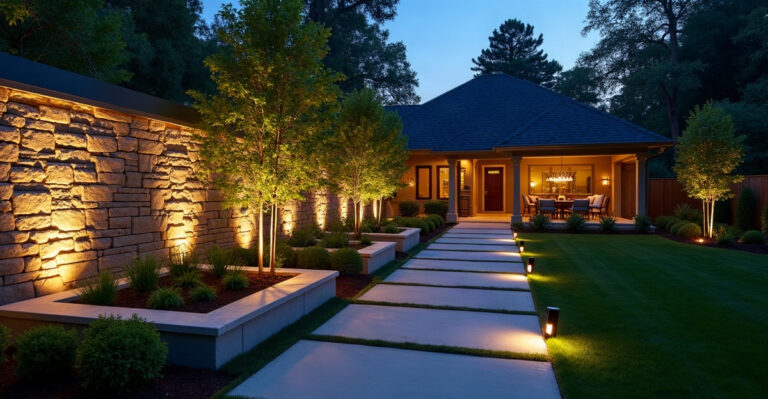
- Garden and landscape accents.
- Deck and patio lighting.
- Phased projects that may expand over time.
High voltage often fits:
- Large architectural façades.
- Powerful floodlighting.
- Commercial-scale properties.
- Sites with existing dedicated outdoor circuits.
In some cases, permanent architectural systems can reduce the need for standalone floodlights. We explore whether permanent lighting can replace flood lights for properties that want streamlined installations.
Below is a simplified comparison:
Low Voltage (12V)
Transformer Required: Yes
Typical Applications: Pathways, gardens, patios, accents
Installation Complexity: Often DIY-friendly where permitted; professional recommended for larger systems
Brightness Capability: Excellent for most residential uses
Expansion Flexibility: High; easy to add fixtures
Relative Risk Level: Lower shock risk, though still requires proper installation
High Voltage (120V/230V)
Transformer Required: No
Typical Applications: Large façades, floodlighting, commercial properties
Installation Complexity: Professional installation recommended in most cases
Brightness Capability: High; ideal for large coverage areas
Expansion Flexibility: Moderate; modifications may require electrician
Relative Risk Level: Higher shock risk if damaged; safe when properly installed
When do we need high voltage outdoor lighting?
We typically specify high voltage for large properties, powerful security lighting, or commercial projects where long runs and higher load capacity make direct supply more practical.
Can we mix low and high voltage systems on the same property?
Yes. Many properties use low voltage for landscape accents and high voltage for major architectural or security lighting. The systems remain electrically separate but work together visually and functionally.
For homeowners focused on gardens and patios, we frequently recommend low voltage within residential outdoor lighting plans. Larger facilities often move straight to high voltage under structured outdoor security lighting strategies.
Still unsure which system suits the project? A professional lighting plan helps balance safety, performance, cost, and long-term flexibility. We’re always available to discuss options and provide clear direction through our lighting consultation team.