Creative Lighting Ideas for Halloween, Easter, and More
Creative holiday outdoor lighting ideas transform Halloween, Easter, and other celebrations into cohesive exterior designs through thoughtful layering and smart planning. We combine pathway lights, architectural uplighting, and accent fixtures with clear purpose to create depth and visual flow. In this guide, we explain how we balance bold and soft seasonal color palettes, match color temperatures to exterior materials, and use smart lighting systems for year-round flexibility without cluttering the look.
Key Takeaways
- Layered lighting—combining pathway lights, uplights, and focused accents—creates depth, defines focal points, and strengthens curb appeal.
- Halloween designs rely on dramatic contrasts like purple and green washes, while Easter favors pastel shades and softer architectural highlights.
- Matching color temperature to exterior materials helps brick, stone, and modern finishes look cohesive and well planned.
- Permanent smart lighting systems give us app-based color changes, scheduling, and smooth seasonal transitions without repeated installation.
- Outdoor-rated, energy-efficient LED fixtures with proper spacing and secure mounting improve safety, reliability, and consistent visual results.
Statement-Making Holiday Outdoor Lighting Ideas That Transform Your Home Instantly
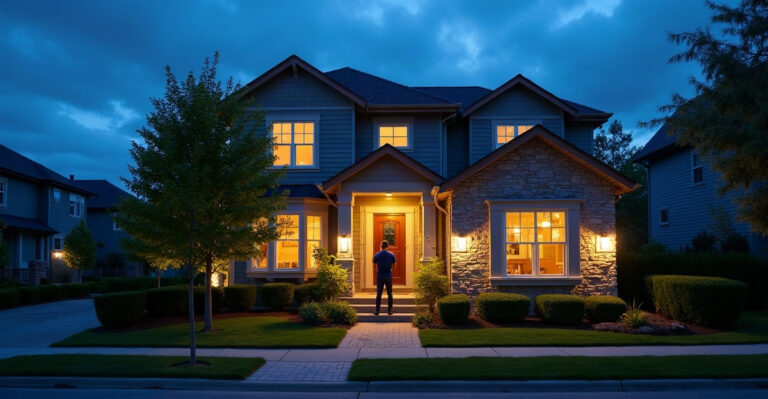
Holiday outdoor lighting ideas work best when they create immediate impact from the street. Curb appeal changes in seconds when lighting is layered with intention rather than scattered randomly across a facade.
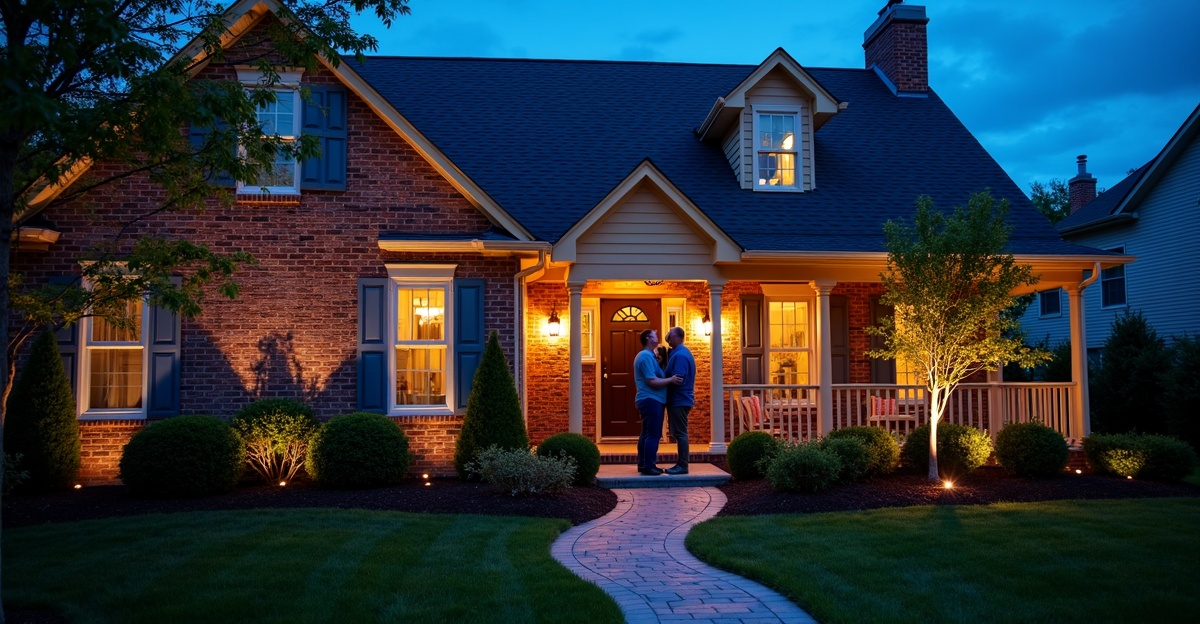
Layered lighting builds depth and clear focal points. We combine pathway lights, architectural uplights, and focused accent lighting to guide the eye across residential facades, driveways, garden paths, and patios. This approach delivers cohesive seasonal celebration lighting instead of a mix of disconnected decorative outdoor lights.
For Halloween, we often wash front facades in purple and green. Uplighting brick columns in saturated violet while casting subtle green along entry walls establishes drama. Pathway lights in dim amber help guests move safely while keeping the mood intact.
Easter calls for a softer touch. Pastel pathway lighting in blush pink or pale lavender creates a welcoming entrance. Gentle uplights in garden beds highlight spring blooms and soften hard edges along walkways and pergolas.
National holidays benefit from bold contrast. Red, white, and blue roofline accents paired with balanced white uplighting create symmetry instead of chaos. Winter celebrations shine with warm white and cool white combinations that add dimension without overwhelming the home’s architecture.
Color temperature matching plays a critical role. Warm white lighting enhances stone and brick textures. Cooler tones complement modern stucco or painted exteriors. Matching tones across fixtures ensures focal points stand out intentionally, not by accident.
For property owners ready to elevate their display, professionally installed outdoor holiday lights provide integrated control and sleek daytime appearance. Permanent systems also eliminate the clutter of seasonal cords across driveways and patios.
Halloween and Easter: Bold vs. Soft Seasonal Design Strategies
Every holiday carries a distinct mood. Effective holiday outdoor lighting ideas reflect that mood through contrast, spacing, and color control.
Halloween outdoor lighting thrives on tension and shadow. We create silhouette effects by uplighting trees from below, allowing branches to cast dramatic forms against walls. Purple and green wall washes intensify the atmosphere. Orange pathway markers define safe walking paths without breaking the dark aesthetic. Subtle flicker-style LED effects layered across entry pillars introduce movement without becoming distracting.
Balance matters. If the facade carries bold color, we keep the ground layer minimal. When lawn décor becomes the feature, we spotlight it with controlled beams rather than flooding the entire yard.
Easter lighting ideas shift the tone entirely. Soft pastel outdoor LED lighting delivers a gentle welcome. Pale blue washes along porch columns, lavender in garden beds, and blush pink at the entry create unified focal points. Illuminated wreaths or seasonal displays deserve a dedicated spotlight instead of competing lights from multiple angles.
Proportion keeps everything refined. We avoid clustering fixtures too tightly. We outline walkways with evenly spaced lights. We allow one or two focal points to lead the design instead of filling every corner with color.
For additional inspiration on color palettes that transition across seasons, review seasonal lighting color ideas as a planning reference.
Beyond One Holiday: How to Design a Lighting Setup That Works Year-Round
One permanent system can support every celebration with a simple adjustment. Smart lighting solutions allow seamless movement from Halloween tones to winter gold or spring pastels directly from an app.
We begin with a neutral architectural base layer. Warm white LEDs in the 2700K–3000K range highlight structure and texture year-round. This base remains active every evening, independent of holiday themes.
Color-changing LEDs then overlay special-event accents. In October, we activate purple and green automation scenes. In December, we shift to warm white and gold. Spring activates pastel gradients. Summer celebrations can bring red, white, and blue roofline accents instantly.
Customizable lighting reduces seasonal effort. There’s no ladder work. There’s no repeated installation. App-based scheduling means scenes activate and deactivate automatically.
For a closer look at flexible installations, explore our guide to permanent Christmas lights year-round. Homeowners seeking local service can review permanent holiday lighting options in Las Vegas or Phoenix.
Scalability also matters. Systems can start with rooflines and entryways, then expand to pergolas, garden beds, and driveways as preferences evolve.
Smart Lighting vs. Temporary Decorative Outdoor Lights: What’s the Difference?
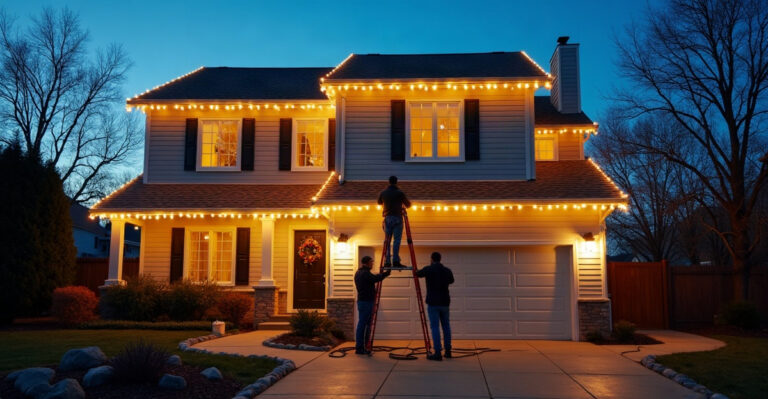
Temporary decorative outdoor lights serve a short-term need. They require unpacking, ladder installation, extension cords, and manual timers every season. Cords often cross driveways or lawns. Storage becomes another annual task.
Smart lighting systems eliminate that cycle. Outdoor-rated fixtures install once and remain in place cleanly under eaves or along architectural lines. App control allows color selection, brightness adjustment, and automation scenes from a phone.
Scheduling automation minimizes manual work. Lights activate automatically for specific holidays and return to standard evening settings once celebrations end. That consistency improves both safety and reliability.
Energy-efficient LED technology keeps operating costs low. LEDs use significantly less power than traditional incandescent bulbs and emit less heat, improving safety. Programmable schedules further reduce unnecessary runtime.
For detailed guidance, review our resource on seasonal lighting scheduling to simplify transitions throughout the year.
Permanent systems deliver cleaner results and long-term alignment. Temporary strings often sag or misalign. Integrated solutions maintain spacing and symmetry permanently.
Safety and Efficiency: Protecting Your Home While Designing Stunning Displays
Visually impressive holiday outdoor lighting ideas must also protect the home. Safety begins with outdoor-rated lighting and weatherproof components designed for exterior exposure.
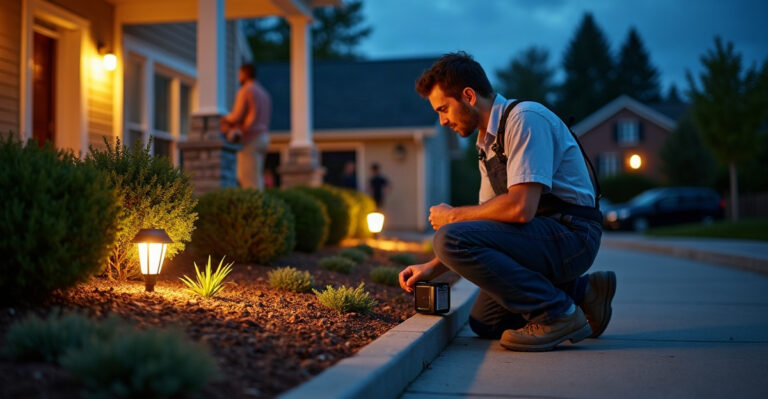
We recommend fixtures with IP65 or higher IP ratings to ensure protection against dust and water. Driveways, garden beds, patios, and rooflines face varying moisture conditions. Weatherproof lighting prevents long-term damage and system failure.
Electrical load planning must always be addressed. Overloaded circuits increase fire risk. Professional design ensures proper distribution across breakers and transformer capacity.
Extension cord safety is critical for temporary setups. Avoid indoor-rated cords outdoors. Connections should remain elevated and protected from pooling water. Cable management should keep walkways clear to prevent trip hazards.
LED efficiency enhances safety further. LEDs operate at cooler temperatures than traditional bulbs, reducing heat-related fire risks near landscaping or decorative materials.
Secure mounting methods prevent fixture movement in high winds. Loose fixtures create hazards and disrupt lighting precision.
Practical Design Principles for a Cohesive Outdoor Display
Professional results follow clear lighting design principles. The goal is visual clarity, defined focal points, and controlled layering.
Layering, Balance, and Precision Placement
Effective layered outdoor lighting includes:
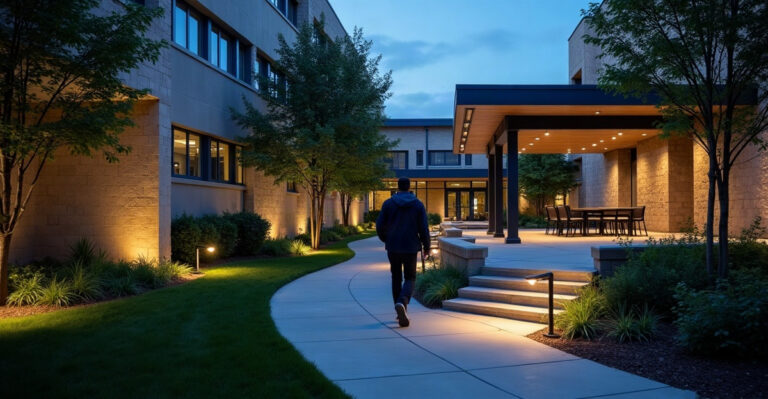
- Evenly spaced pathway lighting to guide movement and establish rhythm.
- Architectural uplighting to highlight brick columns, stone facades, and textured walls.
- Targeted accent lighting for wreaths, lawn décor, or pergolas.
- Symmetrical roofline lighting to frame the home cleanly.
Color temperature coordination ensures materials look natural. Warm white strengthens brick and wood tones. Neutral white complements contemporary finishes. Uncontrolled mixing of temperatures can create visual confusion.
Pathway lighting spacing should remain consistent to maintain flow. Architectural uplighting should be positioned several inches from walls to achieve proper beam spread and reduce glare.
Less clutter produces stronger results. Clear focal points outperform overloaded displays. When seasonal lighting integrates with permanent architectural fixtures, the home appears intentional and refined year-round.
Property owners interested in a professionally designed system can explore comprehensive residential outdoor lighting solutions for long-term flexibility and seamless seasonal transitions.
A cohesive approach transforms holiday outdoor lighting ideas into a sophisticated exterior design statement that adapts effortlessly from Halloween to Easter and beyond.