Examples of Accent Lighting for a Beautiful Home Exterior
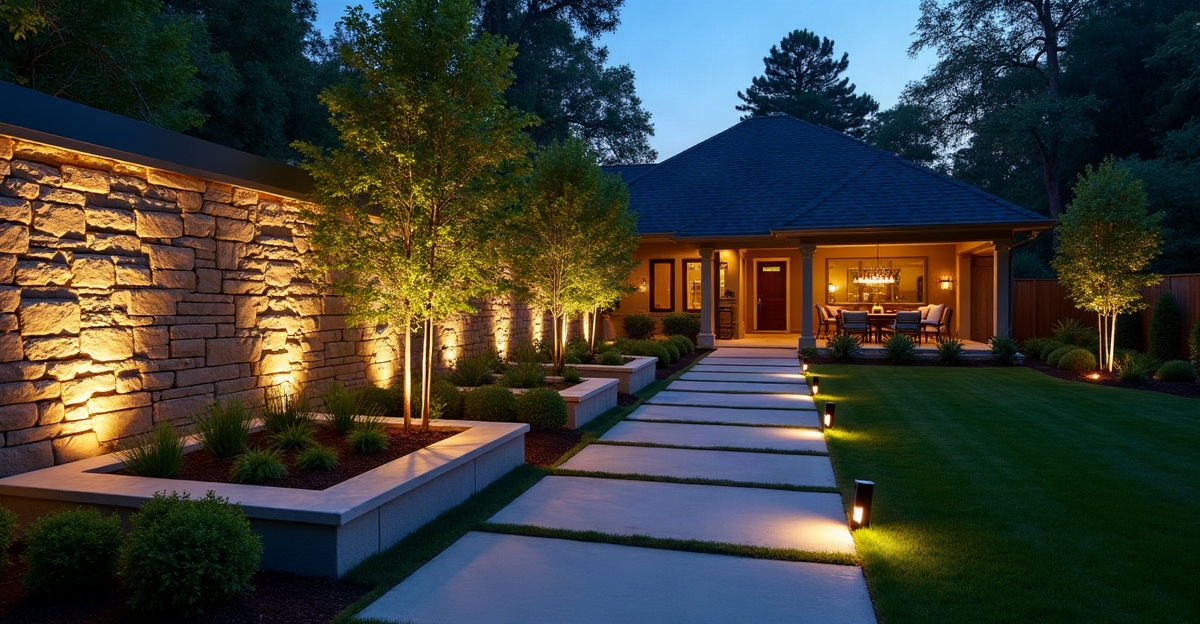
Examples of exterior accent lighting include wall washing for textured façades, uplighting trees and columns, and highlighting entrances, paths, patios, and garden features. We use focused, low-glare lighting to create contrast, reveal materials, improve wayfinding, and retain dark areas that strengthen each feature’s visual impact.
Key Takeaways
- We use accent lighting to highlight selected architectural and landscape features. Ambient, task, and security lighting support wider visibility and safety needs.
- Wall washing suits broad surfaces, while wall grazing brings out texture. We match narrow or wide beam spreads to each feature’s size and shape.
- Selective lighting can turn trees, specimen plants, raised planters, pergolas, and waterside landscaping into striking focal points. Uniform lighting often reduces depth and visual interest.
- We specify the lowest effective brightness, warm-white lamps where suitable, shielded fixtures, and precise aiming to limit glare and light spill.
- Smart zones, dimming, schedules, and scenes give us flexible control. Proper fixture placement, weather-rated protection, and routine maintenance still remain essential.
What Exterior Accent Lighting Is—and Why Selective Lighting Creates More Impact
Exterior accent lighting uses focused light to draw attention to a chosen feature, add depth, and establish visual hierarchy after dark. The best examples of accent lighting make façades, trees, entrances, and garden features feel intentional without making the whole property excessively bright.
Accent lighting differs from ambient lighting, which provides broad visibility across an outdoor area. Task lighting serves practical needs at steps, doorways, cooking areas, and routes. Security lighting focuses on visibility and deterrence. A strong exterior scheme combines modest ambient and task lighting with carefully selected accents. Our guide to layered outdoor lighting explains how these roles work together.
Darkness has an important role in this design. Contrast allows focal features to stand out, while excess brightness flattens texture and removes atmosphere. Accent lighting depends on controlled contrast, not maximum output.
Results vary with property layout, surface materials, landscaping maturity, ambient light, fixture placement, beam spread, and existing ambient light. One fixture or technique will not produce the same effect on every property. For a closer look at the fundamentals, explore what accent lighting is.
Architectural Accent Lighting Examples: Façades, Walls, Columns and Entrances
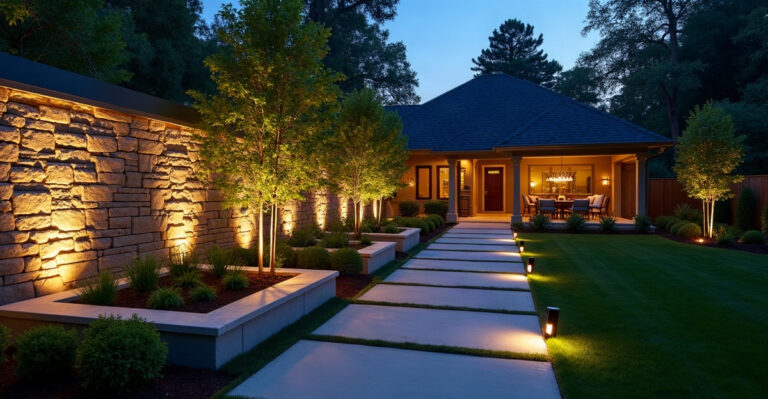
Wall washing uses a wide, even beam to softly reveal brick, stone, timber, rendered walls, hedges, or broad planting. It suits surfaces where you want to show the overall material without drawing attention to every mark or imperfection.
Wall grazing places a fitting close to a textured wall so light travels across the surface. This technique brings out stone joints, brick texture, timber grain, and depth. It can also exaggerate uneven finishes, hard shadows, and poor installation alignment, so aiming and spacing need careful testing.
Façade lighting uses adjustable spotlights or uplights to feature columns, gables, arches, rooflines, and standout materials. Narrow beams work well for columns and smaller details. Wider beams suit large wall sections and broader architectural forms. Our guide on highlighting architecture with smart lights covers practical approaches for these features.
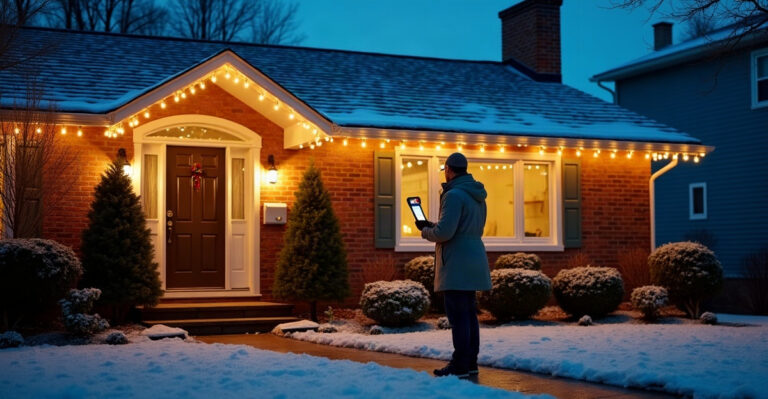
An entrance can become a clear focal point with light on a front-door surround, gate, porch, house number, or statement pot. Wall-mounted fittings, discreet uplights, spike lights, step lights, and adjustable spotlights all have a place. Position fittings outside normal sightlines and aim light at the feature rather than into the street, front door, interior windows, neighbouring homes, or seated eye level.
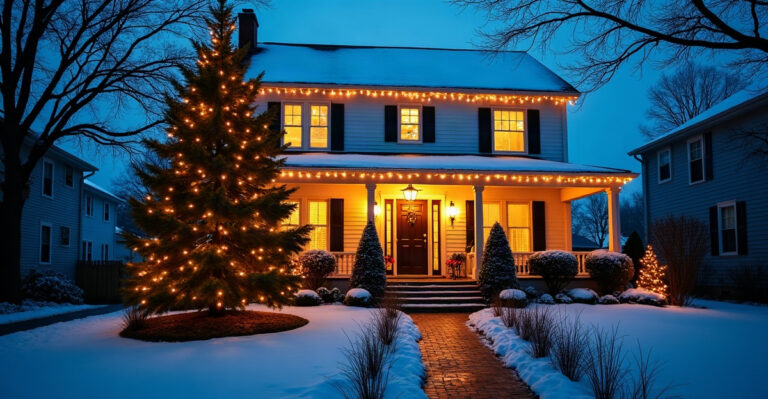
Thoughtful outdoor accent lighting improves curb appeal, reveals material texture, supports wayfinding, and creates a strong arrival point without turning the property into general floodlighting.
Landscape and Garden Lighting Examples: Trees, Planting, Art and Garden Structure
Mature trees, palms, sculptural shrubs, and specimen planting offer some of the most effective exterior focal points. Spike lights, ground-mounted uplights, and adjustable spotlights can reveal trunks, bark, canopy shape, and layered foliage. A narrow beam often suits a tall trunk or palm, while a wider spread can show a fuller canopy.
Garden beds and hedges benefit from subtle light that adds depth at a property boundary or frames a view from the patio, street, or interior. Bright, uniform rows of fittings tend to flatten planting and create a commercial appearance. One or two focal points per view are usually enough. A concealed spotlight can feature garden art, a statement pot, a statue, distinctive planting, or a large boulder with far more impact than lighting every element.
Raised planters, retaining walls, steps, and level changes can use recessed fittings, wall-mounted lights, step lights, or concealed linear lighting to reveal form and improve edge awareness. These accents support safe movement, but they do not replace task lighting where routes or steps need clear illumination.
Moonlighting creates soft, dappled light through branches from an elevated tree-mounted fitting. Use it only where installation, aiming, tree health, cabling, and maintenance access can be properly managed. Poorly secured cables, intrusive spill, and difficult servicing can outweigh the visual result.
Every garden lighting plan must allow for visible fixtures, plant and furniture shadows, cable routes, irrigation, drainage, roots, mowing areas, mulch, snow, soil movement, water, fallen leaves, and future plant growth. For further ideas, see the best ways to highlight landscaping.
Accent Lighting for Paths, Patios, Decks and Water Features
Subtle path-edge or planting-bed lighting can frame a garden route, driveway edge, or approach to the front door. The goal is guidance, not a runway effect. Restrained lighting also helps identify gates, house numbers, boundaries, and changes in level without shining toward drivers, neighbouring properties, or windows.
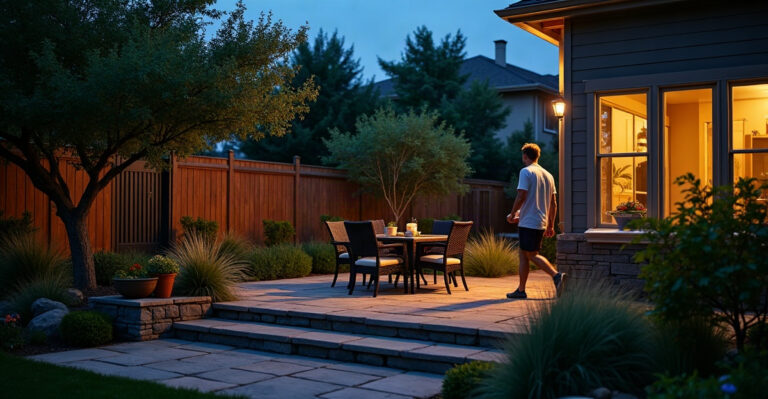
Patios, decks, pergolas, and dining zones benefit from layered effects. Adjustable spotlights can feature structural posts or selected planting. Wall-mounted fittings can reveal a feature wall. Step lights improve visibility at level changes. Discreet integrated fixtures can define a dining-zone perimeter. Pair these accents with appropriate task lighting for cooking, steps, and access routes.
A softly lit wall or pergola, selected planting, and gentle route lighting can produce a comfortable Evening Entertaining setting without broad floodlighting. Our outdoor mood lighting options help create flexible after-dark spaces.
Water features, ponds, fountains, and pool-adjacent landscaping can create striking reflections and movement. Use suitable equipment only where local safety requirements allow. Electrical safety, drainage, water exposure, glare, and safe maintenance access must guide the design. We recommend qualified professionals for water-adjacent installations and confirmation of local requirements.
Authentic project photography or accurately represented diagrams should show the lit feature within its wider nighttime setting. Over-edited images often make coverage look brighter and more uniform than it will be in practice.
How to Choose the Right Exterior Accent Light
Choose the lighting effect before selecting the fixture. Uplights, spike lights, in-ground lights, wall-mounted fittings, step lights, and adjustable spotlights all serve different purposes and site conditions.
Beam angle matters. Narrow beams suit columns, tall trees, and individual focal points. Wider beams suit walls, hedges, and broad planting. Distance from the feature, mounting height, and feature width determine the appropriate spread.
Use the lowest effective brightness and test at night before finalising placement. Excessive output can flatten architectural detail, cause glare, reduce comfort, and weaken the accent effect. Warm white generally complements residential exteriors and natural materials. Cooler tones can appear harsher, so use them only where the intended style supports that choice.
Glare control should shape every decision. Shielded fittings, recessed light sources, careful aiming, and placement outside normal sightlines provide a cleaner result. Avoid unshielded lamps and light aimed directly outward, upward without purpose, into windows, at the street, or at seated eye level.
Exterior equipment needs environmental protection appropriate for rain, dust, corrosion, heat, cold, and coastal exposure where relevant. Low-voltage landscape systems differ from mains-voltage systems. We recommend qualified professionals for mains electrical work, transformer sizing, complex controls, and permanent outdoor installation.
Smart Outdoor Lighting Controls That Support a Better Design
Smart controls improve a well-planned lighting system, but they cannot correct poor fixture placement, glare, or excessive brightness. Good design still starts with the right beam, output, aim, and location.
Separate zones for the front garden, driveway, façade, rear garden, patio, and feature lighting allow independent control. Scheduling can follow household routines or sunset, reducing unnecessary run time and helping conserve energy. Dimming lets you use brighter arrival lighting earlier in the evening, then lower-level feature lighting later at night.
Useful scenes include:
- Arrive Home
- Evening Entertaining
- Late Night
- Away
Each scene should activate only the lighting needed for that purpose. Remote control and monitoring can add convenience where the selected system supports them, but manual control should remain simple for every household member.
Smart systems work especially well with residential outdoor lighting that has been divided into purposeful zones from the start.
Planning, Installation and Maintenance Checklist for Exterior Accent Lighting
Walk around the property after dark before installation. Review views from the street, driveway, front door, interior windows, seating areas, and neighbouring properties. Identify one or two features worth highlighting in each view, then test temporary fixture positions where possible.
Before work begins, account for:
- Glare and light spill
- Visible fittings and shadow patterns
- Water exposure, drainage, and irrigation lines
- Cable routes and transformer capacity
- Roots, mowing areas, and future landscape growth
- Local electrical regulations and safety requirements
Ensure transformers and wiring allow for sensible future expansion. Local regulations and electrical requirements may apply, particularly around mains power and water features.
Accent lighting needs ongoing care. Fixtures may require cleaning, re-aiming, pruning around, and adjustment as planting grows and seasons change. Avoid treating accent lighting as general floodlighting. Do not over-light the property, select output that is too bright, ignore shadows from planting or furniture, or choose fixtures without considering weather resistance, corrosion, drainage, and maintenance access. Smart features do not replace sound lighting design.
Exterior Accent Lighting FAQs
What is an example of accent lighting outside?
An uplight aimed at a mature tree, a narrow spotlight on a column, or a wall wash across a stone façade are all effective examples.
What is the difference between accent lighting and landscape lighting?
Accent lighting describes the focused effect. Landscape lighting describes lighting used across outdoor planted areas and garden structures. Landscape lighting can include accent, pathway, task, and safety lighting.
Where should exterior uplights be placed?
Place them where the fitting stays outside normal sightlines and can aim at the intended feature without creating glare, window spill, or trip hazards.
What colour temperature is best for outdoor accent lighting?
Warm white suits most homes, natural materials, and garden settings. The best choice depends on surrounding materials, existing lighting, and the intended atmosphere.
How bright should exterior accent lights be?
Use the lowest output that clearly reveals the feature. Test after dark, then reduce brightness if glare or excessive spill appears.
Can outdoor accent lighting be controlled with a smart home system?
Yes. Compatible systems can provide zoning, schedules, dimming, scenes, and remote control while retaining straightforward manual operation.
By Big Pig Smart Lighting Team. Last updated: September 14, 2026. For electrical safety, regulations, and water-adjacent work, confirm local requirements and use qualified professionals.