Weatherproof Outdoor Lighting: What You Need To Know
Weatherproof outdoor lighting handles rain, moisture, dust, and temperature swings, yet we must understand the difference between weatherproof, waterproof, and outdoor-rated fixtures to avoid costly installation errors. We verify IP ratings, match materials to local climate conditions, and follow correct installation methods so we can deliver long-term safety, durability, and consistent performance.
Key Takeaways
- Weatherproof fixtures generally manage rain and moisture, often within IP44–IP65 ratings, while waterproof options rated IP67 and above withstand heavier water exposure, including temporary immersion.
- We always confirm the IP rating instead of relying on terms like “weather-resistant” or “outdoor-rated,” since these labels lack strict technical standards.
- Climate factors such as salt air, heat, frost, and high humidity demand corrosion-resistant materials, UV-stable components, and proper thermal control.
- High-quality materials, sealed housings, certified compliance, and LED technology increase service life, reduce energy use, and improve overall safety.
- Proper installation, including adequate drainage, sealed wiring connections, and full code compliance, ensures that weatherproof performance lasts for years.
Do not modify or enhance the wording; the text must remain identical except for the HTML markup.
Do not convert the first sentence or introductory text into a heading — it must remain a normal paragraph (<p>).
What “Weatherproof” Really Means (And Why It’s Often Misunderstood)
Weatherproof outdoor lighting refers to fixtures built to handle rain, moisture, dust, temperature shifts, and other environmental exposure without compromising safety or performance. These products are made specifically for exterior use and tested against recognized standards.
Confusion often arises between weatherproof and waterproof LED outdoor lights. The difference matters.
Weatherproof lighting protects against common outdoor conditions such as rainfall, humidity, and airborne debris. It’s appropriate for patios, façades, gardens, and walkways. Waterproof LED outdoor lights, on the other hand, withstand greater levels of water ingress. Depending on the IP rating, some may tolerate temporary immersion.
Terms like “weather-resistant” create further uncertainty. That label has no strict, universal technical definition. We recommend checking verified Ingress Protection (IP) ratings rather than relying on marketing language alone.
Below is a clear comparison to simplify decisions:
Weatherproof vs. Waterproof vs. Outdoor-Rated
Water Protection Level
- Weatherproof: Handles rain, splashes, and general moisture exposure.
- Waterproof: Resists heavy water exposure and may tolerate immersion depending on IP rating.
- Outdoor-Rated: Broad term; protection level varies and must be verified.
Typical IP Rating Range
- Weatherproof: Commonly IP44 to IP65.
- Waterproof: Often IP67 and above.
- Outdoor-Rated: Varies widely.
Suitable Installation Areas
- Weatherproof: Covered patios, exterior walls, open gardens.
- Waterproof: Ground lights, certain poolside zones (if rating allows).
- Outdoor-Rated: Depends entirely on specified IP rating.
Risk Level if Misapplied
- Weatherproof used in immersion areas: Risk of water damage and electrical failure.
- Waterproof in low-risk areas: Generally safe but may add unnecessary cost.
- Outdoor-Rated without verification: High risk if rating is unclear.
For homeowners and property managers evaluating options, clarity at this stage prevents expensive mistakes. We always recommend verifying the IP rating and intended application before purchasing or installing fixtures.
For broader guidance on selecting durable permanent systems, we explain the essentials in what to look for in permanent outdoor lighting systems.
IP Ratings Explained in Plain English (IP44, IP65, IP67 and What They Mean for Your Space)
IP stands for Ingress Protection. It’s a standardized rating that measures how well a fixture resists solids and liquids.
The first digit indicates protection against dust and solid particles.
The second digit indicates protection against water.
IP44
The “4” for solids means protection against objects larger than 1mm.
The second “4” means protection against splashing water from any direction.
We use IP44 fixtures on covered patios and sheltered walls where light rain or splashes may occur.
IP65
The “6” means dust-tight.
The “5” means protected against water jets.
This rating works well for open garden areas, driveways, and exposed façades.
IP67
The “6” means complete dust protection.
The “7” means protection against temporary immersion in water.
Installations such as in-ground lights or certain poolside locations commonly use IP67. It does not replace certified underwater pool luminaires unless the product clearly specifies that purpose.
Quick Reference by Area
- Covered patios: IP44 or higher
- Open garden areas: IP65 recommended
- Driveways: IP65 minimum
- Poolside locations: IP67 preferred (verify compliance)
- Coastal properties: IP65 or IP67 plus corrosion-resistant materials
Technical standards only help when translated into real conditions. We always match the rating to exposure level instead of choosing the highest number by default.
Systems should also comply with recognized safety standards and local electrical codes. Rating alone does not replace proper installation or regulatory compliance.
Choosing for Your Climate: Rain, Salt, Heat, Frost, and Humidity
Climate plays a decisive role in lighting performance. A fixture that performs well in a dry inland area may fail quickly in a coastal or tropical setting.
Heavy rain and storms require sealed housings with secure gaskets and appropriate drainage. Constant moisture demands reliable construction. We explore this in greater detail in how permanent lights perform in rain.
Salt air in coastal regions accelerates corrosion. Stainless steel, powder-coated aluminum, and marine-grade finishes resist oxidation far better than untreated metals. Without proper materials, fixtures degrade quickly despite strong IP ratings.
High-temperature climates introduce another issue: heat buildup. LEDs are efficient, but internal components still require proper thermal management. Excessive heat shortens lifespan and reduces output. Practical insights appear in how permanent outdoor lights handle heat.
Freezing temperatures and snow create expansion and contraction cycles. Water trapped inside poorly sealed fixtures can freeze, expand, and crack housings or gaskets. Durable seals and impact-resistant materials prevent this.
Humidity introduces condensation risk. Even in areas with moderate rainfall, high humidity can lead to internal moisture buildup. Well-engineered gaskets and ventilation paths help equalize pressure and reduce condensation.
No single rating fits every environment. We always match:
- Climate type
- Exposure level
- Material quality
- IP rating
That combination determines long-term durability—not the label alone.
Key Features That Impact Durability, Safety, and Long-Term Value
IP rating forms the baseline specification. It confirms verified resistance levels.
Material quality determines how long that protection lasts. Stainless steel and powder-coated aluminum resist corrosion effectively. Marine-grade finishes provide additional protection in salt-heavy environments.
UV resistance prevents discoloration and brittleness under prolonged sun exposure. Without it, plastic components weaken and crack over time.
Sealed housings and quality gaskets stop water intrusion at connection points. Poor sealing often causes early fixture failure.
LED technology provides significant advantages:
- Lower energy consumption
- Reduced heat output
- Long operational life when properly heat-managed
Compared with halogen fittings, LEDs offer far better efficiency and longer service intervals. Reduced heat output also improves component longevity.
Certified, compliant fixtures outperform low-cost, non-rated imports in safety and reliability. Substandard lighting may lack adequate sealing or verified testing.
Integration also matters. Many modern systems support:
- Smart controls
- Motion sensors for security
- Automation timers for energy savings
These features enhance flexibility while maintaining efficiency. For security-focused applications, controlled illumination plays a key role in effective lighting outdoor security strategies.
Installation Matters: Avoiding Moisture, Wiring, and Placement Mistakes
Even high-quality weatherproof outdoor lighting can fail if installed incorrectly.
Proper placement reduces water pooling and impact exposure. Fixtures shouldn’t sit in low points where water accumulates.
Drainage and ventilation minimize condensation. Installers must ensure water cannot collect around seals or cable entry points.
Mounting height affects performance and safety. Path lights need correct spacing to avoid glare. Driveway lights require placement that prevents vehicle impact.
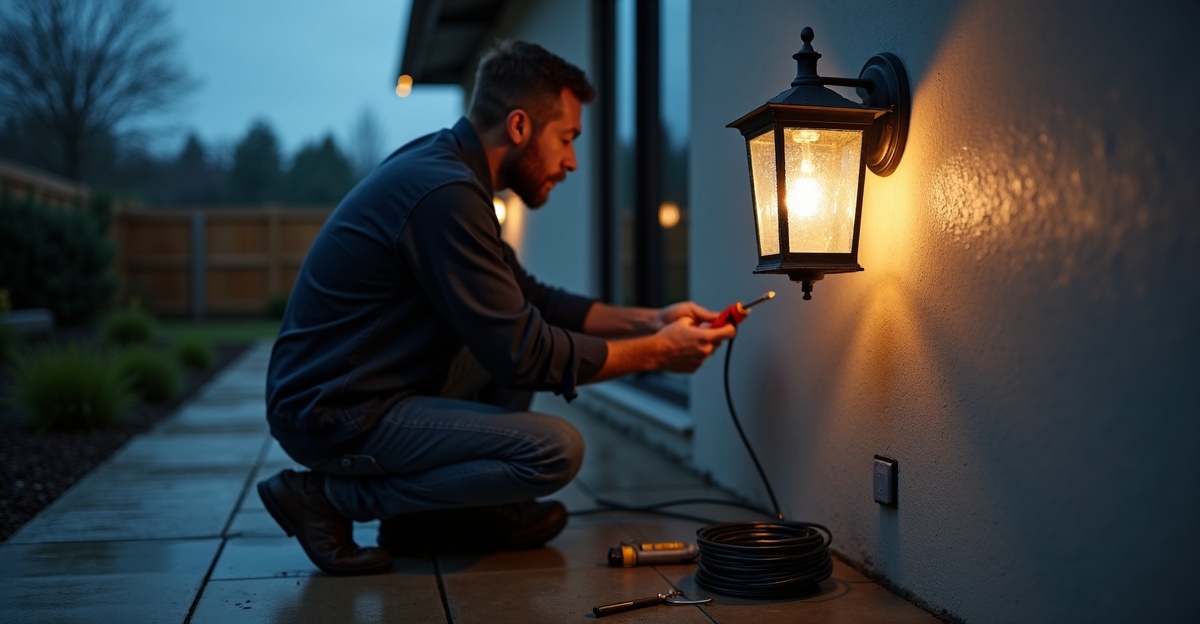
Outdoor-rated wiring and waterproof connectors are essential. Junctions and cable entries must be sealed and protected.
Compliance with local electrical codes remains mandatory. Poolside areas, driveways, and smart integrations often require a licensed electrician. Low-voltage systems provide flexibility and safety advantages in many residential applications. We break down the differences in low voltage vs high voltage outdoor lighting explained.
Common installation mistakes include:
- Misinterpreting IP ratings
- Ignoring wiring protection
- Blocking ventilation openings
- Choosing fixtures based on appearance alone
Attention to installation details ensures performance aligns with product specifications.
Practical Buying Checklist for Confident Decision-Making
Before selecting fixtures, we recommend confirming the following:
- What is the exposure level: covered, partially exposed, or fully exposed?
- Which IP rating is required for this exact location?
- Are materials appropriate for coastal, humid, or high-heat environments?
- Is the fixture UV-resistant?
- Are seals and gaskets clearly specified?
- Does it use energy-efficient LED technology?
- Is it compatible with smart lighting systems or automation plans?
- Will installation comply with local electrical codes?
This structured review prevents overspending or under-specifying.
For property owners planning comprehensive exterior upgrades, our residential outdoor lighting solutions balance durability, energy efficiency, and long-term reliability. For guidance specific to individual projects, we encourage connecting through our lighting consultation team.
Clear, informed decisions result in safer environments, stronger curb appeal, lower operating costs, and lighting systems that perform consistently year after year.