Smart Outdoor Lighting Automation Ideas For Homes
Smart outdoor lighting ideas automate safety, security, and curb appeal through motion sensors, schedules, geo-fencing, and smart home integration. We control pathways, driveways, façades, and outdoor living areas with precise automation that responds in real time. These systems blend layered lighting design, energy-efficient LED technology, and app-based controls to create setups that adjust to daily routines, social gatherings, and long-term property plans.
Effective outdoor lighting starts with strategy. We combine ambient, task, and accent lighting to shape visibility and mood across the property. At the same time, we reduce energy waste and simplify control through centralized apps and voice assistants. The result feels intentional, practical, and ready for future upgrades.
Key Takeaways
- Motion-activated lights and dusk-to-dawn automation increase visibility along pathways, driveways, and perimeter zones while controlling energy consumption.
- Scheduled scenes and smart zoning give us coordinated control over façades, gardens, pools, and entertaining spaces.
- App access, voice assistant support, and security system integration give us flexible control and remote management from anywhere.
- LED fixtures, correct IP ratings, and routine upkeep protect long-term reliability and steady performance.
- Reviewing compatibility, expansion potential, installation needs, and available technical assistance helps us select a system that works for both new construction and renovation projects.
Smart Outdoor Lighting Ideas That Instantly Transform Safety, Security, and Curb Appeal
Smart outdoor lighting ideas shape how a home feels after sunset. We use automation to create safer pathways, stronger perimeter visibility, and a polished look that enhances everyday living.
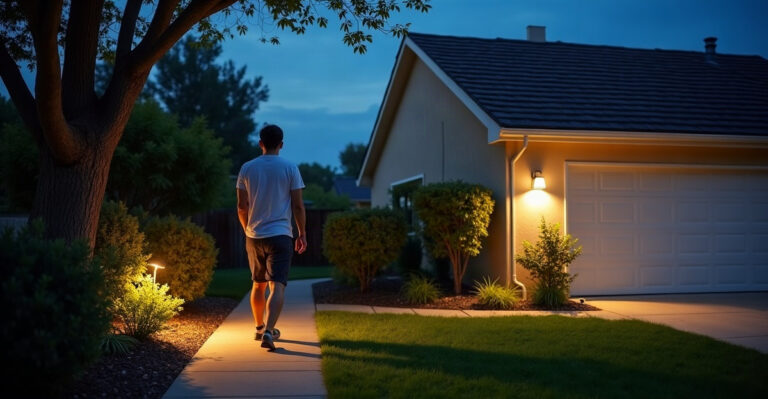
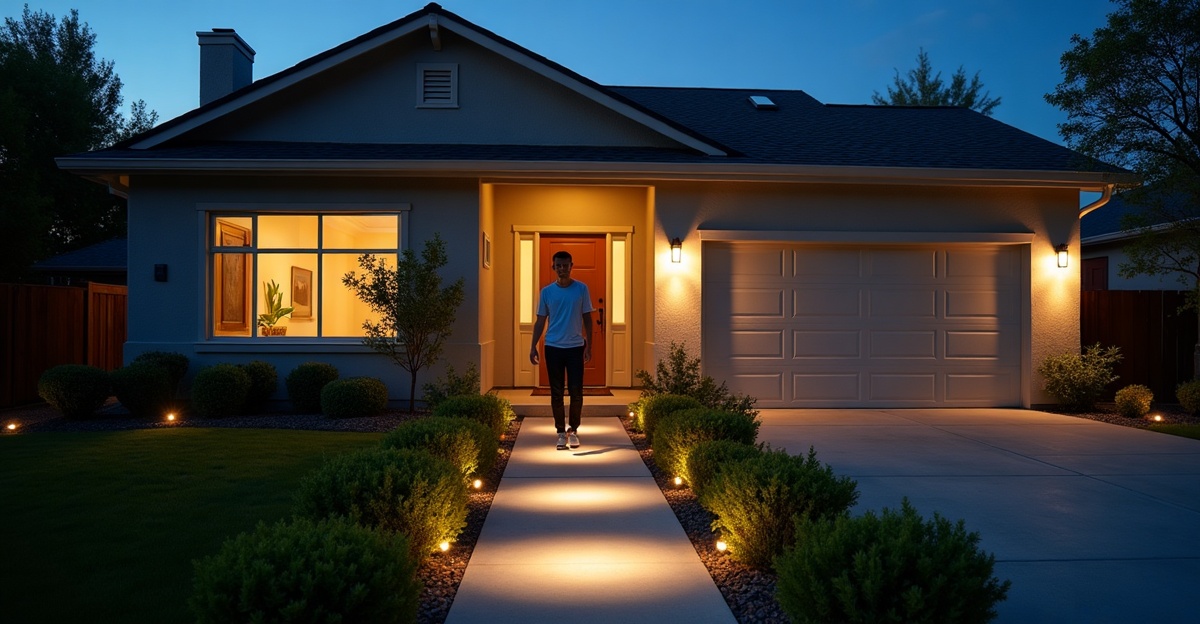
Pathway lighting paired with motion-triggered illumination improves safety immediately. Fixtures remain softly dim or off, then brighten when movement is detected. This approach creates a welcoming arrival experience while keeping energy use controlled.
Driveway automation adds another layer of convenience. Lights can activate when a vehicle approaches using motion sensors or geo-fencing through a connected app. The result is smooth, hands-free visibility from curb to garage.
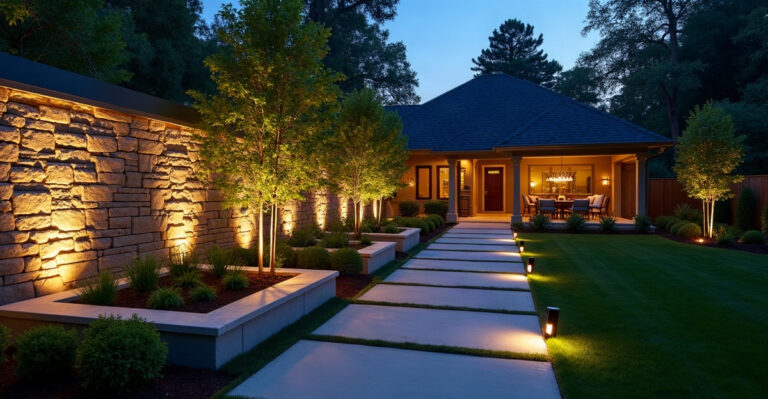
Façade highlighting brings architectural design to life in the evening. We often set scheduled scenes that illuminate columns, stonework, or entry details at sunset. Subtle outdoor accent lighting draws attention to craftsmanship without overwhelming the structure.
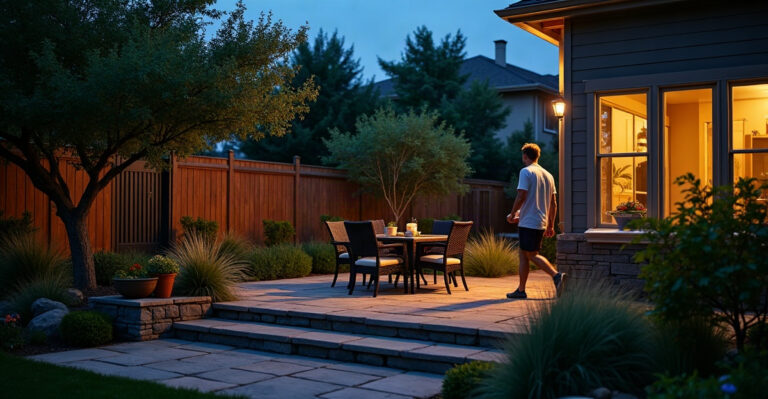
Garden scenes benefit from layered depth. Uplighting trees, washing walls with soft light, and defining plant beds combine to create dimension. With thoughtful residential outdoor lighting, landscapes feel intentional and refined rather than flat and dark.
Pool and entertaining areas gain flexibility with adjustable brightness and color temperature. Cooler tones support active gatherings. Warmer tones create a relaxed ambiance for dining or conversation. Customizable outdoor mood lighting allows us to adapt spaces for different occasions without adding new fixtures.
Security-focused automation closes the loop. Dusk-to-dawn triggers ensure perimeter lights respond to natural light levels. Motion detection can raise brightness instantly around the property boundary. A well-planned outdoor security lighting system strengthens visibility while maintaining comfort.
Each of these ideas prioritizes lifestyle benefits. We improve visibility for families and guests. We simplify control through automation. We elevate curb appeal with intentional lighting design.
How Automated Lighting Systems Work in Plain Language
Automated lighting systems operate without manual switching. They rely on schedules, motion sensors, light sensors, and app-based controls to manage when and how lights turn on.
Scheduling is the most basic function. We set specific times for lights to activate and shut off. Sunset scenes, late-night dimming, and early morning routines become automatic.
Motion sensors detect movement. When someone walks through a driveway or along a fence line, lights respond immediately. After a set period of inactivity, they return to their previous level.
Dusk-to-dawn triggers use light sensors. These sensors measure natural daylight and adjust lighting accordingly. When the sun sets, lights activate. When daylight returns, they switch off. For homeowners who want fine-tuned timing, we explain how to schedule outdoor lighting by season to keep systems aligned with changing daylight hours.
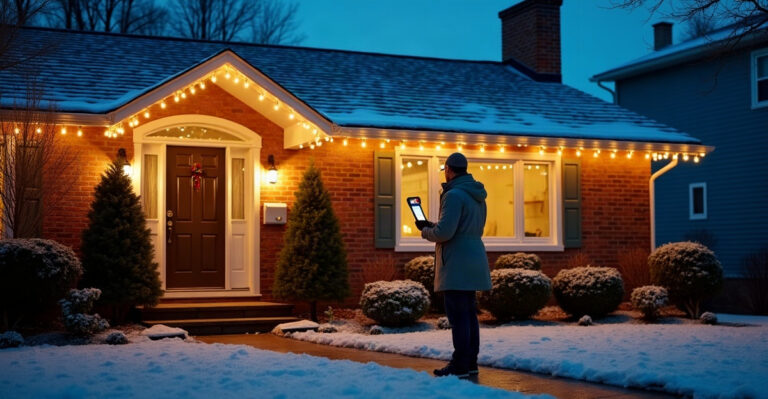
App control provides remote access through a smartphone or tablet. We can check status, adjust brightness, or activate scenes from anywhere. Many homeowners ask whether systems can be managed away from home. We address this directly in our guide on remote lighting control.
Integration with broader smart home platforms increases flexibility. Outdoor lighting can connect to voice assistants, security systems, and centralized hubs. Compatibility details are covered in our discussion of Alexa or Google integration. For a deeper look at connectivity, we also outline how permanent lighting works with smart homes.
Scenes are simply grouped settings. We program multiple fixtures to respond together with specific brightness and color levels. One scene might highlight the façade and pathways. Another might dim everything except poolside lighting. Systems that allow flexibility across property sections benefit from smart zoning, and we explain zoning for different areas in more detail.
Clear control replaces guesswork. Automation simplifies operation while maintaining professional-level performance.
Practical Automation Scenarios for Real Homes
We apply automated lighting systems based on how families actually use their properties. Real-life scenarios make the value immediately clear.
Arrival and Daily Routines
Picture arriving home after sunset. The garage door opens. Driveway lights brighten gradually. Pathway fixtures guide the walk to the front door. This sequence increases safety and comfort without manual switches.
Early morning routines benefit from subtle automation as well. Pathway lights activate before sunrise at a lower intensity. The environment feels calm and functional rather than harsh.
Vacation mode offers added peace of mind. Lights shift according to a programmed schedule that mimics occupancy. The property looks lived-in even while we are away.
Entertaining and Security Modes
Evening entertaining calls for warmth. Patio fixtures dim slightly. Garden uplights remain steady. Pool lighting shifts to a softer tone. Ambiance improves without sacrificing visibility.
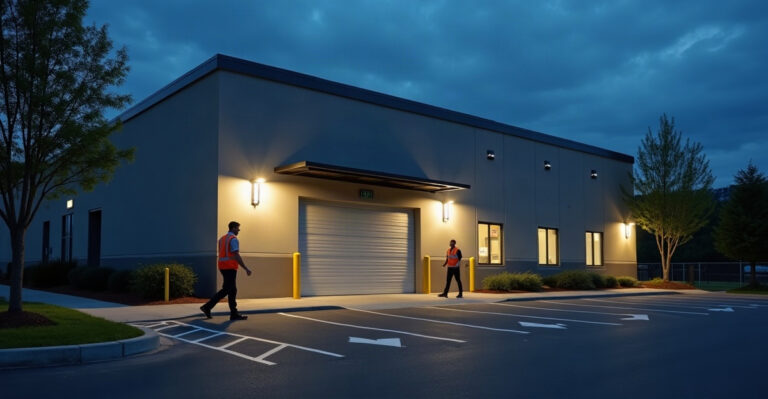
Security mode takes priority late at night. Perimeter lights remain dim. If motion is detected, those fixtures instantly brighten. This balance maintains comfort while addressing potential activity near entry points.
Implementation requires thoughtful planning. We consider Wi-Fi reliability outdoors, especially around detached garages or large yards. We evaluate wiring access before recommending trenching or wireless solutions. Strategic fixture placement ensures light falls where it is needed rather than creating glare.
Energy Efficiency and Smart Control Without Overpromising
Modern outdoor systems rely on LED technology as a baseline. LEDs consume significantly less electricity than traditional halogen or incandescent fixtures. They also produce less heat and operate efficiently for long periods.
Automation supports additional energy awareness. Motion activation reduces unnecessary runtime. Dusk-to-dawn sensors prevent lights from operating during daylight. Scheduled shutoffs ensure systems don’t remain on longer than required. These elements create practical savings through reduced operating hours.
We avoid unrealistic claims about dramatic cost reductions. Energy savings vary depending on property size, usage patterns, and system configuration. The primary value lies in smarter control and consistent performance over time.
Durability plays a major role in long-term efficiency. Outdoor fixtures should meet appropriate IP ratings for moisture and dust resistance. Proper cable protection and sealed connections help prevent corrosion and signal loss. Routine maintenance, such as cleaning lenses and checking connections, preserves brightness and lifespan.
Lighting performs best when expectations remain grounded. Efficiency improves through smart configuration, quality components, and consistent upkeep.
Planning for Renovations vs. New Builds
Early planning creates the strongest results. Coordinating lighting during architectural and landscape design stages allows for integrated wiring, ideal fixture positioning, and centralized system control.
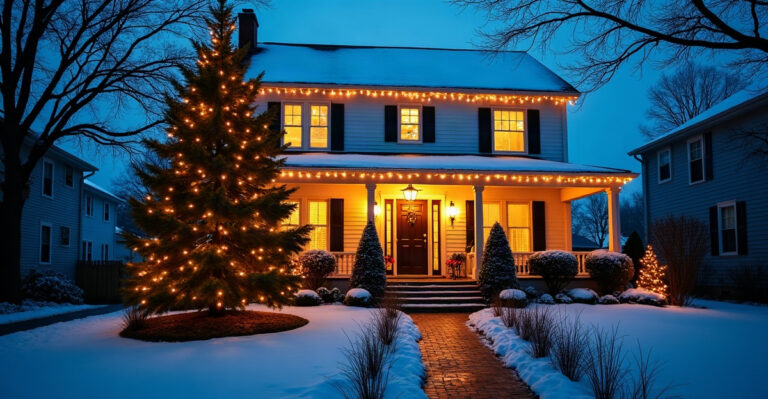
New builds offer the most flexibility. Pre-wiring during construction simplifies installation. Centralized control panels can be incorporated into the home’s automation infrastructure. For homes including roofline installations, under eave lighting can be integrated cleanly before exterior finishes are finalized.
Renovations require a different approach. We assess existing wiring pathways and available power sources. Wireless solutions can reduce trenching, especially in established landscapes. Connectivity strength becomes a key consideration, particularly for large properties.
Weather durability influences every design decision. Outdoor environments face heat, moisture, wind, and debris. Selecting suitable fixture housings and protected cabling prevents premature wear.
Collaboration improves outcomes. Builders, electricians, architects, and landscape designers each play a role in ensuring wiring access, mounting surfaces, and control systems function as intended.
How to Evaluate the Right Smart Outdoor Lighting System
Choosing the right system requires a structured evaluation. We focus on compatibility, scalability, usability, and support rather than impulse decisions.
Key criteria include:
- Compatibility with existing smart home platforms and voice assistants.
- Scalability for future expansion into new zones or additional fixtures.
- Intuitive app controls that simplify scheduling and scene creation.
- Integration with security systems for coordinated response.
- Professional versus DIY installation considerations based on property complexity.
- Access to long-term technical support and maintenance.
Installation complexity varies by property size and wiring access. Homes with pre-wiring often accommodate centralized systems more easily. Retrofits may rely on hybrid wired and wireless configurations.
Durability in harsh weather should never be overlooked. Fixtures rated for outdoor exposure handle temperature swings and moisture effectively. Asking about IP ratings and housing materials ensures long-term reliability.
Security integration adds another layer of value. Lighting linked with cameras or alarm systems strengthens perimeter awareness.
Finally, control convenience matters. Clear scheduling, scene creation, and timer integration simplify everyday use. We explain timer integration options for homeowners comparing capabilities.
Thoughtful comparison leads to confident decisions. A well-chosen system supports safety, comfort, and curb appeal while remaining easy to manage year after year.