How Many Lumens for a Porch Light? Choosing the Right Brightness
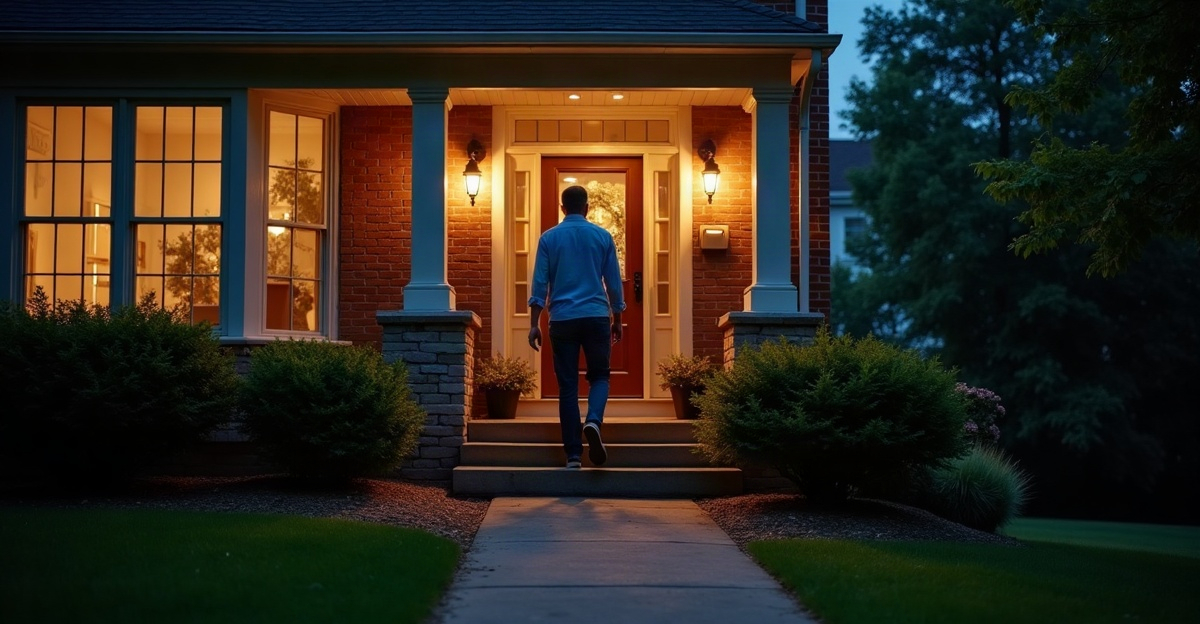
Knowing how many lumens to use for a porch light helps us create safe visibility at the door, steps, walkways, and house numbers without causing glare or light spill. Most front porches need 300–800 lumens. Smaller or well-lit entries may need 200–400 lumens. Larger, darker entries may require up to 1,200 lumens across several fixtures.
Key Takeaways
- Start with 300–800 lumens for a typical front porch. Then adjust the output for porch size, mounting height, coverage needs, and nearby ambient light.
- Use 200–400 lumens for small, covered, or well-lit entries. Consider 800–1,200 lumens for larger, recessed, or security-focused areas.
- Focus on the light that reaches the threshold, steps, walking surfaces, and house numbers. Don’t rely on a bulb’s lumen rating alone.
- Choose shielded or downward-facing fixtures. Use several lower-output lights to reduce glare and create more even coverage.
- Select warm white light around 2700K–3000K. Use dimmers, schedules, or motion activation to control brightness and reduce energy use.
The Quick Answer: Start With 300–800 Lumens for Most Front Porches
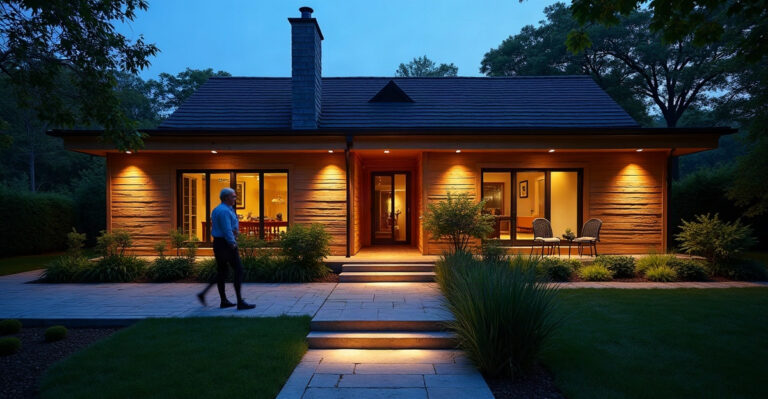
For how many lumens for porch light, most front porches work well with approximately 300–800 lumens. The right porch light brightness depends on porch size, surrounding darkness, fixture design, mounting height, and the result we want from the space.
These ranges provide a starting point, not a universal rule. What matters most is the amount of light that reaches the doorway, walking surface, steps, and house numbers, rather than the lumen figure printed on a bulb package.
| Porch condition | Recommended starting brightness |
|---|---|
| Small, covered, or well-lit entry | Approximately 200–400 lumens |
| Typical front porch or entry | Approximately 300–800 lumens |
| Larger, darker, recessed, or security-focused entry | Approximately 800–1,200 lumens, preferably spread across multiple fixtures |
| Steps, house numbers, walkways, or package areas | Add dedicated low-glare lighting instead of relying on one very bright fixture |
Good entryway lighting lumens improve visibility for visitors, package deliveries, and safe arrival after dark. Porch lighting also supports awareness around the front of a home, although it remains one element of a wider security plan. Our outdoor security lighting options can help create clearer visibility without turning the entry into an overlit area.
Choose a Lumen Range Based on Your Porch and Surroundings
Compact, open entrances often need less outdoor LED brightness because light can reach the door and landing without obstruction. A deep porch, recessed doorway, tall mounting point, columns, overhead cover, stairs, or long walkway changes that result. These features can block or absorb light, leaving important areas dim even when the bulb has a high lumen rating.
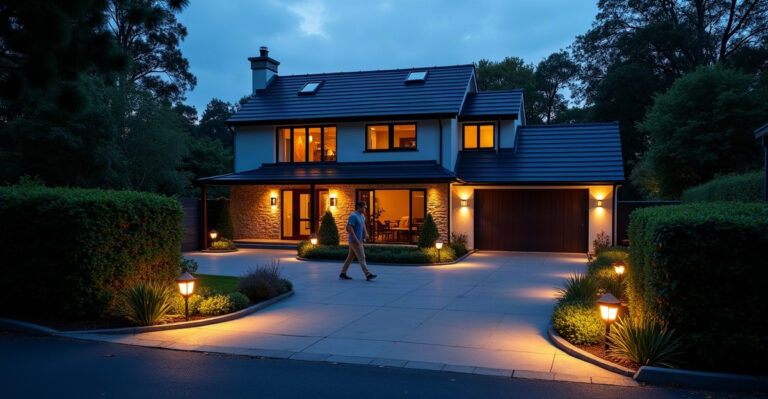
Large entries usually benefit from distributed light. Two wall sconces, a ceiling fixture, or pathway fixtures can provide more even coverage than one powerful bulb. This approach reduces harsh contrast, helps visitors see steps, and creates a more comfortable first impression. Review our guidance on outdoor lighting placement before choosing fixture locations.
Ambient light matters as much as the porch itself. A rural property with little surrounding light may need stronger or more carefully positioned fixtures than an urban home with streetlights, nearby homes, or existing landscape lights. We recommend checking the entry after dark. Packaging alone cannot show how a fixture will perform on a specific property.
Porch Brightness Decision Checklist
Use these factors to narrow the best range:
- Porch size and depth
- Overhead cover and recessed areas
- Fixture mounting height
- Existing street, landscape, or neighboring light
- Fixture glass, shade, and material
- Steps, walkways, house numbers, and package areas
- Preferred atmosphere at the entry
- Local dark-sky and neighbor-comfort concerns
- Whether dimming or motion control would be useful
Brighter is not always better. Excess output can create glare, wash out the doorway, and leave deep shadows beyond the brightest spot. Balanced illumination gives us better practical visibility than a single intense light source.
Fixture Design and Light Placement Matter as Much as Lumens
Glare is overly bright or poorly directed light that causes visual discomfort and makes nearby areas appear darker by comparison. It can reduce useful visibility at steps, paths, and the edge of the porch.
A clear-glass fixture generally exposes more of the bulb’s output, but it can also expose the bright bulb itself. Frosted glass softens the visible light and limits bulb glare, though less light may reach the ground. Opaque and downward-facing shades direct light onto useful surfaces, including the threshold and stairs.
Lantern-style fixtures can spread light in several directions. However, a lantern placed too high or too far from the door may light the wall and surrounding air more effectively than the ground. Enclosed fixtures can also hold heat, so we should check that bulbs are rated for enclosed use where required.
A 600-lumen bulb inside an enclosed or opaque fixture may provide less useful illumination than a lower-lumen bulb in a well-positioned, open, downward-directed fixture. Fixture selection and placement determine how effectively those lumens work.
Two lower-output fixtures often outperform one overly bright bulb. Matching wall sconces can improve facial visibility near the door. A porch ceiling light plus a door light can cover a deep entry. Low-glare path lighting helps long approaches without forcing the porch fixture to handle every task. Our layered outdoor lighting guide explains how these light sources work together.
Where possible, choose shielded fixtures that direct light downward. This limits light spill, improves comfort, and supports responsible outdoor-lighting practices. For focused architectural illumination, consider outdoor accent lighting as part of the larger plan.
Select the Right Light Appearance and Avoid Overlighting
Lumens measure light output, or brightness. Watts measure energy use. LED bulbs use far fewer watts than incandescent bulbs with similar lumen output, so wattage alone does not tell us how bright a porch bulb will be.
Kelvin measures light appearance, also called color temperature. It does not measure brightness. For most welcoming residential entries, we recommend warm white light around 2700K–3000K. This range feels comfortable, shows common exterior finishes well, and suits many home styles. Learn more in our guide to outdoor lighting color temperature.
Cooler light can feel more utilitarian, but it is not automatically safer or better. The right choice depends on task needs, personal preference, and the overall lighting plan. A consistent color temperature across the entry, walkway, and front yard usually looks more intentional than mixed light colors.
Very bright, unshielded fixtures can disturb neighbors, waste energy, create harsh shadows, and contribute to light pollution. Focused, shielded lighting provides a better result than excessive light in every direction. Dimming offers an effective way to keep everyday output comfortable while retaining higher brightness for temporary needs.
Use Smart Controls for Flexible, Optional Porch Lighting
Smart outdoor lighting is not required for good porch-light brightness, but it gives us more control over how and when light operates. Dimming can maintain a softer setting for normal evening use, then raise brightness for guests, deliveries, or tasks at the door.
Schedules can turn lights on around arrival times and reduce output later in the evening. This avoids leaving a fixture at full brightness unnecessarily. Remote control also adds convenience when we are away from home.
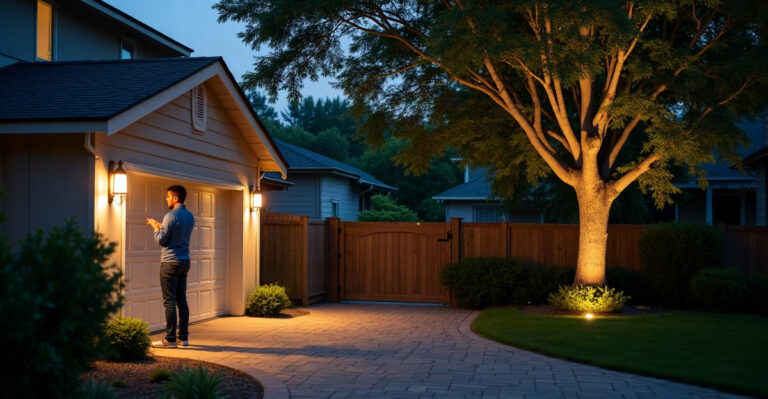
Motion activation works well for temporary light near a door, path, step, or package area. Proper sensor placement matters. We should aim sensors away from passing cars, public sidewalks, and areas with frequent wildlife activity to reduce false triggers. Our guide to outdoor motion sensor lights covers practical considerations.
Smart scenes can coordinate porch fixtures with pathways and entry lighting. That creates balanced coverage without relying on one high-output porch bulb. For a complete front-entry concept, explore these front yard lighting ideas and our residential outdoor lighting services.
Safety, Compatibility, and Porch-Light FAQs
Use bulbs and fixtures rated for damp or wet locations based on the installation area. Follow fixture wattage limits, bulb specifications, manufacturer instructions, and local electrical requirements. We should also confirm compatibility with dimmable bulbs, smart bulbs, enclosed fixtures, and integrated LED fittings. A qualified electrician should handle new wiring, outdoor electrical work, and code-compliance questions.
Common Porch-Light Questions
Is 800 lumens too bright for a porch light?
It can suit a larger, darker, recessed, or security-focused entry. It may be excessive for a small or well-lit porch. Shielding, thoughtful placement, dimming, or multiple lower-output fixtures can prevent glare.
Is 400 lumens bright enough for a front porch?
Approximately 400 lumens can be enough for many small to typical covered entries, especially where streetlights or landscape lighting provide ambient light.
What LED wattage equals a porch light’s lumen output?
Shop by lumens rather than watts. LED efficiency varies by bulb, so equal wattage ratings can produce different brightness levels. Lumens measure brightness; watts measure energy use.
What color temperature is best for porch lights?
Warm white light around 2700K–3000K is a practical choice for most welcoming residential porch applications.
Should porch lights stay on all night?
That depends on household preferences, ambient lighting, and security needs. Dimming, schedules, and motion activation can maintain visibility while reducing unnecessary brightness and energy use.
Are motion-sensor porch lights worth it?
They can provide useful temporary task lighting and added convenience. Careful sensor positioning and adjustment reduce false activations.
We can help create a balanced plan that suits the home, entry layout, and lighting priorities. Explore Big Pig Smart Lighting options or contact our team to discuss an individualized lighting plan for a home or project.