Driveway Lighting Ideas for Better Visibility and Curb Appeal
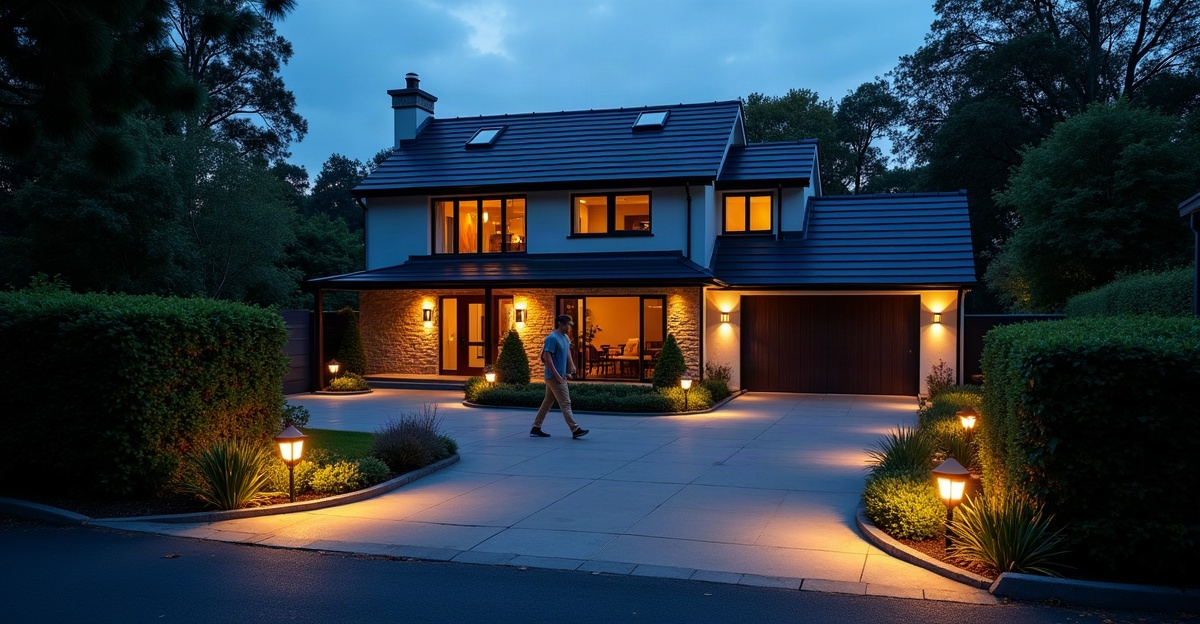
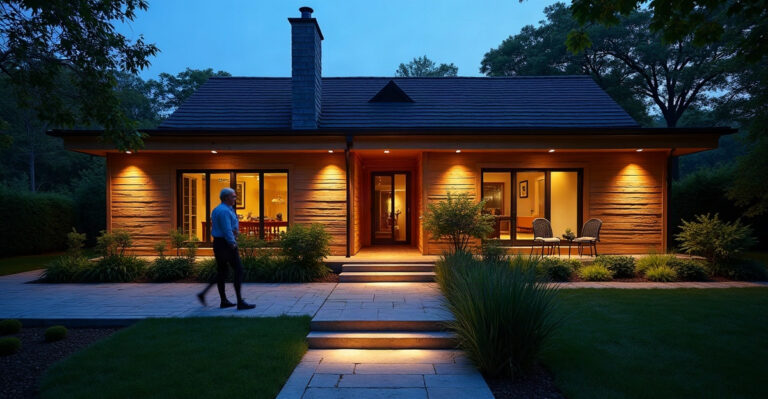
We recommend driveway lighting that prioritises clear visibility at gates, bends, parking bays, pedestrian routes, and level changes. A layered layout can also strengthen a property’s curb appeal. We combine route lighting, focused entrance lighting, and restrained accent fixtures to support safe movement. This approach limits glare, light spill, and wasted energy.
Key Takeaways
- We plan lighting around key decision points instead of illuminating every metre of the driveway.
- We use path lights for pedestrian routes, bollards for open or landscaped drives, and wall lights or downlights for gates, garages, and narrow areas.
- We reduce glare by directing fixtures downward, shielding visible light sources, and keeping light out of driver and neighbour sightlines.
- We specify traffic-rated recessed fittings only where drainage, load capacity, sealing, and future maintenance access support them.
- We use timers, motion sensors, dimming, and smart controls to deliver convenient, targeted lighting. These controls also reduce late-night energy use and light spill.
Plan for Safe, Welcoming Driveway Illumination
Driveway lighting ideas work best when we plan for visibility, movement, and appearance together. Brighter fixtures alone can create glare, harsh shadows, and unwanted light beyond the property.
We start by assessing driveway length and width, vehicle turning areas, parking bays, gates, pedestrian routes, steps, gradients, drainage, surface material, planting, power access, neighbour proximity, and preferred controls. This early review prevents poorly placed fixtures and helps us select lighting that suits the site.
Prioritise the places where drivers and pedestrians need clear visual information. These usually include gates, bends, parking areas, level changes, steps, walkways, garage entrances, house numbers, and doorways. A light at each key decision point is usually more useful than evenly filling every metre of driveway with light.
Lighting can improve awareness and make arrivals easier, but it is not a complete security solution. We should combine sensible exterior lighting with secure gates, maintained boundaries, visible addresses, and appropriate home security measures.
A practical plan balances safe navigation, attractive exterior design, responsible light use, installation requirements, budget, weather exposure, and long-term maintenance. For more guidance on positioning fixtures around exterior spaces, review outdoor lighting placement before finalising the layout.
An annotated driveway drawing can be useful at this stage. Mark route lighting beside pedestrian paths, targeted lighting at gates and parking bays, and restrained accent lighting around planting or architectural features.
Driveway Lighting Ideas That Work for Different Layouts
Different driveway illumination ideas suit different surfaces, layouts, and arrival patterns. We should select each fixture for a clear task rather than placing the same product everywhere.
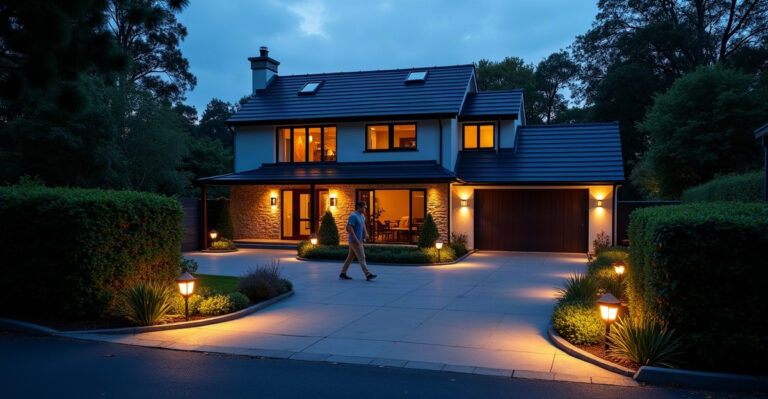
Low-level path lights suit walkways beside a driveway, side access routes, and paths from a parking space to the front door. They support safer walking without overpowering the vehicle route. Check beam spread, future plant growth, paving reflectivity, and how visible each fitting will look in daylight.
Bollards work well on long, open, curved, or landscaped driveways. They create visible markers and add architectural definition. However, poorly positioned bollards can obstruct vehicle movement or put a bright source directly in a driver’s line of sight.
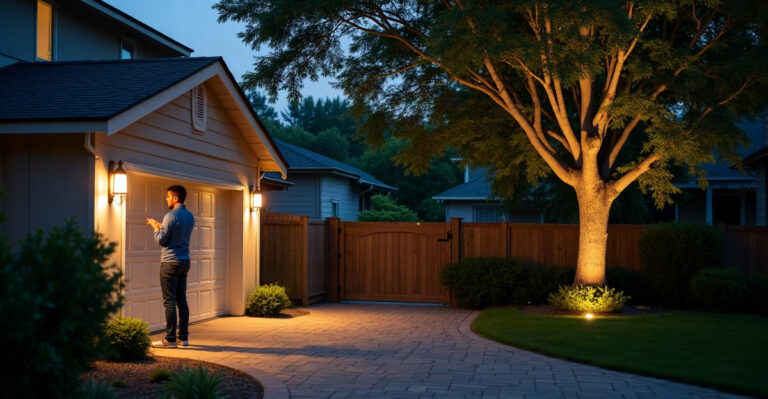
Downlights mounted on gateposts, walls, eaves, or a garage frontage direct light onto key arrival areas while keeping the fixture discreet. Mounting height, beam width, shadows, and shielding all affect the result. On narrow driveways or side routes, wall-mounted lights can be a practical alternative to freestanding fittings, provided they do not shine into drivers’ or neighbours’ sightlines.
Recessed in-ground fittings can define driveway edges, turning areas, and architectural paving details with a refined, low-profile effect. Any fixture exposed to vehicle traffic must be traffic-rated, meaning it is built and tested for the expected vehicle load. It also needs correct sealing, stable support, suitable drainage, and practical access for future servicing.
Driveway LED lighting can also include linear products set within protected wall details, steps, planters, retaining walls, and gate features. These fittings give a clean outline and subtle guidance light. We should not install strip or linear lighting across exposed vehicle routes unless the product is specifically rated and intended for that use.
Uplights create depth around entrance trees, planting, stonework, façades, and gate areas. These driveway accent lights can boost curb appeal without turning the whole driveway into a brightly lit surface. Keep beams contained to avoid spill into windows, neighbouring land, or the night sky. For more inspiration, see landscape lighting highlights.
Gate, house-number, and entrance lights help visitors, deliveries, and emergency services identify the property after dark. Garage-door and parking-bay lighting also improves visibility for reversing, unloading, and moving safely from the car to the home.
The strongest schemes use layers. Combine functional route lighting, targeted entry lighting, and subtle accents instead of relying on a single powerful floodlight. Our guide to layered outdoor lighting explains how these roles work together.
Placement, Brightness and Glare: How to Light the Driveway Properly
Path lights, bollards, wall lights, uplights, downlights, post lights, and vehicle-rated recessed fittings each serve different purposes. We should not treat them as interchangeable.
Glare occurs when a light source appears excessively bright against its surroundings or shines directly into a person’s view. It can make it harder to judge distance, see surface changes, or reverse safely. Aim fittings downward, use shielding where possible, and keep unshielded fixtures away from approach, turning, and reversing sightlines.
Beam spread describes how widely a fixture distributes light. A narrow beam concentrates light on a small feature, while a wider beam covers more area at lower intensity. Colour temperature describes the apparent warmth or coolness of white light. Warm white light often creates a more welcoming residential atmosphere. Cooler light can appear more clinical and may increase perceived glare, although the right choice still depends on the architecture, materials, and personal preference.
IP ratings indicate how well an enclosure resists ingress from solids and water. We should select outdoor-rated equipment appropriate for its exact exposure level, using manufacturer documentation and qualified electrical guidance.
Spacing is site-specific. Instead of copying a fixed distance rule, assess the fixture output, beam spread, mounting height, paving colour, surface reflectivity, obstacles, and the level of light already present. Dark paving, hedges, stone walls, and dense planting absorb or block light. Pale paving and glossy surfaces can reflect light and create glare.
Daytime appearance matters as well. Choose finishes and fixture sizes that suit the property, conceal cables carefully, allow for plant growth, and check sightlines from the street and from inside the home. Respect neighbour impact, wildlife, local light-pollution restrictions, and any community rules that apply.
For narrow driveways, wall lights and downward-facing fittings often make best use of limited space. Long landscaped drives suit spaced bollards and selective tree uplighting. Steep driveways need clear illumination at level changes and pedestrian crossings. Gates benefit from focused post, wall, or downlighting. Parking bays need practical overhead or wall-mounted light. Poorly drained surfaces usually require alternatives to recessed fittings.
Smart Controls for Convenient, Lower-Impact Driveway Lighting
Smart driveway LED lighting is an optional upgrade, not a requirement. Standard switched or timer-controlled lighting can work very well. Smart controls add convenience where we want flexible operation, lower late-night output, or coordinated scenes.
Useful features include schedules, astronomical timers that follow changing sunset times, dimming, scene setting, app control, geofencing, occupancy sensing, motion sensing, and integration with wider smart-home routines. A simple dusk-to-bedtime schedule can run low-level route lighting without leaving it on throughout the night. An arrival scene can brighten the gate, parking bay, and route to the front door. Lower output late at night reduces unnecessary energy use and light spill.
Motion-activated lighting works well at occasional-use side access routes, gates, and arrival zones. Sensors need careful aiming and sensitivity settings. Passing pedestrians, animals, vehicles, and movement beyond the boundary can trigger poorly positioned sensors.
Constant bright lighting is not automatically more secure or more effective. Targeted, well-controlled lighting often gives better visibility with less glare and less impact on neighbours. Smart systems still require reliable outdoor-rated fixtures, sensible wiring or wireless planning, stable connectivity where applicable, and easy manual override controls.
For homeowners considering integrated scenes and app-based control, Big Pig Smart Lighting can provide professional input on smart lighting design. Smart features can also complement the ideas in smart outdoor curb appeal planning.
Installation, Weather Resistance and Long-Term Maintenance
Low-voltage landscape lighting and mains-powered exterior lighting have different installation needs. Low-voltage systems generally use a transformer and can suit many path, planter, and landscape applications. Mains-powered systems may be appropriate for larger fixed fittings, wall lights, and new exterior circuits, but they require suitable electrical planning.
We recommend qualified electrical support for mains work, new circuits, buried cables, and installations involving drainage, paving, walls, or structural changes. Use equipment rated for the installation environment and local climate, based on manufacturer documentation, qualified electrical guidance, and relevant local authority requirements.
Recessed driveway lighting has important limits. It may be unsuitable for poorly drained driveways, unstable surfaces, heavily salted environments, or projects where future maintenance access is limited. Water management, load support, sealing, and replacement access must all be resolved before installation.
Check cable routes before landscaping or repaving. Plan for drainage around fittings, expected vehicle loading, weather exposure, lens cleaning, driver replacement, and plant growth that could block the light. Local restrictions may also address exterior lighting, spill, and light pollution.
Choose the Right Approach for Your Driveway
The best choice depends on layout, style, budget, installation complexity, maintenance expectations, and desired controls. Low-level path lights are a strong choice for pedestrian routes. Bollards suit long, open, or landscaped drives. Wall lights and downlights suit narrow driveways, gates, garages, and entrance zones. Use traffic-rated recessed fixtures only where drainage, loading, sealing, and servicing requirements can be met.
There is no single best lighting type for every driveway. Vehicle movement, pedestrian access, surface material, drainage, architecture, planting, power availability, and neighbour proximity should shape the design. For broader exterior inspiration, explore these front yard lighting ideas.
Common Driveway Lighting Questions
What is the best type of lighting for a driveway? A layered combination is usually best: route lighting for walking, focused lighting at gates and parking areas, and subtle accents for visual depth.
How can we light a driveway without creating glare? Aim fixtures down, shield visible light sources, avoid direct sightlines for drivers, and use several lower-output fittings rather than one harsh floodlight.
Are recessed driveway lights safe for cars to drive over? They can be, provided the fixtures are traffic-rated for the expected load and installed with correct support, sealing, drainage, and service access.
How far apart should driveway lights be placed? Spacing depends on beam spread, fixture output, mounting height, surface reflectivity, obstacles, and the driveway layout. Test the planned effect rather than relying on a universal measurement.
Are bollard lights or path lights better for a driveway? Bollards suit open and landscaped routes where visible markers help. Path lights suit pedestrian paths and lower-profile guidance close to the ground.
Can driveway lighting use a motion sensor or smart app? Yes. Motion sensing works well for occasional-use zones, while smart apps, timers, and scenes offer more flexible everyday control.
What colour temperature is best for residential driveway lighting? Warm white often suits welcoming homes and landscape features. Cooler tones may suit contemporary schemes, but can feel harsher and create more perceived glare.
Do we need an electrician to install driveway lights? Use a qualified electrician for mains-powered work, new circuits, buried cables, and complex exterior installations. Low-voltage systems may still benefit from professional design and installation support.
Start by assessing the driveway layout and marking the areas that need useful light. Then create a balanced plan, consult a qualified installer for mains work, and consider professional lighting and smart-control advice for a polished result.