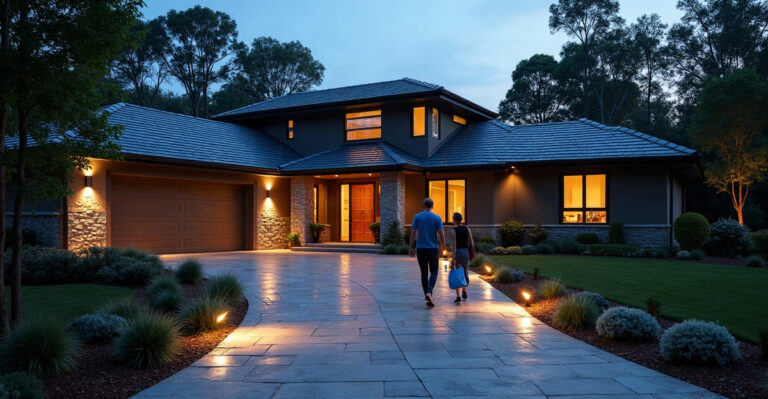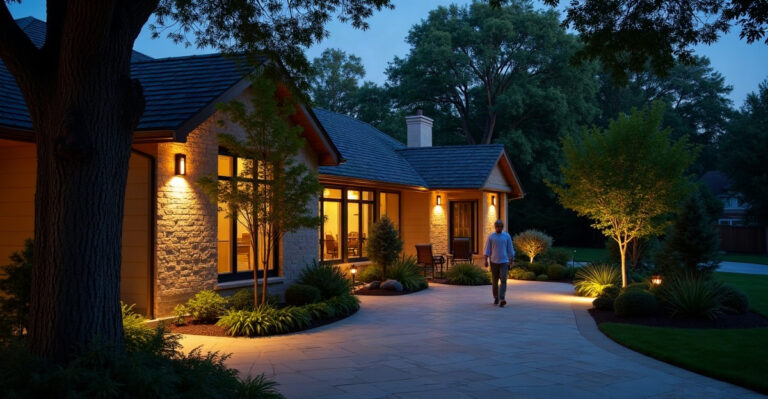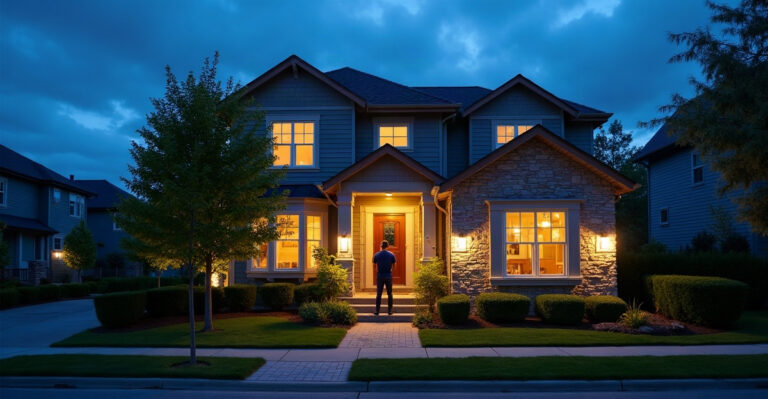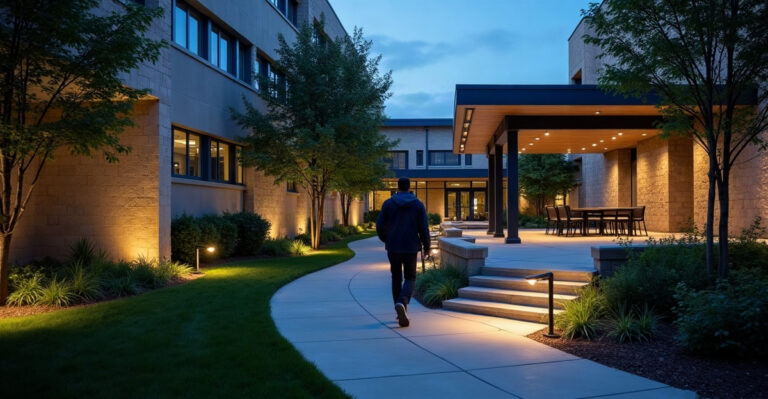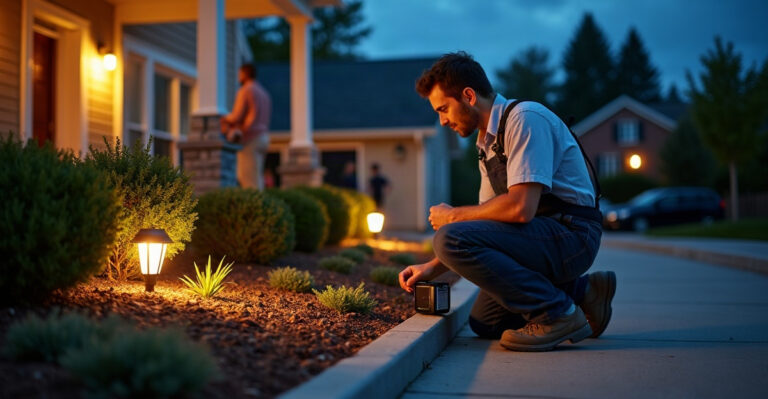
Driveway Lighting Ideas for Better Visibility and Curb Appeal
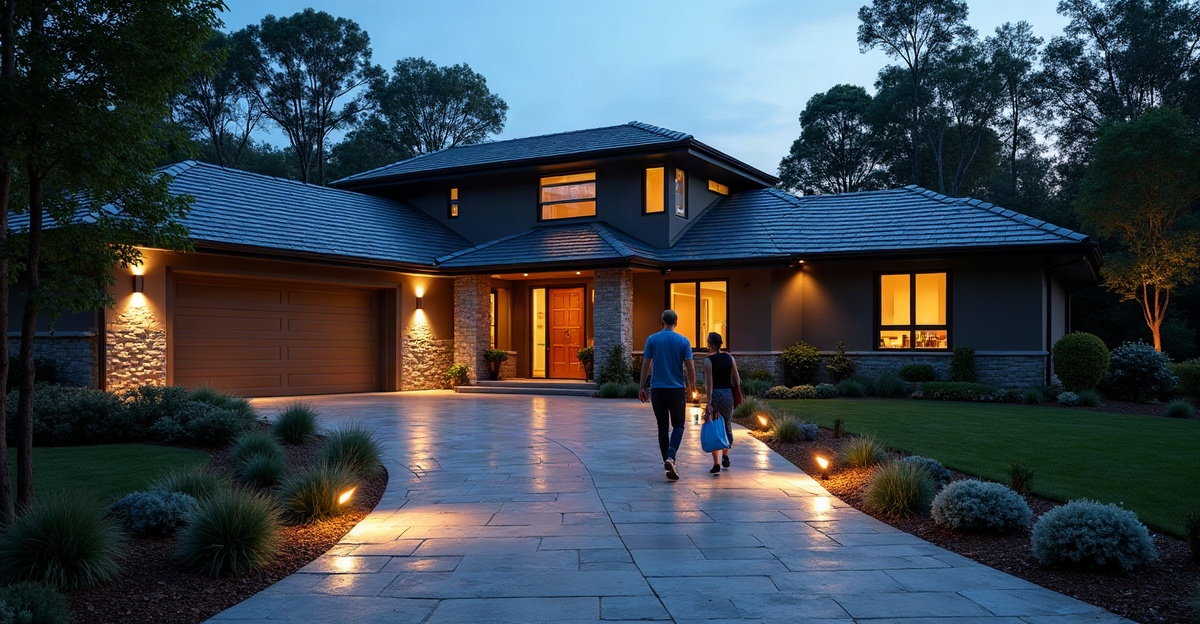
Driveway lighting works best when we combine route guidance, focused entry lighting, and subtle accents. This approach improves visibility without causing glare. We create a site-specific plan that considers vehicle flow, pedestrian access, surface conditions, drainage, fixture positions, and smart controls. These details support safety and kerb appeal.
Key Takeaways
- We prioritise gates, bends, parking bays, garage entrances, steps, paths, house numbers, and front-door routes before adding decorative features.
- We use layered lighting, including path lights for walking routes, bollards for open driveways, and wall lights or downlights for gates and garages.
- We reduce glare by directing fittings downwards, shielding visible light sources, and placing bright lights outside drivers’ direct sightlines.
- We select outdoor-rated fittings for each installation area. We use traffic-rated recessed lights only where drainage, load capacity, sealing, and maintenance access meet site needs.
- We use timers, dimmers, motion sensors, or smart scenes to deliver light when needed. These controls reduce energy use and limit unwanted light spill.
Plan for Safe, Welcoming Driveway Illumination
Effective driveway lighting is not about installing the brightest possible fixtures. A successful design supports safe driving and walking, makes arrivals easier, complements the home’s architecture, and controls glare and unwanted light spill.
The best driveway lighting ideas begin with a clear site plan. Before selecting fittings, assess the driveway’s length and width, vehicle turning space, parking bays, gates, pedestrian routes, steps, slopes, drainage, surface material, planting, available power, neighbour proximity, and preferred controls.
Quick Driveway Lighting Planning Checklist
Identify the following before installation:
- Entry gates, gate controls, house numbers, and delivery access points
- Bends, turning areas, parking bays, garage entrances, and reversing zones
- Walkways, side-access routes, steps, uneven surfaces, and changes in level
- Dark paving, walls, hedges, or planting that may absorb or block light
- Potential glare lines from approaching cars, neighbouring homes, and street traffic
- Drainage routes, buried services, cable paths, and areas exposed to vehicle loads
- Required controls, including switches, timers, sensors, dimming, or smart scenes
Prioritise areas where drivers and pedestrians need visual information. Gates, corners, parking spaces, steps, paths, garage doors, house numbers, and front-door routes all deserve attention before decorative features.
Lighting can improve awareness and route finding, but it is not a complete security solution. A well-planned scheme works alongside secure gates, clear sightlines, sensible landscaping, and appropriate property security measures. Our guide to driveway safety lighting explains how permanent lighting can support safer arrivals without relying on harsh, all-night floodlighting.
A practical plan balances safe movement, exterior appearance, responsible light use, installation needs, budget, weather exposure, and future maintenance. An annotated layout is often useful: mark route lighting, entry lighting, parking-area lighting, and accent lighting before choosing products.
Driveway Lighting Ideas That Work for Different Layouts
Different layouts need different fixture types. The strongest driveway illumination ideas use each fitting for a specific task rather than repeating the same light across the entire property.
Low-level path lights work well beside pedestrian routes, side-access paths, and the route between a parking area and the front door. They provide useful guidance without overpowering the driveway. Check beam spread, planting growth, paving reflectivity, and how prominent each fitting will look in daylight.
Bollards suit long, open, curved, or landscaped driveways. They create clear visual markers and add architectural presence during the day. Position them outside vehicle overhang and turning paths. Poor placement can obstruct movement or put a bright source directly in a driver’s sightline.
Downlights fitted to gateposts, walls, eaves, or garage frontages direct illumination onto important arrival areas while keeping the fixture discreet. They are especially useful at gates, garage doors, and narrow approaches. Mounting height, beam spread, shadows, and shielding all matter. Our under-eave lighting options can provide a clean solution where the building structure offers a suitable mounting position.
Wall-mounted lights are practical where driveways run beside a garage, boundary wall, or home. They free up ground space and can light constrained access routes effectively. Aim them carefully: a wall light that shines into an approaching driver’s eyes creates discomfort rather than visibility.
Recessed in-ground fittings create a refined, low-profile edge or turning-point marker. Use them only where the product is traffic-rated for the expected vehicle load. Proper installation also requires sound support, effective sealing, drainage, and service access. In-ground lighting is a specialist detail, not a universal solution.
Driveway LED lighting can also include linear or strip lighting in protected architectural channels, retaining walls, planters, steps, and gate details. This creates a modern outline and subtle guidance effect. Avoid installing strip products on exposed vehicle routes unless they are specifically engineered and rated for that purpose.
Uplighting adds depth around a driveway without flooding the whole surface with light. Highlight a feature tree, stone wall, gate pillar, planting bed, or façade near the entrance. Our landscape lighting techniques can help create a stronger arrival experience using planting and architecture. Keep uplights shielded and aimed away from windows, neighbouring properties, and the sky.
Gate, house-number, and entrance lighting improves wayfinding for visitors, deliveries, and emergency services. Garage-door and parking-bay lighting supports unloading, reversing, and the transition from car to home.
Layering produces the most balanced result. Combine functional route lighting, focused entry lighting, and restrained driveway accent lights rather than relying on one powerful floodlight. For a wider exterior scheme, see how to layer outdoor lighting with distinct functional and decorative zones.
Placement, Brightness and Glare: How to Light the Driveway Properly
Path lights, bollards, wall lights, uplights, downlights, post lights, and vehicle-rated recessed fittings all have different roles. They are not interchangeable. Good placement matters more than simply increasing brightness.
Glare occurs when a light source appears excessively bright within the field of view. It can reduce visibility, particularly while driving, reversing, or moving from a darker area into a brighter one. Aim fittings downward, use shields where appropriate, and keep exposed light sources out of direct sightlines.
Beam spread describes how widely a fixture distributes light. A narrow beam concentrates light on a small area, while a broad beam covers more ground with lower intensity. Select beam spread according to the mounting position and the area that needs guidance.
Colour temperature describes whether white light appears warm or cool. Warm white often feels more welcoming for residential driveways and works well with brick, timber, planting, and traditional façades. Cooler light can suit a contemporary design, but it may feel clinical and can increase perceived glare. Personal preference, surrounding materials, and the wider lighting scheme should guide the choice.
An IP rating indicates how well an enclosure resists contact with solids and water. Select outdoor-rated equipment appropriate for the fitting location and exposure level, following manufacturer documentation and qualified electrical guidance. Low-voltage systems can simplify some landscape installations, while mains-powered exterior fittings need appropriate electrical planning and professional installation.
Do not copy a fixed spacing rule. Fixture spacing depends on beam spread, mounting height, output, surface reflectivity, obstacles, and the desired effect. Dark paving, dense hedges, and stone walls absorb or block light. Pale paving and smooth walls can reflect light and create glare.
Consider the daytime view as carefully as the night-time result. Fixture finish, scale, concealed cables, landscape integration, and views from the home and street all affect curb appeal. Our smart curb appeal lighting guidance shows how a coordinated system can make an entrance feel more intentional.
Respect neighbours, wildlife, and local light-pollution requirements. Use the lowest practical output, direct light where it is needed, and avoid sending light across property boundaries.
Smart Controls for Convenient, Lower-Impact Driveway Lighting
Smart driveway LED lighting is optional, but it can make a well-planned system easier to use. Schedules, astronomical timers, dimming, scenes, app control, geofencing, occupancy sensing, and smart-home integration all provide practical control without requiring lights to operate at full output all night.
Low-level route lighting can be scheduled from dusk until bedtime. An arrival scene can brighten the gate, parking bay, and front-door route when a vehicle approaches. Late-night dimming reduces unnecessary energy use and light spill while retaining basic orientation lighting.
Motion sensing suits occasional-use areas such as side-access routes, gates, and arrival zones. Sensors must be aimed and adjusted correctly. Depending on placement and sensitivity, passing pedestrians, animals, or vehicles can trigger them.
Constant bright lighting is not automatically more secure or more effective. Targeted illumination at the right time often delivers a better result with less glare. Smart systems still require outdoor-rated fittings, sensible wiring or wireless planning, dependable connectivity where applicable, and a simple manual override.
At Big Pig Smart Lighting, we can help integrate controls into a wider residential outdoor lighting plan, whether the project needs simple automation or coordinated scenes across the property.
Installation, Weather Resistance and Long-Term Maintenance
Low-voltage landscape lighting and mains-powered exterior lighting require different installation approaches. Low-voltage systems can be suitable for many path, garden, and accent applications. Mains work, new circuits, buried cables, and installations involving drainage or structural changes should be completed by a qualified electrician or appropriate professional.
Choose equipment rated for its installed location and local climate. Manufacturer documentation, qualified electrical guidance, and relevant local authorities should guide decisions on electrical standards, IP ratings, safety requirements, and energy use.
Recessed driveway fittings need particular care. They may be unsuitable for poorly drained driveways, unstable surfaces, heavily salted environments, or projects where future service access is limited. Water must drain away from the fitting. The fixture must handle expected traffic loading, and the lens, driver, lamp, or complete fitting must remain accessible for maintenance.
Plan cable routes before paving, planting, or hardscaping begins. Protect cables from vehicle damage and excavation. Account for weather exposure, cleaning needs, replacement access, and plant growth that may later block the beam.
Check local restrictions or community rules that cover exterior lighting, light spill, and light pollution. A thoughtful scheme protects the appearance of the property while limiting its impact beyond property boundaries.
Choose the Right Approach for Your Driveway
There is no single best solution for every property. The right approach depends on vehicle movement, pedestrian access, driveway surface, drainage, architecture, planting, power availability, neighbour proximity, budget, and desired controls.
Low-level path lights suit pedestrian routes. Bollards work best on long, open, or landscaped drives. Wall lights and downlights are strong choices for narrow driveways, gates, garages, and entrances. Use traffic-rated recessed fixtures only where drainage, loading, sealing, and servicing needs can all be met.
For broader inspiration, our front yard lighting ideas can help connect driveway illumination with the rest of the property. Placement decisions can also be improved by reviewing where outdoor lights should go before installation.
Frequently Asked Questions
What is the best type of lighting for a driveway?
A layered scheme usually works best: route lighting for safe movement, targeted entry lighting, and limited accents for character.
How can we light a driveway without creating glare?
Use shielded fixtures, aim light downward, keep bright sources outside driving sightlines, and avoid excessive output.
Are recessed driveway lights safe for cars to drive over?
They can be, provided the fixtures are traffic-rated for the expected load and installed with correct support, drainage, sealing, and maintenance access.
How far apart should driveway lights be placed?
Spacing depends on beam spread, mounting height, output, paving colour, obstructions, and the required level of guidance.
Are bollard lights or path lights better for a driveway?
Bollards suit open and landscaped routes. Path lights are generally better for pedestrian paths beside a driveway.
Can driveway lighting use a motion sensor or smart app?
Yes. Both can provide convenient control when the fixtures, sensor placement, connectivity, and manual override are planned properly.
What colour temperature works best for residential driveway lighting?
Warm white commonly creates a welcoming appearance. Cooler light may suit some modern designs but can appear harsher.
Do we need an electrician to install driveway lights?
Use a qualified electrician for mains-powered work, new circuits, buried cables, and any installation with electrical or structural implications.
Assess the layout first, then create a practical lighting plan around movement, appearance, and maintenance. For professional design or smart-control advice, we can arrange a lighting consultation and help identify a suitable approach.