Front Yard Lighting Ideas to Improve Your Home
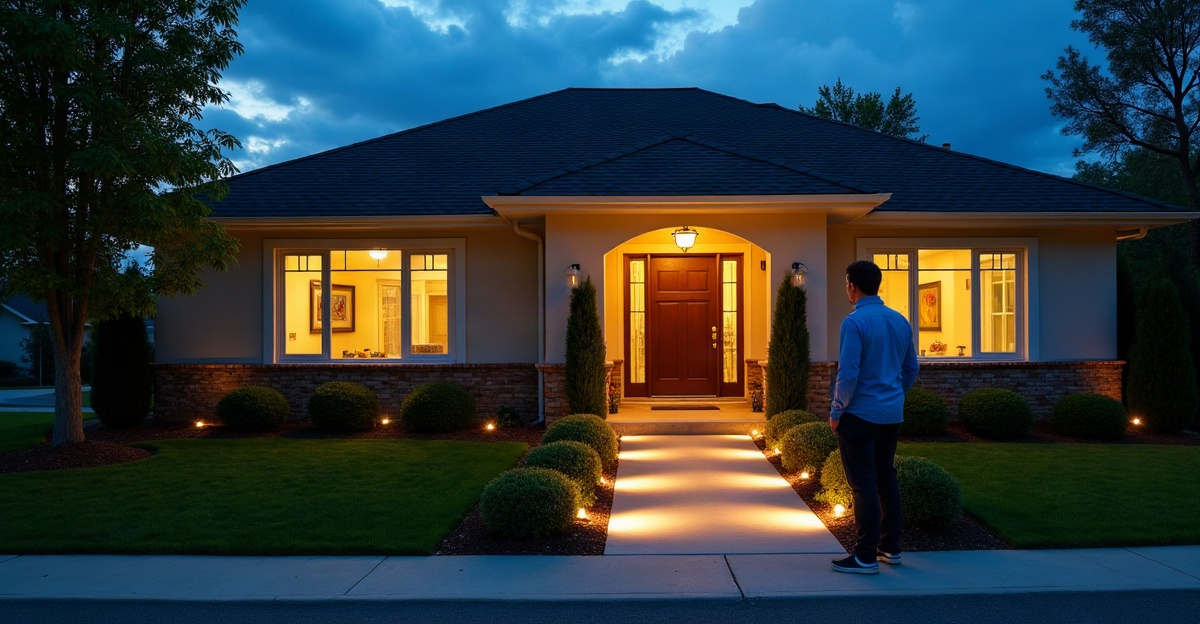
Front yard lighting helps us make walkways, steps, driveways, and entries safer and more inviting. A layered plan lets us combine practical path and entry lights with selective landscape and façade accents. Shielded fixtures and smart controls reduce glare and unwanted light spill.
Key Takeaways
- We map paths, steps, driveway edges, doors, house numbers, gates, and focal features before we choose fixtures.
- We prioritize low-glare task lighting for routes and level changes. Then, we add warm ambient and accent lighting where it provides value.
- We use overlapping pools of light on walkways instead of evenly spaced, overly bright fixtures that create a runway effect.
- We match fixture type, scale, finish, and warm color temperature with the home’s architecture and each lighting zone.
- After dark, we test fixture placement and use shielding, dimming, timers, or motion activation to control glare, spill, and overnight output.
Start With a Front Yard Lighting Plan
The best front yard lighting ideas begin with the way people move through the property. Before adding fixtures, identify the routes guests and family members use most often.
Look at the front door, walkway, driveway, steps, gates, porch, house numbers, and landscaping. These areas should guide the lighting plan.
A professional residential outdoor lighting design can combine safety, appearance, and comfort without making the front yard too bright.
Walk the Property After Dark
A daytime review can help with measurements, but nighttime conditions reveal where lighting is really needed.
Look for:
- Dark steps
- Uneven walkway areas
- Hidden driveway edges
- Hard-to-see house numbers
- Dark entrances
- Overgrown landscaping
- Areas with strong glare
- Corners that feel disconnected
This walk-through can help identify where functional lighting should come first and where decorative lighting can add value.
Light Walkways Without Creating a Runway Effect
Path lighting is one of the most useful front yard lighting ideas because it helps people move safely from the street or driveway to the front door.
Avoid placing identical fixtures in a perfectly straight line on both sides of a walkway. This can create an overly formal runway appearance.
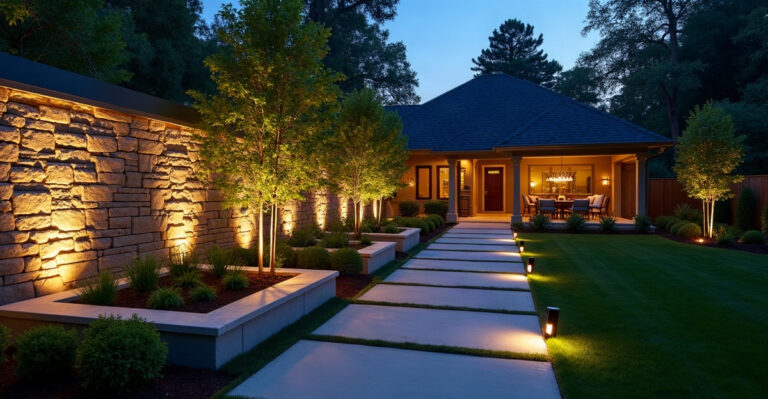
Instead, use staggered placement and overlapping pools of light.
Focus on Turns and Changes in Elevation
Give extra attention to:
- Walkway curves
- Steps
- Sloped areas
- Changes in paving material
- Narrow passages
- Garden edges
The goal is to help people understand where the path continues without flooding the whole area with light.
Fixtures should direct light downward and across the walking surface. Shielding can help reduce glare and keep the light focused.
Make the Front Door Easy to Find
The front entrance should be one of the clearest visual points after dark.
Wall lights beside the door can provide balanced illumination. Homes with covered porches may also use ceiling or recessed lighting to brighten the entrance without placing a bright fixture directly at eye level.
House numbers should also remain visible at night. Depending on their location, they may receive light from a nearby wall fixture, landscape fixture, or dedicated light.
Use Under-Eave Lighting for Subtle Coverage
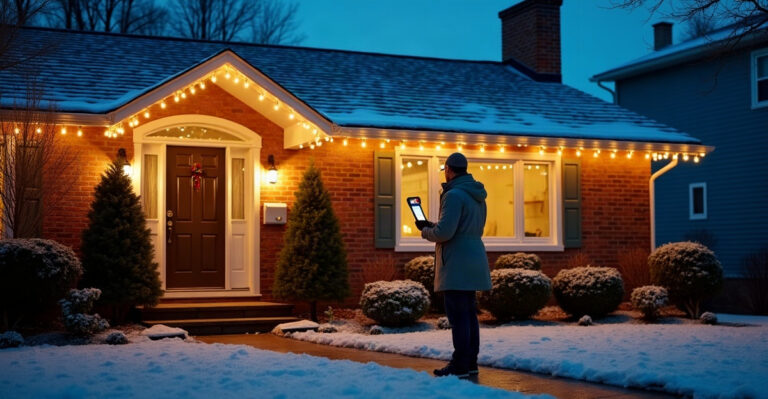
Under-eave lighting can provide soft illumination around front walls, entryways, rooflines, and architectural details.
Because fixtures sit beneath the roof edge, they can remain less noticeable during the day while adding controlled light after dark.
Careful spacing is important. Too many fixtures can make the façade look flat and overly bright.
Add Accent Lighting to Front Yard Landscaping
Landscape lighting can help selected trees, garden beds, stonework, or architectural features stand out after sunset.
Good outdoor accent lighting focuses attention on a few important features instead of lighting every plant.
Highlight Trees and Architectural Features
Possible focal points include:
- Mature trees
- Decorative walls
- Columns
- Stone façades
- Sculptures
- Entry gates
- Water features
- Large shrubs
Uplighting can emphasize height and texture. Downlighting from trees or structures can create softer pools of illumination below.
The strongest designs also leave some areas darker. This contrast adds depth and makes highlighted features more noticeable.
Illuminate Driveways Carefully
Driveway lighting can improve visibility without turning the entire front yard into a brightly lit parking area.
Place fixtures near driveway entrances, curves, parking areas, garage doors, and nearby pedestrian routes.
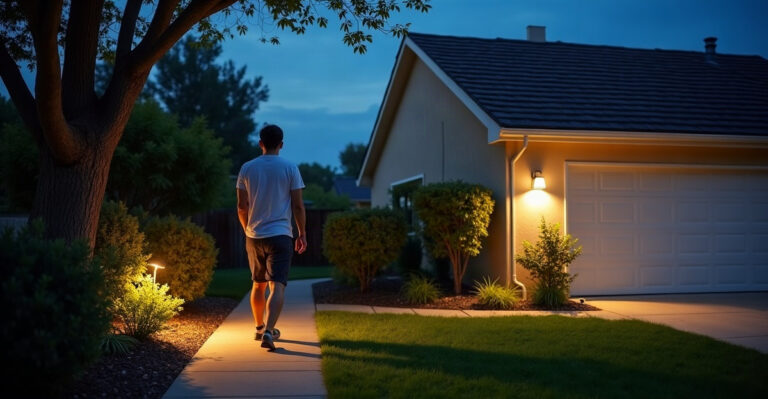
Low-level fixtures can define edges, while lights mounted near the garage can help with parking and unloading.
Avoid aiming high-output fixtures directly toward the street or neighboring properties.
Connect the Driveway to the Main Walkway
Think about what happens after someone parks.
The route between the driveway and front door should feel connected. Adding lighting around nearby steps, paths, or landscaping can help create a smooth transition.
This approach is especially useful on larger front yards where the garage sits away from the main entrance.
Use Mood Lighting Around Porches and Seating Areas
Not every front yard light needs to serve a purely practical purpose.
Homes with front porches, benches, or small seating areas can benefit from softer outdoor mood lighting.
Warm, lower-level illumination can make these spaces feel more comfortable without overwhelming the rest of the yard.
Layer Different Types of Light
A front porch might use several lighting layers:
- Wall lights around the door
- Recessed ceiling lights
- Step lighting
- Accent lighting near columns
- Landscape lighting around nearby plants
Each layer should serve a purpose. Dimming and zoning can help control the overall brightness.
Improve Front Yard Security Lighting
Front yard lighting can also improve visibility around vulnerable areas.
Useful locations for outdoor security lighting can include:
- Side gates
- Garage doors
- Side yards
- Front entrances
- Driveway edges
- Areas near ground-floor windows
Motion-activated fixtures can provide additional light when movement occurs.
Avoid Harsh Floodlighting
Very bright floodlights can create glare and deep shadows. They may also disturb neighbors or make it harder to see beyond the brightest area.
Use shielded fixtures and direct the beam toward the area that needs coverage.
Motion sensors should also be positioned carefully so normal street traffic or passing animals do not trigger them constantly.
Match Fixtures to the Home’s Architecture
Lighting should look like part of the property rather than an afterthought.
Consider the home’s architecture, exterior colors, materials, and size when choosing fixtures.
A traditional home may suit classic lantern-style wall lights, while a modern property may work better with simple, low-profile fixtures.
Fixture size matters too. Small lights can disappear visually on a large façade, while oversized fixtures can overpower a smaller entrance.
Keep the Color Temperature Consistent
Warm light often works well in residential front yards because it feels comfortable and pairs naturally with landscaping and many exterior finishes.
Try to keep nearby fixtures within a similar color temperature range. Mixing very warm and very cool lights can make the design appear inconsistent.
Add Seasonal Lighting Without Changing the Entire Layout
Front yard lighting can also support holidays and special events.
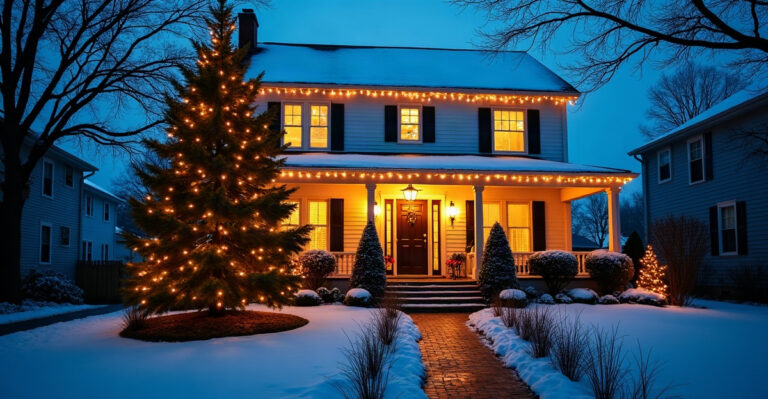
Outdoor holiday lights can add temporary or programmable color to rooflines, landscaping, entryways, and other exterior features.
If holiday lighting is part of your yearly plans, consider this during the main lighting design. Permanent fixture locations may provide a cleaner way to support different seasonal looks.
Use Timers, Dimmers, and Smart Controls
Outdoor lighting does not need to operate at full brightness all night.
Timers, dimmers, motion sensors, and separate lighting zones give homeowners more control.
For example, entry and path lighting may remain active during evening hours, while decorative accent lights can turn off later.
Security fixtures can operate through motion detection rather than staying continuously bright.
This helps reduce unnecessary light while keeping important areas visible.
Common Front Yard Lighting Mistakes to Avoid
Some front yard lighting ideas look attractive on paper but work poorly when installed.
Common mistakes include:
- Installing too many fixtures
- Using fixtures that are too bright
- Pointing lights toward windows
- Ignoring glare
- Lighting every tree equally
- Placing path lights in perfect rows
- Using different color temperatures without a plan
- Forgetting how plants will grow
- Leaving dark gaps around steps
- Using security lights as general landscape lighting
Testing the system after dark can reveal problems that are difficult to see during installation.
Review the Front Yard as Landscaping Changes
Outdoor spaces change over time.
Trees become taller. Shrubs grow wider. New plants may block existing fixtures. Walkways, garden beds, or seating areas may also change.
Review the lighting periodically and make small adjustments where needed.
Big Pig Smart Lighting can help create a front yard lighting plan that combines walkway visibility, architectural accents, landscape lighting, security, and comfortable outdoor illumination.
For help choosing fixtures and planning their placement, contact us to discuss your front yard and lighting goals.
Frequently Asked Questions About Front Yard Lighting Ideas
What are the best front yard lighting ideas for a small home?
Focus on the entrance, main walkway, steps, and one or two landscaping features. A few carefully placed fixtures can create more impact than filling a small front yard with lights.
Where should front yard lights be placed?
Prioritize the front door, pathways, steps, driveway edges, house numbers, and any areas where people regularly walk. Accent lights can then highlight selected trees, walls, or landscaping features.
How bright should front yard lighting be?
Front yard lighting should be bright enough to help people see routes and entrances without creating glare. Different areas may need different brightness levels, so use lower-intensity accent lighting and stronger task lighting only where necessary.
What color light is best for a front yard?
Warm white lighting often works well for residential yards because it creates a softer, more welcoming appearance. Keeping a similar color temperature across nearby fixtures can also make the design look more consistent.
How can I make my front yard lighting look more professional?
Use layers of lighting instead of relying on one fixture type. Combine path, entry, accent, and security lighting while keeping brightness controlled. Consistent fixtures, careful spacing, shielding, and nighttime testing can also create a more polished appearance.