Commercial Building Exterior Lighting: Design and Safety Tips
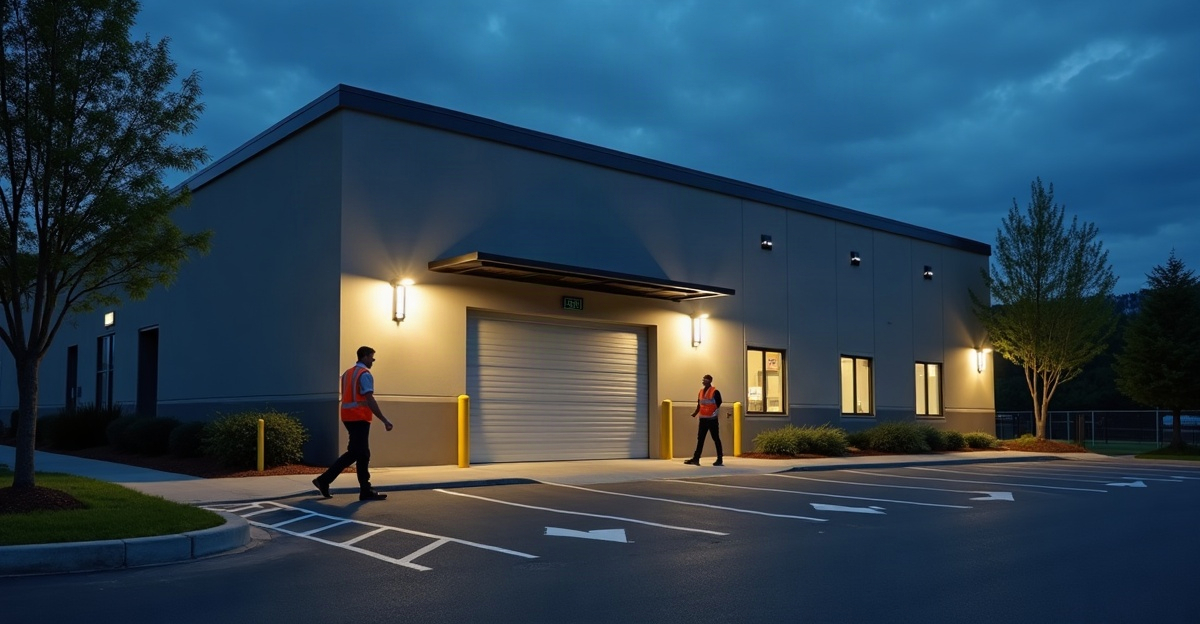
Commercial exterior lighting needs a zone-by-zone plan. We prioritize entrances, accessible routes, parking areas, loading zones, and emergency exits before architectural accents. Effective layouts give pedestrians and drivers clear visibility. They also limit glare, shadows, light spill, energy use, and maintenance demands.
Key Takeaways
- We assess each exterior area after dark. This reveals user activity, hazards, traffic flow, and visibility needs.
- We control light with proper distribution, shielding, mounting heights, and aiming. We don’t rely on higher brightness alone.
- We match fixture types to each application. Use area lights for parking, wall-mounted luminaires for doors, and canopy fixtures for covered service areas.
- We use LED fixtures with photocells, timers, zones, dimming, and correctly configured sensors. These controls align lighting with operating hours.
- We confirm electrical capacity, maintenance access, permits, and local code requirements before installation. We also review accessibility, energy, and dark-sky standards.
Start With a Commercial Exterior Lighting Plan
Good commercial building exterior lighting starts with how people use the property after dark. A warehouse, retail center, office building, restaurant, and medical facility may all have different lighting needs.
We first divide the property into functional zones. This helps us decide which areas need higher visibility and which areas only need lower-level accent or orientation lighting.
A professional commercial outdoor lighting plan can bring these zones together into one coordinated system.
Identify the Most Important Exterior Zones
Common priority areas include:
- Main entrances
- Employee entrances
- Parking lots
- Accessible parking spaces
- Walkways
- Loading docks
- Delivery areas
- Emergency exits
- Drive lanes
- Building corners
- Service areas
- Outdoor seating areas
Each space has a different purpose. Lighting should match that purpose rather than using the same fixture and brightness throughout the property.
Prioritize Entrances and Accessible Routes
Entrances should be easy to locate from parking areas and pedestrian routes.
Wall-mounted fixtures, canopy lights, or other controlled luminaires can help illuminate doors, steps, ramps, and nearby walkways. Lighting should make level changes and obstacles visible without shining directly into people’s eyes.
Accessible routes also need careful attention. Walkways connecting accessible parking spaces, ramps, entrances, and other key areas should remain clear and easy to follow.
Avoid Excessive Brightness Around Doors
One common mistake is placing extremely bright fixtures directly above entrances.
When one area becomes much brighter than its surroundings, people’s eyes need time to adjust when they move between light levels. Strong glare can also make nearby darker areas harder to see.
Balanced commercial building exterior lighting uses enough illumination for the task while controlling brightness and contrast.
Plan Parking Lot Lighting for Drivers and Pedestrians
Parking lots often cover a large part of a commercial property. Their lighting should support drivers, pedestrians, and employees moving between vehicles and the building.
Pole-mounted area lights can provide broad coverage. Fixture height, spacing, beam distribution, and aiming all affect how evenly light reaches the pavement.
The goal is to reduce dark gaps while avoiding excessive brightness.
Pay Attention to Pedestrian Routes
Parking lot lighting should not focus only on vehicles.
People also need to see:
- Curbs
- Crosswalks
- Cart return areas
- Islands
- Wheel stops
- Changes in elevation
- Sidewalk entrances
Lighting these transition areas helps create a clearer route from a parked vehicle to the building.
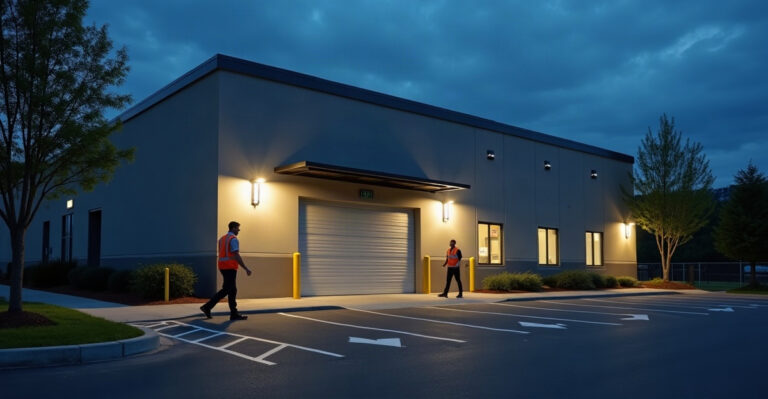
Improve Visibility Around Loading and Service Areas
Loading docks and service areas have different needs from customer entrances.
Employees may need to identify dock edges, stairs, vehicles, equipment, and delivery routes. These areas can also operate before sunrise or after normal business hours.
Canopy fixtures, wall-mounted lights, and targeted area lighting can help support visibility.
Keep Fixtures Away From Direct Sightlines
Lights mounted around loading areas should illuminate work surfaces without shining directly toward drivers or workers.
Glare can reduce visibility even when a space is technically bright. Shielding, correct mounting heights, and careful aiming can improve performance without increasing wattage.
Use Security Lighting in Vulnerable Areas
Exterior lighting can support site security by improving visibility around doors, gates, parking areas, and other sensitive locations.
Professional outdoor security lighting can be planned around the property’s actual risks and operating schedule.
Common locations include:
- Rear entrances
- Side doors
- Storage areas
- Gates
- Loading docks
- Utility areas
- Parking lot edges
- Building corners
Combine Lighting With Sensors and Controls
Motion sensors may work well in areas that do not need full output all night.
A fixture can remain dimmed during low activity and increase output when motion occurs. This can reduce energy use while keeping the area functional when needed.
Sensors must be configured carefully. Poor placement can cause unnecessary activation from passing vehicles, animals, vegetation, or nearby activity.
Add Architectural Lighting Without Creating Glare
After functional zones are covered, architectural lighting can improve the building’s nighttime appearance.
Outdoor accent lighting can highlight façades, columns, signage, landscaping, textured surfaces, and other design features.
Accent lighting should remain secondary to safety and task lighting.
Highlight Selected Features
Not every wall or architectural element needs the same amount of light.
Choose a few visual focal points, such as:
- Main entrance façades
- Brand signage
- Columns
- Stone or brick features
- Landscape trees
- Monument signs
- Architectural projections
Using light selectively creates depth. It also prevents the building from appearing flat or overly bright.
Use Under-Eave Lighting for Covered Areas
Some commercial buildings have long rooflines, covered walkways, entrance canopies, or architectural overhangs.
Under-eave lighting can provide controlled illumination in these areas while keeping fixtures visually discreet.
This type of lighting may work well around entrances, exterior corridors, patios, and architectural edges.
Spacing should match the size of the area and the fixture’s beam spread. Too many fixtures can create bright spots, while too few may leave inconsistent coverage.
Create Comfortable Outdoor Customer Areas
Restaurants, hotels, entertainment venues, and mixed-use properties may have patios, waiting areas, or outdoor gathering spaces.
These spaces usually need a different lighting approach from parking lots and service zones.
Outdoor mood lighting can help create a more comfortable setting around seating areas, landscaping, and gathering spaces.
Layer the Lighting
A customer-facing outdoor space can combine:
- Task lighting near doors
- Low-level walkway lighting
- Accent lighting around landscaping
- Wall lighting
- Downlighting over seating
- Decorative fixtures
Separate controls can allow each layer to operate at an appropriate level throughout the evening.
Consider Seasonal Exterior Lighting
Commercial properties may also use lighting for holidays, events, promotions, or seasonal displays.
Outdoor holiday lights can add programmable color or decorative lighting to rooflines, façades, landscaping, and other visible areas.
Planning for seasonal lighting during the main design process can simplify wiring and controls.
It can also reduce the need to add temporary power sources or poorly placed fixtures later.
Use LED Fixtures and Smart Controls
LED fixtures are commonly used for commercial exterior lighting because they can support efficient operation and long service life.
However, fixture efficiency alone does not create a good design.
Controls can have just as much impact.
Useful options include:
- Photocells
- Timers
- Occupancy sensors
- Motion sensors
- Dimming
- Separate lighting zones
- Scheduling systems
Different zones can follow different schedules. Customer-facing areas may stay active during operating hours, while service areas can reduce output when activity is low.
Reduce Glare and Light Spill
Brighter lighting does not always improve visibility.
Poorly aimed fixtures can send light into neighboring properties, streets, windows, or the night sky.
Shielded fixtures help direct light toward the intended surface.
Mounting height also matters. A fixture installed too low may create bright hot spots. A poorly selected high-mounted fixture may send light far outside the target area.
Testing the finished layout after dark is an important part of the process.
Plan for Maintenance and Future Changes
Commercial building exterior lighting should remain practical after installation.
Maintenance teams need safe access to fixtures, drivers, electrical components, and controls.
Landscaping should also be considered. Trees and shrubs may eventually block light or interfere with sensors.
Review the system when:
- Landscaping changes
- Parking layouts change
- Operating hours change
- Entrances are relocated
- New signs are installed
- Outdoor seating expands
- Building additions are completed
Small adjustments can help the system continue working as intended.
Work With Big Pig Smart Lighting
A commercial exterior lighting system should support visibility, safety, energy management, and the appearance of the property.
Big Pig Smart Lighting can help plan lighting for entrances, parking areas, walkways, service zones, security-sensitive areas, and architectural features.
We consider how each area is used and select fixture types, controls, and placement accordingly.
For help planning commercial building exterior lighting for your property, contact us to discuss your lighting goals and site requirements.
Frequently Asked Questions About Commercial Building Exterior Lighting
What areas should commercial exterior lighting cover first?
Start with entrances, accessible routes, parking areas, walkways, loading zones, emergency exits, and service areas. These locations usually have the greatest need for clear visibility. Accent lighting can be added after the main functional areas are covered.
How can commercial buildings reduce exterior lighting glare?
Use shielded fixtures, proper mounting heights, controlled beam distributions, and careful aiming. Avoid pointing bright fixtures toward roads, neighboring properties, windows, or common sightlines.
What type of lighting works best for commercial parking lots?
Pole-mounted LED area lights are commonly used because they can cover large spaces. The final layout depends on parking lot size, pole height, fixture output, beam pattern, spacing, and pedestrian activity.
Should commercial exterior lights stay on all night?
Not every fixture needs to operate at full output overnight. Timers, photocells, dimming, and motion sensors can reduce unnecessary lighting while keeping important entrances, security areas, and travel routes visible.
How often should commercial exterior lighting be reviewed?
Review the system periodically and after major changes to the property. Landscaping growth, building renovations, parking changes, new signage, and updated operating hours can all affect how well the existing lighting layout performs.