Outdoor Lighting for Businesses: First Impressions Matter
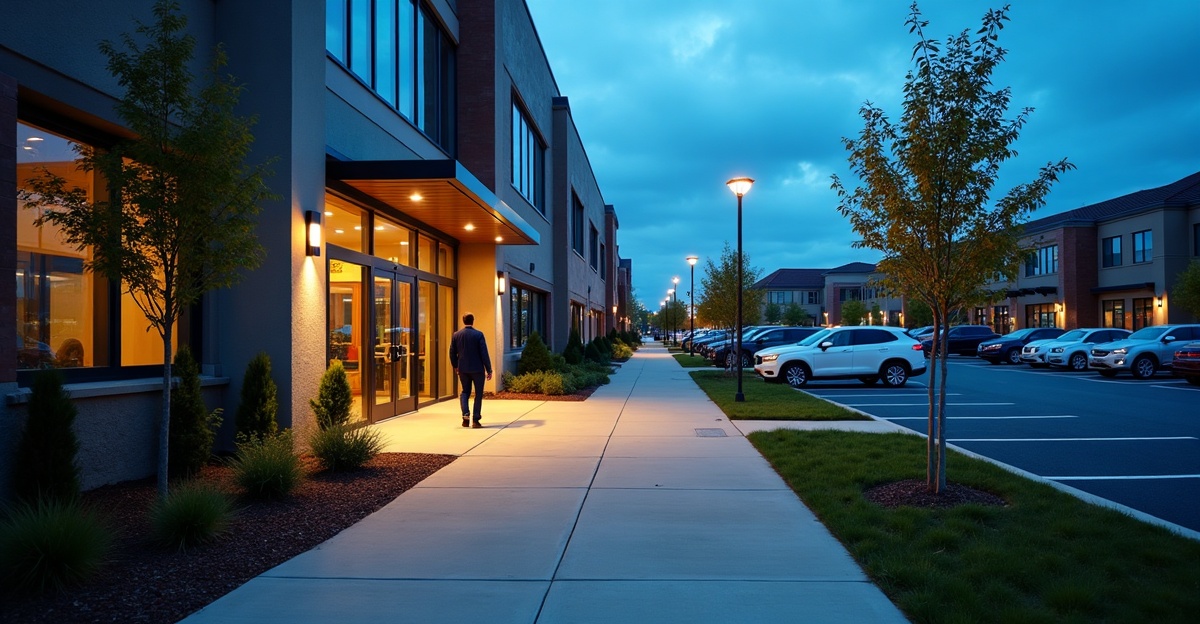
We help businesses create safer, more welcoming arrivals with commercial outdoor lighting that improves visibility at entrances, pathways, parking areas, signage, and service zones. We use layered lighting plans that suit each property type. This approach supports after-dark operations, strengthens curb appeal, and helps visitors move with confidence without creating excess brightness or glare.
Key Takeaways
- We prioritise clear lighting at entrances, pedestrian routes, accessible areas, parking spaces, loading zones, and directional signs.
- Our team uses layered, focused fixtures to guide movement, highlight important features, and improve visibility in security-sensitive areas.
- We match fixture placement, brightness, and operating times to retail sites, offices, hospitality venues, multifamily properties, and warehouses.
- Smart controls, including photocells, schedules, sensors, zoning, dimming, and remote monitoring, help us improve consistency and reduce unnecessary energy use.
- Before installation, we plan for glare control, reduced light spill, weather resistance, maintenance access, and local compliance requirements.
Make Every Arrival Safer, Clearer and More Welcoming
Commercial outdoor lighting shapes first impressions from the moment visitors turn onto the property. It helps customers identify the business, locate the entrance, read signs, and move safely from parking or drop-off areas to the door.
Business exterior lighting also supports reliable after-dark operations. Clear illumination improves visibility around paths, steps, accessible routes, parking spaces, and service areas. A well-planned system gives staff, customers, delivery drivers, and visitors a more confident arrival experience.
We do not need to make every surface excessively bright to create a welcoming property. Effective outdoor lighting for businesses uses layers of light in the areas that need it most. Entrance lighting can establish a focal point, pathway lighting can guide movement, and accent lighting can highlight key architectural features. This approach creates a polished exterior without wasting light or creating discomfort.
Security also deserves careful consideration. Lighting can improve visibility and may discourage some unwanted activity, especially around access points and concealed areas. Still, commercial lighting design cannot replace appropriate site design, access control, cameras, security staff, gates, or other security measures. Each part of the property needs its own assessment.
For a coordinated exterior lighting upgrade, our commercial outdoor lighting solutions can help create a professional, dependable presentation after dark. Strong first impressions start with a property that feels easy to identify, simple to access, and safe to use.
Light the Areas That Matter Most to Customers and Operations
Business entrance lighting should make the primary entry obvious from the street, sidewalk, and car park. Well-directed wall lights, downlights, bollards, or architectural fixtures can define the approach, improve face-to-face visibility, and make the front door feel intentional. Lighting should also support reception approaches, covered entries, ramps, and door hardware.
Pathway lighting needs consistent coverage. Shadows, glare, and sudden shifts between bright and dark zones can make paths, curbs, steps, and level changes harder to read. Accessible outdoor lighting should support clear travel along ramps, pedestrian crossings, handrails, and shared walkways.
Parking lot lighting requires a practical balance between vehicle and pedestrian needs. Drivers need to see travel lanes, crossings, parked vehicles, and site exits. Staff and customers need clear routes from parking spaces to entrances. Loading zones also need appropriate illumination for deliveries, reversing vehicles, and late operating hours.
Outdoor signage lighting helps visitors confirm they have reached the right location. Illuminated building signs, monument signs, and directional signs can improve wayfinding while supporting branding. Fixtures should highlight information without sending glare toward drivers, nearby properties, or public roads. For more customer-focused approaches, explore these commercial lighting ideas.
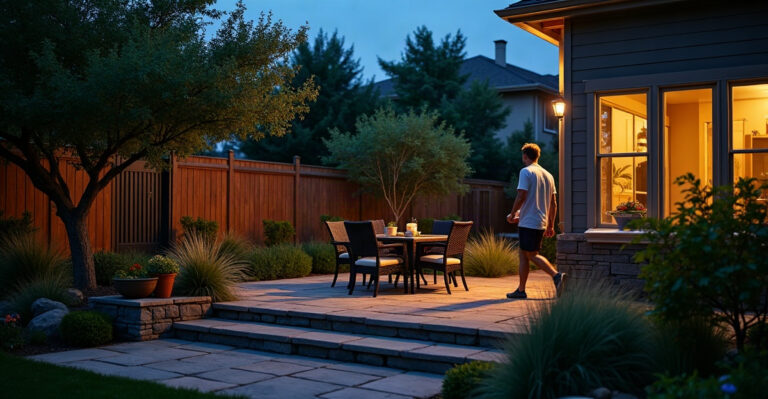
Patios, terraces, and outdoor dining areas benefit from layered lighting. Ambient fixtures set the mood, task lighting supports tables and service points, and accent lighting gives the space character. Our outdoor accent lighting options can bring attention to architectural details, landscaping, and dining features while keeping circulation routes usable.
Security-sensitive spaces need individual treatment. Side passages, gates, bin areas, service doors, loading bays, and perimeter routes rarely benefit from one broad floodlight. Focused security lighting for businesses gives each area useful visibility without over-lighting the whole site.
Match the Lighting Strategy to the Property Type
Retail outdoor lighting should make branding visible and the storefront inviting. Window displays, customer parking, pavement approaches, and entry doors all influence whether a business looks open, active, and easy to enter. Permanent lighting can also help maintain a consistent storefront presentation; learn how permanent lighting for small businesses supports daily visibility.
Office exterior lighting needs to create a credible, professional arrival experience. Clear entry lighting, car park coverage, and well-lit pedestrian routes support employees and visitors outside standard working hours. These office outdoor lighting ideas can help guide planning for professional premises.
Hospitality venues and restaurants need atmosphere without sacrificing function. Restaurant patio lighting should support seating, queues, entrances, steps, parking, and service access. A memorable exterior can encourage visits and reinforce the brand experience. See how permanent restaurant lighting can support a more visible dining destination.
Multifamily exterior lighting and mixed-use development lighting should guide residents, visitors, and delivery drivers through shared spaces. Entrances, communal paths, parking areas, gates, mail areas, and access points all need clear visual cues. The lighting plan should account for different users and operating hours across the site.
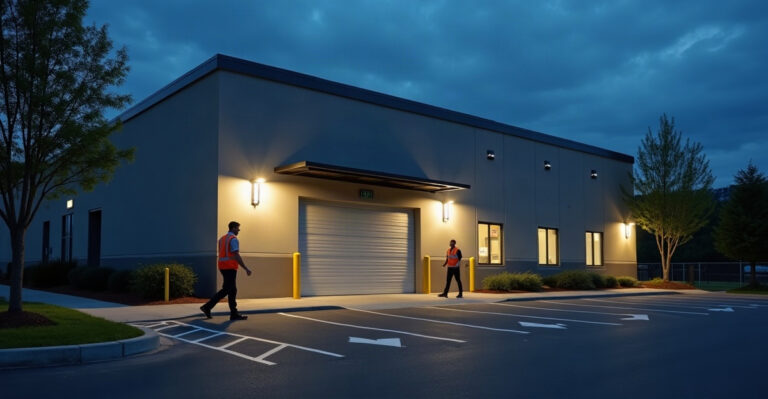
Warehouse outdoor lighting has a different job. Loading docks, storage yards, staff entries, vehicle routes, and perimeter spaces need operational visibility that supports safe movement and reliable work. A brightly lit parking area requires a different strategy than a boutique entrance or restaurant terrace. Fixture placement, lighting level, and controls should always match how each space is used and when activity occurs.
Use Smart Controls to Improve Consistency and Reduce Waste
Smart commercial lighting makes exterior systems easier to manage. It uses schedules, photocells, occupancy or motion sensors, zoning, dimming, remote monitoring, and scene control to operate lighting based on conditions and site activity.
Photocell lighting control can switch fixtures on as daylight fades and off as natural light returns. Schedules can maintain a consistent presentation during business hours without relying on manual switching. This helps entrances, signage, car parks, and facades look dependable every evening.
Motion sensor outdoor lighting works well in lower-traffic spaces such as side routes, service corridors, bin areas, and back-of-house access points. These controls can bring lighting up when movement occurs while avoiding unnecessary full-output operation during quiet periods.
Zoning gives each part of the property its own operating plan. Entrance lighting, parking lot lighting, outdoor signage lighting, terraces, and loading areas often need different run times and brightness levels. Dimming and scene control can adapt LED business lighting for opening hours, late-night operation, events, deliveries, cleaning, or reduced activity.
Remote monitoring can simplify management across multiple zones or properties. It can also help identify faults sooner, reducing the chance that a failed fixture affects safety, presentation, or operations for an extended period.
LEDs and commercial lighting automation can reduce energy consumption, but results depend on existing equipment, operating hours, control strategy, installation quality, and maintenance. We recommend reviewing the full operating plan before estimating the value of an exterior lighting upgrade.
Avoid Glare, Light Spill and Over-Lighting
Excessively bright or poorly aimed fixtures can create discomfort and reduce usable visibility. Glare near entrances, parking areas, vehicle routes, signs, and outdoor seating can affect pedestrians, drivers, employees, and customers. It can also make an otherwise premium property appear harsh or poorly maintained.
Glare control outdoor lighting starts with fixture selection and placement. Shielded exterior light fixtures direct light onto the intended surface rather than into nearby eyes, windows, roads, or the night sky. Careful aiming also prevents bright hotspots and dark gaps that make movement harder to judge.
Light spill reduction matters beyond the property line. Nearby homes, businesses, public roads, and shared spaces can all be affected by uncontrolled exterior lighting. Dark-sky commercial lighting principles help limit wasted upward light while maintaining useful illumination where it is needed.
Layered lighting provides better results than relying on high-output floodlights alone. Use lower-level pathway fixtures for pedestrian routes, directed lighting for entries and signs, and focused fixtures for security-sensitive locations. This method supports accessible outdoor lighting without placing excessive light above required levels.
Lighting requirements, planning rules, dark-sky guidance, electrical standards, and accessibility obligations vary by location and project. We recommend consulting qualified local lighting and electrical professionals to confirm project-specific commercial lighting compliance before installation.
Plan for Durability, Maintenance and Long-Term Value
Exterior lighting planning should begin with a site assessment, not a fixture catalogue. We need to identify user routes, operating hours, safety concerns, visual priorities, existing lighting problems, and areas that require different lighting levels. That process helps determine whether the goal is to guide visitors, define an entrance, illuminate signage, improve traffic movement, create ambience, or support security-sensitive spaces.
Weatherproof business lighting must withstand the local environment. Fixture selection should account for weather ratings, heat, moisture, dust, corrosion resistance, mounting conditions, cleaning needs, and access for future servicing. Commercial LED fixtures also need dependable drivers, available replacement parts, and compatible controls.
Commercial outdoor lighting maintenance should be part of the initial plan. A fixture that looks impressive but is difficult to reach, clean, repair, or replace can create avoidable ownership costs. Consider service access, mounting height, control-system reliability, and the availability of replacement components before approving the final design.
Professional lighting design becomes especially valuable when a site has multiple zones, extended operating hours, operational demands, or compliance considerations. The right outdoor lighting installation creates a stronger arrival experience while giving property owners practical control over performance and maintenance.
For projects involving complex site needs or a major exterior lighting upgrade, contact our lighting team to discuss a clear plan for safer, more welcoming, and more effective business exterior lighting.