Spotlight vs Floodlight: Which Is Better for Outdoor Lighting?
We choose a spotlight or floodlight based on whether an outdoor area needs focused feature lighting or wide, controlled coverage for access, tasks, and security areas. Beam angle, lumen output, mounting height, aiming, and smart controls all shape visibility, glare, light spill, and the finished look of the space.
Key Takeaways
- We use spotlights with narrow or medium beams to highlight trees, façades, planting, signs, and architectural details.
- We use floodlights for wider coverage across driveways, patios, garages, side access routes, and larger work areas.
- Higher lumen output doesn’t always improve lighting; well-aimed, shielded fixtures deliver better comfort, visibility, and neighbour-friendly results.
- We layer spotlights, floodlights, path lights, and downlights to create atmosphere and support safe movement after dark.
- Motion sensors, timers, dimming, and zoning reduce energy use and adapt lighting for security, entertaining, and late-night use.
The Quick Answer: Focused Spotlights or Wide-Coverage Floodlights?
Spotlights concentrate light on a defined feature, while floodlights spread illumination across a wider area. Neither fixture is universally better: the right choice depends on the space, intended use, mounting position, control needs, and the visual result we want.
Product names vary between manufacturers, so we should not choose a fixture by its label alone. Compare its beam angle, lumen output, photometric data where available, mounting options, and intended application.
| Factor | Spotlight | Floodlight |
|---|---|---|
| Typical beam spread | Narrow to medium, concentrated beam | Medium to wide, broad beam |
| Coverage area | Small, defined target | Large area or broad zone |
| Common purpose | Accent lighting, focal points, architectural emphasis | Task lighting, access, parking, controlled security coverage |
| Typical placement | Ground-mounted, wall-mounted, tree-mounted, or aimed at a feature | Wall-mounted, eave-mounted, pole-mounted, or installed at a higher position |
| Glare risk | High if aimed into sightlines or windows | High if poorly aimed, overpowered, or mounted too high |
| Common outdoor applications | Trees, façades, columns, signs, gates, planting, sculptures | Driveways, patios, garages, side access, car parks, loading zones |
| Control options | Dimming, scenes, timers, app control, zoning | Motion sensors, timers, dimming, scheduling, zoning |
| Best use | Focused emphasis and visual depth | Broad, even lighting for movement, tasks, and security-sensitive areas |
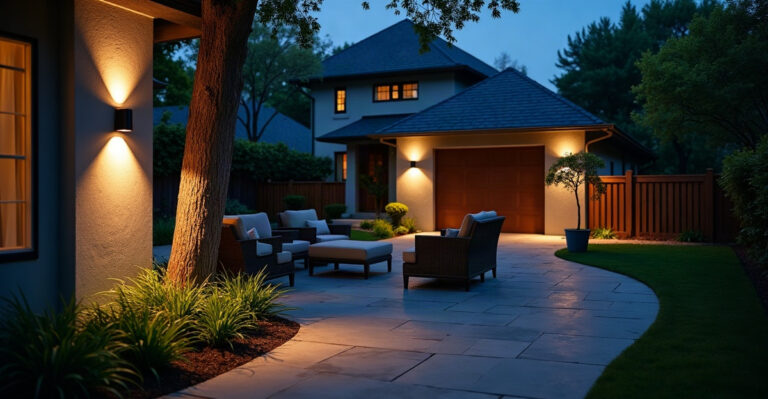
For outdoor spotlight versus floodlight decisions, we often combine both. A spotlight can give a mature tree or stone wall depth, while a controlled floodlight can make a driveway or broad entry safer to use. Good functional backyard layouts make these lighting zones easier to plan from the start.
How Beam Angles, Lumens and Placement Change the Result
Beam angle is the width of light projected from a fixture. Narrow exterior lighting beam angles concentrate light on a smaller target. They work well for long-throw highlighting, uplighting, and strong visual emphasis. Wider angles distribute light over a larger area, but they need careful aiming and shielding to prevent glare and unwanted spill.
Beam angle alone does not determine performance. We also need to consider fixture distance, mounting height, lumen output, lens design, aiming direction, surface colour, reflectivity, ambient light, and the intended outcome.
Lumens measure the total light output of a fixture. More lumens do not automatically create better outdoor lighting. A high-output fixture with poor aiming can make an area uncomfortable, wash out architectural detail, and leave harsh shadows. We choose brightness based on whether the goal is accent lighting, wayfinding, entertaining, task use, or security.
Colour temperature also affects the result. Warmer light often suits residential gardens, patios, architectural features, and outdoor entertaining areas where we want a softer atmosphere. Cooler light can support visibility and a more utilitarian appearance, though it needs careful selection to avoid a harsh look. Consistent colour temperature across the scheme creates a more polished result, while dimmable fixtures give us useful flexibility.
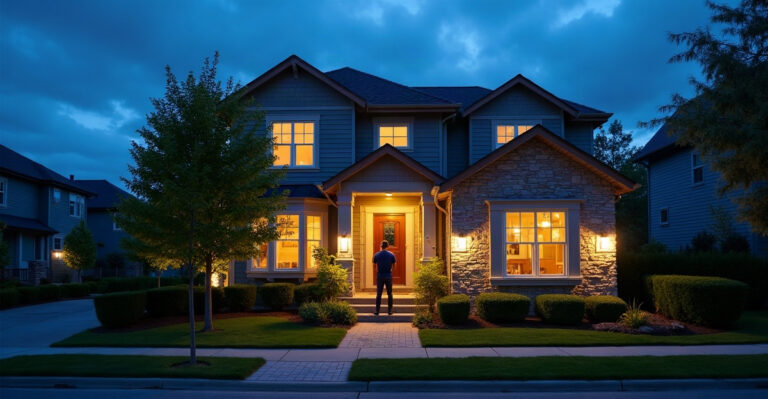
A mature tree may need a focused spotlight to reveal its canopy and trunk. A driveway usually needs broad but controlled floodlighting. A front entry often benefits from targeted light at the door, path, and steps instead of one high-output floodlight. For feature-focused installations, consider outdoor accent lighting that keeps the focal point clear without overlighting the property.
When an Outdoor Spotlight Is the Better Choice
Spotlights work best when we need focused emphasis without broadly illuminating the surrounding space. They create focal points, add visual depth, and help define gardens, façades, entertaining areas, and entrances after dark.
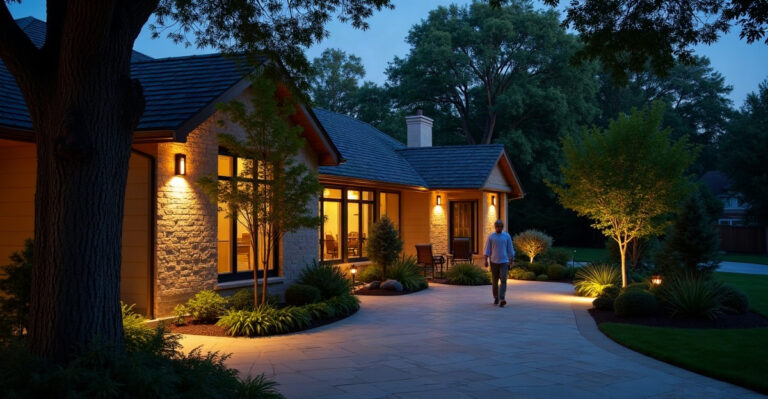
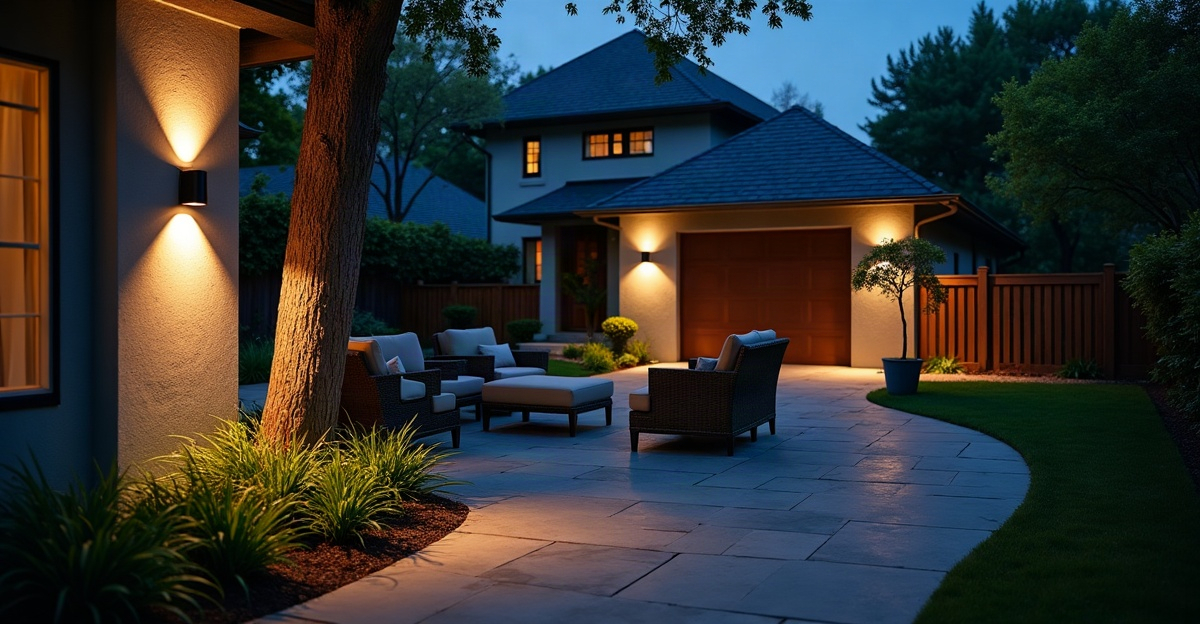
We commonly use spotlights to uplight trees, planting, sculptures, columns, textures, gates, signs, and architectural details. They can also provide targeted lighting near an entry or feature where a floodlight would feel excessive. Thoughtful outdoor living space design uses these focal points to make the space feel intentional after sunset.
Placement, Aiming and Beam Selection
We position outdoor spotlights based on target distance, mounting height, beam spread, and the shadows we want to create or avoid. A low angle can reveal texture on stone, brick, or bark, while a poorly placed fixture can create distracting shadows or shine directly into sightlines.
Outdoor spotlights should generally sit where they can light the intended feature without placing the lamp source in direct view. Shielding and careful aiming keep light out of windows, neighbouring properties, and the sky. We use uplighting selectively and direct it carefully to reduce glare, upward spill, and disturbance to neighbours or wildlife.
The best beam angle for outdoor lighting depends on the size and distance of the target. Narrow beams suit tall trees, columns, and distant architectural details. Medium beams often work well for broader trees, façade elements, and planting groups. Wider beams can suit close features, provided the fixture remains controlled.
A spotlight may appear very bright because it concentrates output on a small area. That does not mean it is brighter overall than a floodlight; it simply distributes its light differently.
When a Floodlight Is the Better Choice for Tasks, Access and Larger Areas
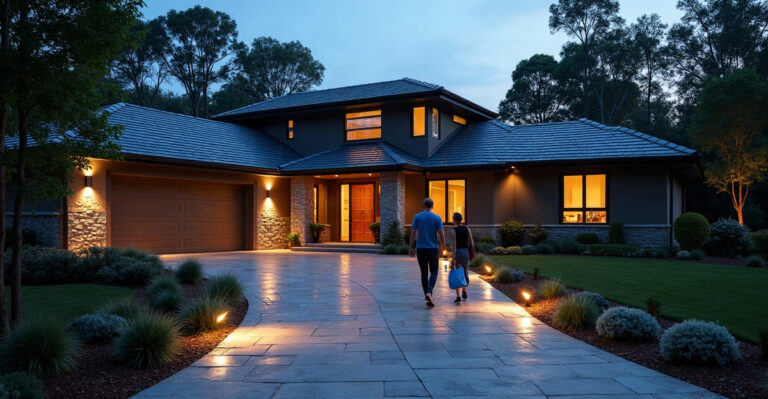
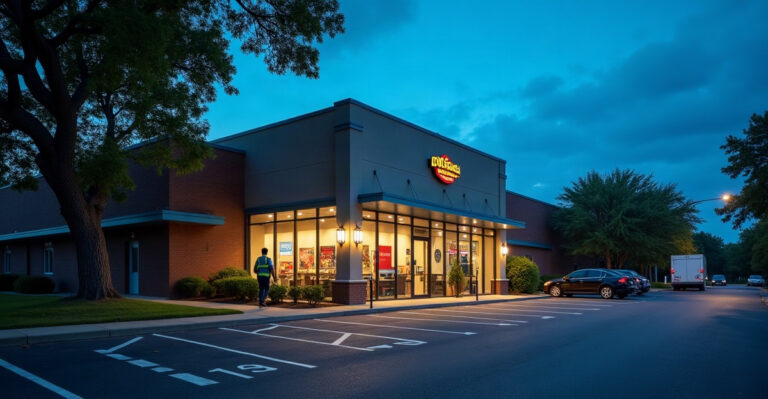
Floodlights provide broad coverage where we need to move, park, unload, work, or use an outdoor area safely. They suit driveways, patios, garden zones, garages, side access routes, loading areas, car parks, broad entry zones, and security-sensitive locations.
Broad coverage should never mean indiscriminate brightness. A well-directed, shielded floodlight is usually more effective than an oversized fixture that spills light across boundaries. For homes, professionally planned residential outdoor lighting can divide practical lighting from decorative lighting, giving each area the right level of output.
Higher mounting positions can widen coverage, but they can also increase glare and spill if aiming is poor. We consider beam spread, output, nearby windows, property lines, reflective surfaces, and approaching drivers or pedestrians. Aim fixtures downward where appropriate, and avoid directing light at cameras, roads, neighbouring properties, or people’s eyes.
Floodlights can support home security, especially at driveways, side gates, garages, and access routes. Still, a floodlight alone does not create an effective security plan. Controlled outdoor security lighting uses sensible placement, zoning, shielding, and controls rather than relying on maximum brightness.
Security Lighting Without Overlighting the Property
Brighter lighting is not always safer. Excessively bright or poorly aimed floodlighting can cause glare, reduce visibility, create deep shadows, disturb neighbours, and add unnecessary light pollution. Cameras and motion sensors may also work better with consistent, managed lighting than with harsh glare or abrupt overexposure.
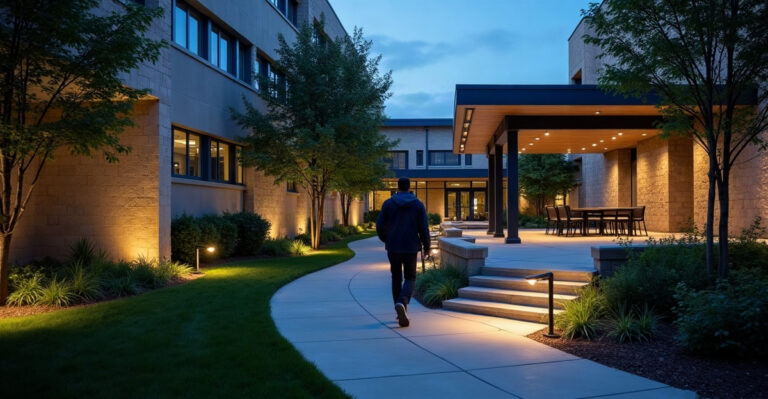
A layered approach gives us better coverage and a more comfortable property at night. We use spotlights for trees, feature planting, façades, and architectural detail. We use floodlights sparingly for wide task areas or security-sensitive zones. Path, step, wall, bollard, and downlighting fixtures can guide movement without forcing either fixture type to do every job.
Motion activation works well for side gates, access routes, garages, and areas used occasionally. Timers and schedules suit predictable evening routines. Dimming can lower late-night light levels, while independently controlled zones let us manage driveway, façade, patio, garden, and entry lighting separately.
For a welcoming entertaining area, outdoor seating area design benefits from lower, layered light rather than security-style floodlighting. The same principle supports year-round outdoor spaces, where comfort and visibility need to work together.
Smart Controls and Installation Checks to Make Before Buying
Smart controls can improve efficiency, flexibility, security, and everyday usability. Scheduling supports predictable routines and energy management. Motion activation helps with access routes and security-sensitive areas. Dimming allows different light levels for arrivals, entertaining, late-night use, or cleaning. Zoning gives separate control over the driveway, façade, patio, garden, and entry.
Scene control can set useful modes for entertaining, arrival, security, and late-night settings. Before purchase, we verify compatibility with switches, sensors, apps, hubs, smart-home systems, wiring, network reliability, and the fixture’s outdoor suitability. Under-eave fixtures, for example, can offer discreet coverage when planned as part of under-eave lighting zones.
Installation Checklist
Before installation, confirm the following:
- The IP or weather rating suits the fixture location and exposure. An IP rating describes protection against solids and moisture; check manufacturer documentation and applicable local standards.
- The power source, voltage, cable routing, transformer or driver location, and maintenance access are practical.
- Low-voltage and mains-voltage requirements match the installation plan.
- Mounting surfaces can support the fixture securely and allow safe aiming.
- Shielding, aiming, and placement prevent spill into windows, neighbouring properties, and the sky.
- Local electrical code, planning, and compliance requirements are addressed.
- A qualified electrician or lighting professional reviews mains work, new circuits, elevated mounting, smart-system integration, and larger properties.
We make the final spotlight versus floodlight decision by defining the target: feature, route, work area, or wide zone. Then we assess its size, fixture distance, mounting height, and required coverage. We also decide whether the lighting supports aesthetics, navigation, security, entertaining, or several uses at once.
A combination of focused and broad lighting often delivers the best outcome. Strong planning can also complement a backyard retreat by keeping practical lighting separate from relaxing mood lighting. Planning an outdoor lighting scheme with smart controls? Speak with a lighting specialist to map zones, fixture types, and automation around how we use the space.