Outdoor Lighting Timers: How and When to Use Them?
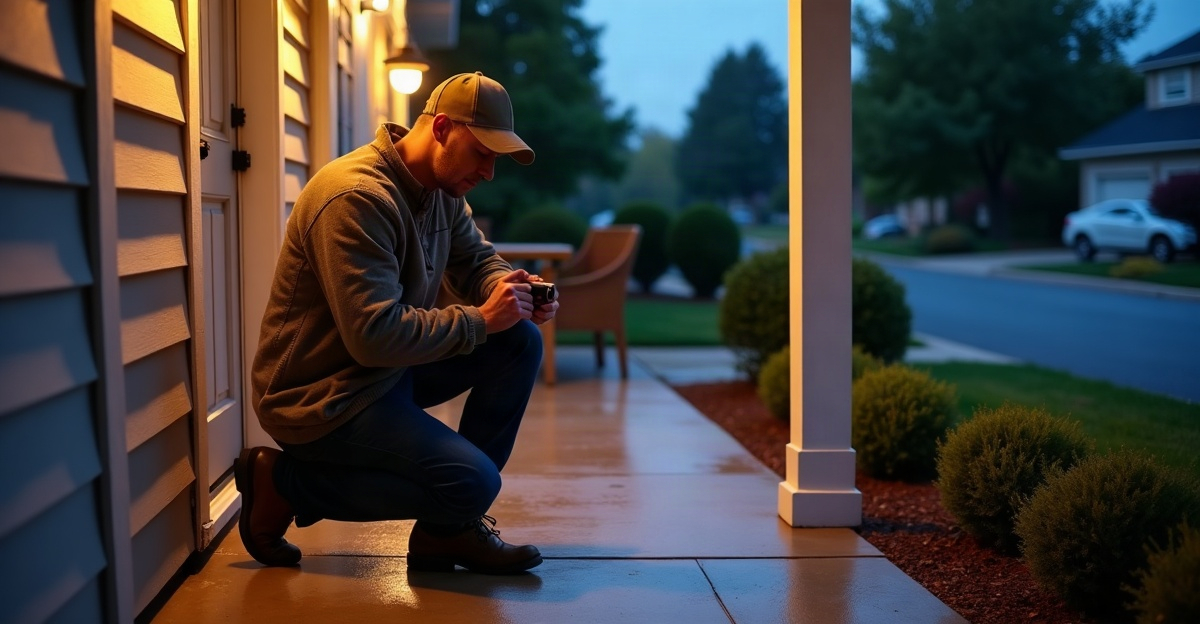
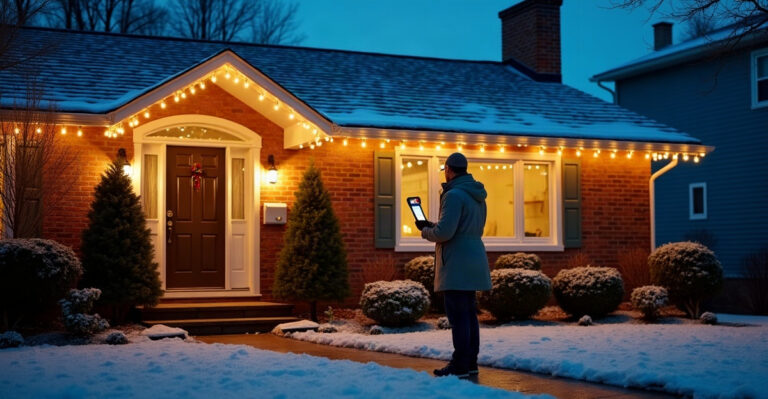
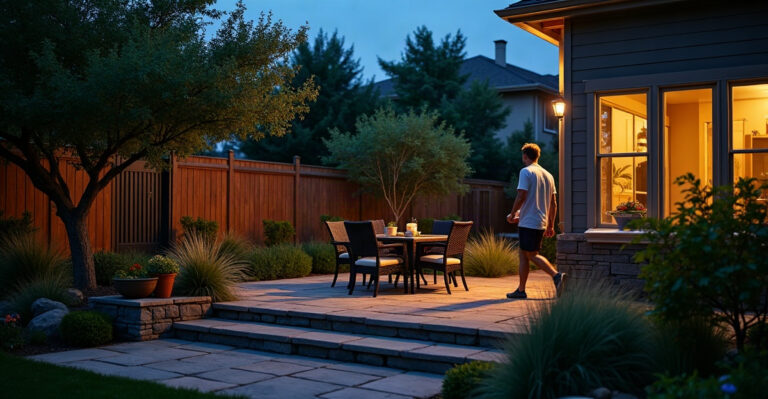
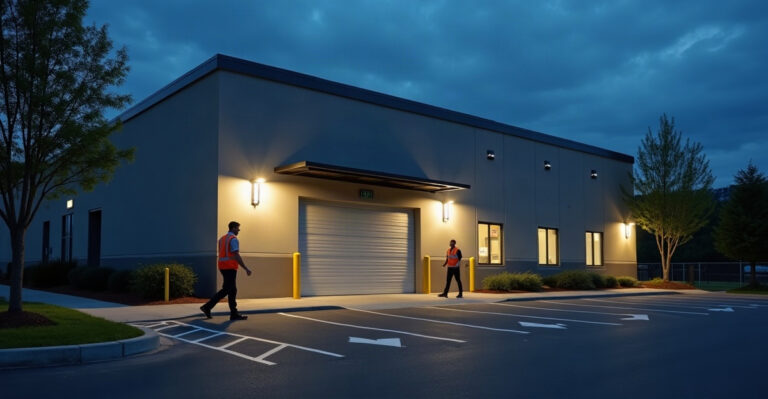
We use an outdoor lighting timer to schedule exterior lights for predictable routines, including porch, patio, landscape, and holiday lighting. We choose the right control based on the lighting purpose, seasonal daylight shifts, fixture compatibility, weather rating, and the need for timed, dusk-to-dawn, or motion-activated operation.
Key Takeaways
- We use timers for lights that follow reliable schedules, such as entry lighting from dusk until bedtime and selected evening landscape lighting.
- We recommend astronomical timers and sunset-based schedules because they limit seasonal adjustments to fixed on and off times.
- We use photocells for dusk-to-dawn driveway and access lighting, while motion sensors work well in occasionally used spaces, such as side gates.
- We confirm voltage, load capacity, LED compatibility, transformer needs, and wet- or damp-location ratings before we install a timer.
- We test schedules, manual overrides, backup settings, and smart-control connections after power outages, storms, seasonal changes, or equipment upgrades.
What an Outdoor Lighting Timer Does—and When It Is the Right Choice
An outdoor lighting timer turns exterior lights on and off according to a programmed schedule. The right timer depends on the fixture type, power source, preferred automation, daylight changes, and installation environment.
Outdoor lighting with timer control makes daily operation consistent and convenient while reducing unnecessary run time. Energy savings vary with fixture wattage, previous operating habits, schedule length, and fixture efficiency.
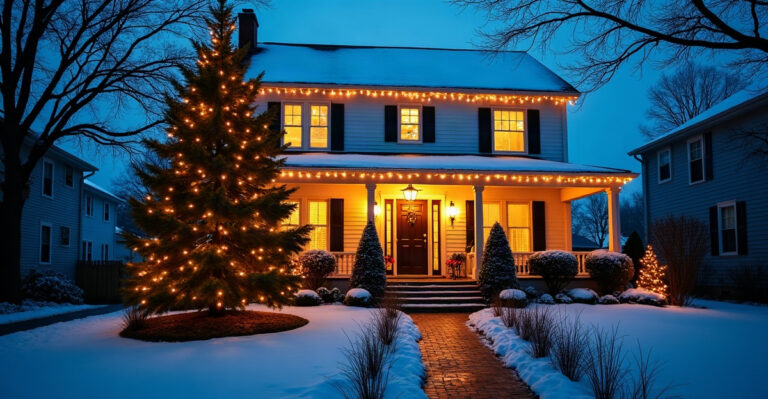
Timers work especially well for porch and entry lights that should operate from dusk until residents return home or go to bed. They also suit paths, driveways, landscape features, façades, patios, entertaining areas, appropriately rated pool-adjacent lighting, holiday displays, and vacant-property lighting where scheduled operation can support a lived-in appearance.
For a straightforward schedule, a timer can provide dependable results. A porch light needed from dusk until bedtime works well with an astronomical timer or smart schedule. Landscape lighting can operate during selected evening hours, while an outdoor-rated plug-in timer can manage holiday displays when its load capacity matches the connected lighting.
Some applications need a different control method. Dusk-to-dawn lighting generally needs a photocell. A side gate or bin area used occasionally benefits more from a motion sensor. Properties needing remote access, grouped zones, changing routines, or smart-home integrations should consider smart outdoor lighting automation.
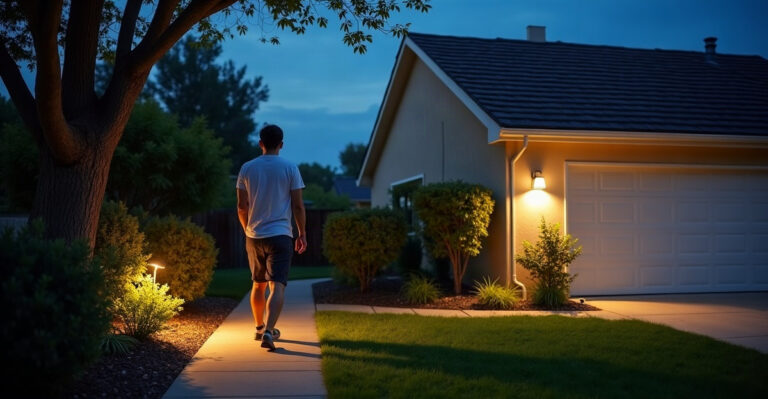
A driveway light needed throughout the night is usually better controlled by a photocell. A side gate may use a motion sensor, optionally restricted to certain overnight hours by a timer. A low-voltage landscape transformer needs a compatible transformer timer or smart landscape controller. For permanent installations, we can also explore permanent outdoor lighting controls that match the system and property routine.
Choosing the Best Outdoor Lighting Control for a Property
Different controls solve different lighting needs. The table below helps us match the control method to the purpose of the lighting system.
| Control type | Best for | Key benefit | Limitation | Installation complexity | Seasonal schedule changes needed? |
|---|---|---|---|---|---|
| Mechanical or digital timer | Predictable on/off routines | Simple scheduled control | Fixed times may need adjustment as daylight changes | Low to moderate | Usually yes |
| Outdoor plug-in timer | Patio lights and holiday displays | Easy control for compatible plug-in loads | Needs a protected outdoor receptacle and environmental rating | Low | Usually yes |
| In-wall timer | Permanently installed exterior lights | Replaces a standard switch with scheduled control | May require neutral-wire and voltage compatibility | Moderate to high | Usually yes |
| Landscape-lighting timer | Low-voltage transformer systems | Controls selected landscape-lighting hours | Must match transformer and total load | Moderate | Usually yes |
| Smart plug, switch, or app control | Remote control, groups, and routines | Flexible scheduling and integrations | Requires compatible hardware and reliable Wi-Fi or hub access | Low to moderate | Often reduced |
| Astronomical timer | Consistent dusk-based lighting | Uses local sunrise and sunset calculations | Needs correct location, date, and time settings | Low to moderate | Usually no |
| Photocell | Dusk-to-dawn lighting | Responds to actual ambient light | Glare and headlights can affect operation | Low to moderate | No |
| Motion sensor | Security and occasional-access areas | Lights operate only when activity occurs | Does not provide steady decorative or path lighting | Low to moderate | No |
Mechanical timers are simple and dependable for repeatable routines. Digital models often provide more programme options, including separate schedules for weekdays and weekends. An outdoor plug-in timer works well with plug-connected lights, but both the timer and connection need suitable outdoor protection.
In-wall timers replace a switch for fixed exterior lighting. They may require a neutral wire, correct voltage, and suitable load compatibility. We recommend a qualified electrician for in-wall, mains-voltage, or hardwired work where local electrical codes apply.
Combined controls can offer better results than a timer alone. A timer and motion sensor can restrict operation to chosen hours while allowing brighter light only when movement occurs. A photocell with smart scheduling combines ambient-light response with flexible routines and remote control. These options work well with professionally planned residential outdoor lighting systems.
How to Set an Outdoor Lighting Timer
Learning how to set outdoor lighting timer controls follows a similar process across many products, but exact buttons, wiring, ratings, and programme steps vary by model. We should always follow the product manual for the specific control.
Start by confirming that the timer suits the location and connected load. Set the current time, date, and time zone where applicable. Then programme on and off times, or select sunset and sunrise settings. Choose the operating days, confirm daylight-saving-time behaviour, and test both the schedule and manual override.
After the first evening, check that lights activate and switch off as expected. Periodic checks help catch changes caused by power interruptions, altered settings, replacement bulbs, or system upgrades.
Using Manual Override
A manual override is useful for parties, maintenance, emergencies, and temporary changes to a normal schedule. Before relying on this feature, we should confirm whether the timer automatically returns to its programmed routine after an override or requires a manual reset.
Troubleshooting a Lighting Timer Outdoor Control
If the schedule does not run correctly, start with these basic checks:
- Confirm that the timer is in automatic mode rather than manual mode.
- Check the power supply, outlet protection, circuit breaker, and connected bulbs.
- Review the programmed time, date, time zone, and selected operating days.
- Confirm that the fixture, transformer, or smart control remains compatible after upgrades.
Managing Seasonal Daylight Changes and Smarter Schedules
A fixed 6 p.m. start time can become unreliable through the year. It may turn lights on too late during winter and unnecessarily early during summer. This is why fixed schedules need regular review.
Fixed clock times suit stable routines but need periodic adjustment. Sunset-offset programming turns lights on a selected amount of time before or after sunset. Astronomical schedules calculate local sunrise and sunset times, which reduces manual seasonal changes. Photocells respond to actual ambient light, while smart controls allow remote updates, grouped zones, integrations, and changing schedules.
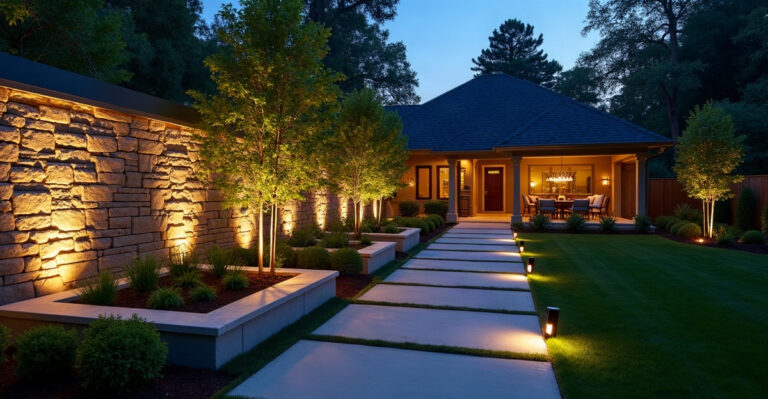
For most entrances, we recommend dusk-to-bedtime operation or a chosen late-evening shutoff. Decorative landscape and outdoor mood lighting often perform best during the evening hours when people can enjoy them. Driveways and access routes that need continuous overnight visibility are better suited to dusk-to-dawn photocell control. Motion-controlled lighting can operate only during selected overnight hours where activity is occasional.
For a practical seasonal approach, see our guide to seasonal outdoor lighting schedules. We can also align routines with sunset patterns through a natural daylight schedule.
Timers support consistent illumination and can help a property appear occupied. They do not replace comprehensive security planning, safe access routes, appropriate fixture placement, or a dedicated outdoor security lighting system.
Compatibility, Weather Protection, and Safe Installation Checks
Before selecting an outdoor lighting timer, confirm the circuit voltage, circuit type, maximum amperage or wattage, and total connected load. LED lighting often uses low running wattage, but some drivers create inrush current at startup. The control must be rated for the applicable LED, electronic, or inductive load.
Low-voltage systems need a timer that matches the transformer, voltage, and total lighting load. Smart controls also need compatible hardware and dependable Wi-Fi or hub connectivity. For permanent displays, our guide explains whether permanent lights work with timers.
Never use an indoor-only timer outdoors. Use equipment rated for wet or damp locations as required, and protect plugs, outlets, and connection points from water ingress with suitable weatherproof covers or enclosures. Avoid overloading outlets, extension leads, timers, transformers, and circuits.
Plug-in timers are often straightforward when used with compatible protected outdoor receptacles. In-wall controls, mains-voltage installations, hardwired landscape systems, and unfamiliar transformer work may need a qualified electrician, particularly where local codes require it. We should consult manufacturer documentation, installation manuals, and relevant local electrical-code resources before installation. A qualified lighting or electrical professional should review technical requirements for the finished system.
Keeping Outdoor Lighting Controls Reliable: Maintenance and FAQs
Reliable control depends on periodic testing. Check battery backup and schedule retention after power outages. Confirm daylight-saving-time updates, manual override behaviour, and smart-control recovery after Wi-Fi or cloud interruptions. Keep photocells away from fixture glare, porch lights, and vehicle headlights. Test the system after storms, power interruptions, seasonal changes, and equipment upgrades.
Frequently Asked Questions
Can we use any timer outdoors?
No. We need a timer rated for the installation environment and protected outdoor connections.
Is a photocell better than a timer for outdoor lights?
A photocell is usually better for dusk-to-dawn operation. A timer is better when lighting should operate only during selected hours.
How often should we adjust an outdoor lighting timer?
Fixed schedules may need seasonal changes. Astronomical timers and sunset-based schedules reduce that need.
Do outdoor timers work with LED lights?
Many do, but we should verify LED load ratings and account for possible inrush current.
Can we put a timer on a landscape-lighting transformer?
Yes, when the timer matches the transformer, voltage, and total lighting load.
What happens after a power outage?
Results depend on battery backup, schedule retention, and smart-control recovery features.
Can we use a smart plug for outdoor lights?
Yes, if the smart plug is rated for outdoor conditions and works with the connected load and Wi-Fi or hub system.
Should outdoor lights stay on all night?
It depends on the area and purpose. Dusk-to-dawn control can suit driveways and access routes, while timers and motion sensors suit spaces that do not need continuous illumination.
For whole-home automation, integrated landscape lighting, or smart schedules, we can help plan a professionally designed system. Contact Big Pig Smart Lighting to discuss the right control approach.