Are Led Outdoor Lights Energy Efficient?
LED outdoor lighting efficiency measures how many lumens a fixture produces per watt. We focus on this ratio because it reveals how effectively a fixture converts electricity into visible light. Modern LEDs match the brightness of a 60-watt incandescent bulb while using just 8–12 watts. Compared with halogen and incandescent options, LEDs cut energy use by 30–75%, last up to 25–50 times longer, and boost overall outdoor performance through directional output and smart controls.
Key Takeaways
- LEDs use far fewer watts to produce the same lumen output as halogen and incandescent bulbs, often cutting outdoor energy consumption by 30–75%.
- A standard 800-lumen LED draws about 8–12 watts, while halogen requires around 43 watts and incandescent needs roughly 60 watts for similar brightness.
- Lifespans of 25,000–50,000 hours reduce replacement cycles and lower total ownership costs.
- Directional light focuses illumination where we need it, reduces waste, and often lets us install fewer fixtures.
- Smart controls such as motion sensors, timers, dimming, and zoning push efficiency further by limiting unnecessary operating time.
What “Energy Efficient” Really Means for Outdoor Lighting
LED outdoor lighting efficiency comes down to how much light we get for each watt of electricity consumed. The more light (lumens) produced per watt, the more efficient the fixture.
Understanding lumens vs watts is critical. Lumens measure brightness. Watts measure energy use. Traditional lighting trained many of us to think higher watts meant brighter light. With LEDs, fewer watts can produce the same or greater brightness. That’s where true outdoor lighting energy savings begin.
According to the U.S. Department of Energy, LEDs use up to 75% less energy than incandescent bulbs. Compared to halogen options, LEDs typically use about 30–50% less energy. The efficiency gap grows even wider when we factor in lifespan. A typical LED lasts 25,000 to 50,000 hours. Incandescent bulbs last roughly 1,000 hours. Halogens average 2,000–4,000 hours.
Efficiency also involves light direction. Incandescent and halogen bulbs release light in many directions and waste energy as heat. LEDs emit light directionally, which means fewer watts are lost. Better beam control allows us to achieve the same illumination with fewer fixtures in many applications.
When we discuss LED outdoor lighting efficiency, we focus on the combination of lumens vs watts, smart watt equivalency, beam control, and reduced wasted energy. That’s what delivers meaningful outdoor lighting energy savings over time.
LED vs. Halogen and Incandescent: A Side-by-Side Energy Comparison
To make this practical, let’s compare a standard 800-lumen output, which is roughly equivalent to a traditional 60-watt bulb.
For approximately 800 lumens:
- LED: about 8–12 watts
- Halogen: about 43 watts
- Incandescent: about 60 watts
That difference adds up quickly in real-world use.
Consider driveway lighting. Many homes use multiple fixtures that run several hours each night. Garden path lights often operate from dusk to dawn. Security floodlights may trigger frequently in high-traffic areas. Each hour of operation multiplies the wattage difference.
Here’s a simple annual example.
Imagine 10 outdoor incandescent bulbs rated at 60 watts each. If they run 8 hours per night:
- 60 watts × 10 bulbs = 600 watts (0.6 kW)
- 0.6 kW × 8 hours = 4.8 kWh per day
- 4.8 kWh × 365 days ≈ 1,752 kWh per year
Now compare that to 10 LED equivalents at 10 watts each:
- 10 watts × 10 bulbs = 100 watts (0.1 kW)
- 0.1 kW × 8 hours = 0.8 kWh per day
- 0.8 kWh × 365 days ≈ 292 kWh per year
That’s a difference of about 1,460 kWh annually. Based on average electricity rates, many households would see a meaningful reduction in outdoor lighting costs.
Most homeowners report a 50–75% reduction in outdoor lighting energy use after switching from incandescent to LED. Compared to halogen, savings often fall in the 30–50% range. Exact numbers depend on usage hours, installation quality, local electricity rates, and climate.
For property owners evaluating long-term value, we often recommend reviewing the ROI on permanent outdoor lighting to understand how efficiency affects total returns.
Total Cost of Ownership: Why Lifespan and Maintenance Matter
Energy consumption is only part of the equation. We also consider total cost of ownership.
LED fixtures usually cost more upfront than incandescent or halogen options. However, the operating cost and replacement frequency shift the financial picture over time. With lifespans of 25,000–50,000 hours, LEDs can last years longer in outdoor installations that operate nightly. Halogens may need replacement after roughly 2,000 hours. Incandescents may fail in about 1,000 hours.
In outdoor settings, this difference has practical implications. Fewer bulb replacements mean fewer ladder climbs under eaves, fewer service calls for pole lights, and less disruption around landscaping. For larger homes and commercial outdoor lighting projects, maintenance savings can be substantial.
Durability also matters. Outdoor fixtures must withstand dust, rain, heat, and cold. IP (Ingress Protection) ratings indicate how well a fixture resists water and dust intrusion. A higher IP rating means better protection. Quality LED fixtures also handle temperature swings well, maintaining stable output in both cold winters and hot summers.
Builders and designers comparing systems often consider efficiency alongside voltage. For a deeper technical comparison, the low-voltage vs high-voltage outdoor lighting discussion helps clarify system performance and long-term flexibility.
Many property owners ultimately weigh longevity against temporary options. In that case, reviewing the benefits of permanent lighting vs temporary lights provides additional financial context.
How Smart Controls Increase Outdoor Lighting Energy Savings
LED outdoor lighting efficiency improves even further with smart controls. Lower wattage is only the starting point.
Automation reduces unnecessary runtime. Motion sensors activate lights only when movement occurs. Timers ensure lights switch off at set hours. Dusk-to-dawn sensors respond automatically to natural light levels. Many LED systems also support dimming, reducing output during low-traffic hours and decreasing energy use proportionally.
For example, LED lights left on all night use less electricity than halogen lights. However, if automation reduces runtime by 30–60%, energy use drops even further. A driveway that previously stayed fully lit for 10 hours may operate at full brightness for only 3–4 hours, then dim or switch off when not needed.
Smart zoning is another advantage. Driveways, patios, pathways, and security lighting can operate independently. Patio lights can dim late in the evening while perimeter security remains active.
In residential projects, pairing efficient LEDs with outdoor security lighting controls balances visibility and conservation. The goal is to reduce waste without adding complexity, with automation running quietly in the background once configured.
Environmental Impact and Reliability in Real-World Conditions
Reduced electricity consumption directly lowers carbon emissions. Because LEDs use significantly less power than incandescent and halogen bulbs, they contribute to a smaller environmental footprint over time.
LEDs also convert more energy into light and less into heat. That heat reduction prevents wasted energy and reduces stress on internal components. Longer lifespans mean fewer discarded bulbs entering landfills.
Outdoor conditions place additional demands on lighting. LEDs reach full brightness instantly, which is critical for motion-activated security systems. Directional output allows precise beam control, so we can often achieve the desired effect with fewer fixtures.
Real-world efficiency still depends on several factors:
- Usage hours
- Fixture quality
- Beam spread and placement
- Climate and environmental exposure
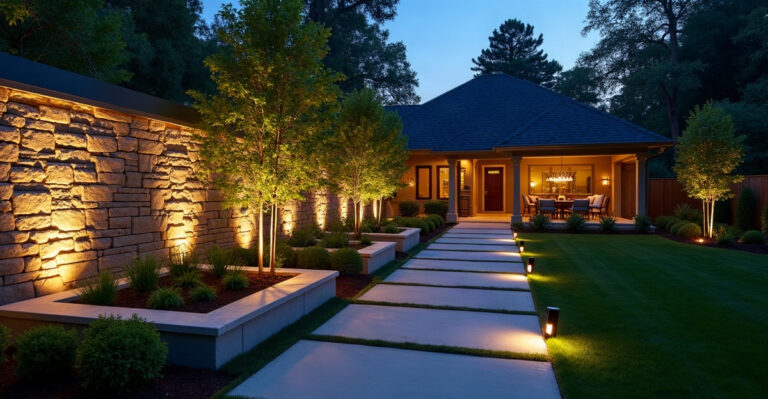
Careful placement improves performance dramatically. For example, properly spaced outdoor accent lighting can illuminate architectural features effectively without increasing total wattage. Thoughtful design prevents over-lighting and unnecessary energy use.
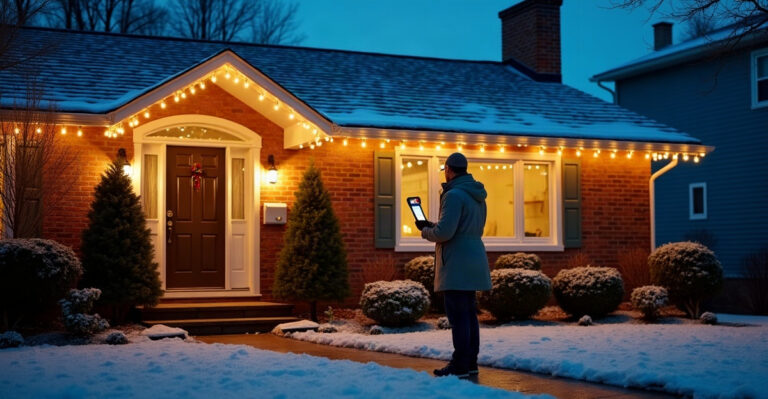
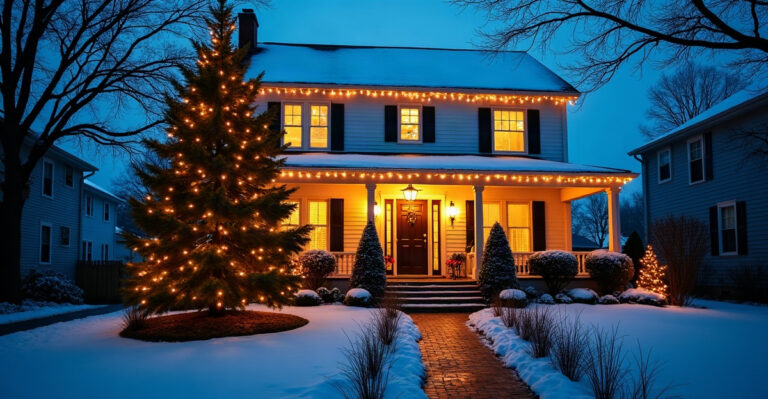
For those evaluating decor lighting, it’s also helpful to examine how different configurations affect sustainability, as discussed in smart holiday lights energy efficiency and energy-conscious seasonal setups.
Common Questions About LED Outdoor Lighting Efficiency
Quick Answers Based on Field Experience
Most residential LED outdoor fixtures use between 5 and 20 watts. That’s significantly lower than traditional 43–60 watt halogen or incandescent equivalents. Even multiple fixtures operating nightly typically consume modest total power compared to older systems.
Actual savings depend on the starting point and user behavior. Homeowners switching from incandescent often see 50–75% savings in outdoor lighting energy use. Those replacing halogen typically see 30–50% reductions. Local electricity rates and usage patterns influence final results.
LED lights remain efficient even if left on overnight because of their low wattage and high lumen output. However, combining LEDs with timers or motion sensors increases outdoor lighting energy savings substantially. Reduced runtime multiplies the efficiency gains.
When evaluating options, focus on lumen output, rated wattage, fixture quality, and control strategy rather than price alone. Balanced decisions deliver measurable savings, reliable performance, and long-term value.