Outdoor Lighting Trends Homeowners Love
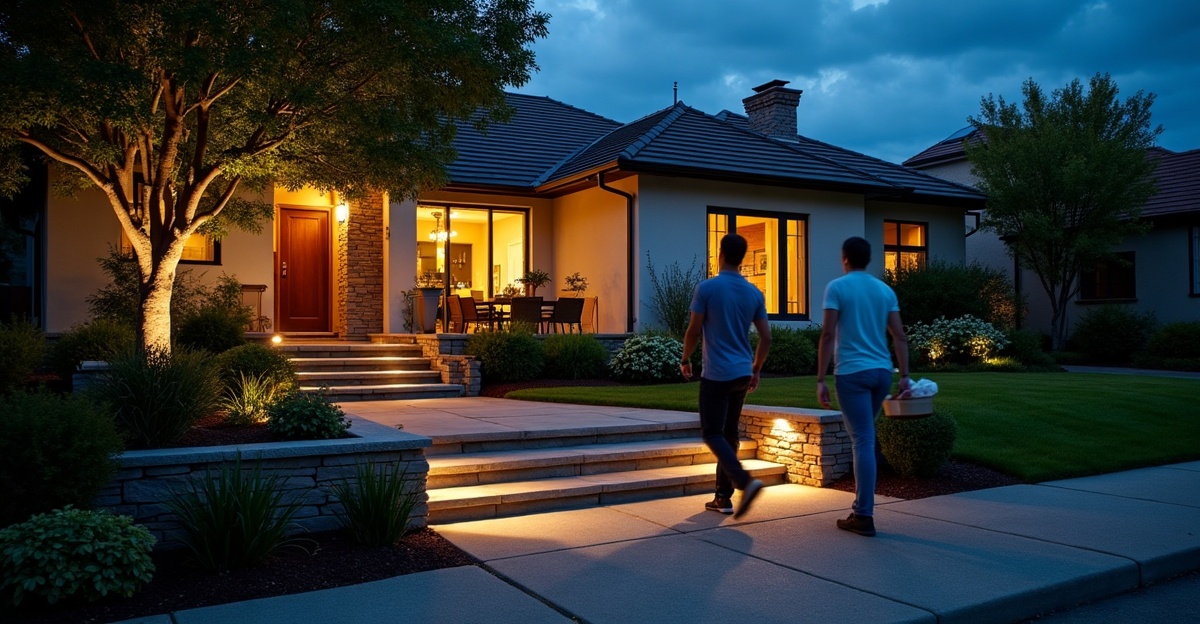
We see homeowners favor layered, purpose-driven outdoor lighting that improves safety, comfort, curb appeal, and after-dark use of patios, pathways, entries, and gardens. Warm, low-glare LEDs, selective architectural accents, smart controls, and durable low-voltage systems create lasting value without flooding the property with light.
Key Takeaways
- We layer ambient, task, pathway, accent, and security lighting to support specific activities and add visual depth.
- We choose warm, shielded, downward-facing fixtures to limit glare, light spill, and excessive brightness.
- We use architectural uplighting, downlighting, and moonlighting with care to feature façades, trees, and textured surfaces.
- We add smart controls, dimmers, timers, and motion sensors to manage zones, schedules, and seasonal lighting scenes with less energy use.
- We plan for power needs, weather exposure, maintenance, future additions, and professional installation for electrical work or permanent fixtures.
The Outdoor Lighting Ideas Delivering the Most Lasting Value
The best outdoor lighting trends focus on purposeful layers, control, efficiency, comfort, safety, and visual appeal rather than raw brightness. A successful system makes each part of the property easier to use while creating a polished appearance after dark.
We should assess modern exterior lighting trends through the needs of the property, daily routines, budget, safety priorities, design preferences, and installation conditions. Home lighting inspiration can help define a style, but copying an image without a lighting plan often creates glare, dark gaps, or fixtures that do not serve the space.
Every effective outdoor lighting design starts with a clear purpose. Ambient lighting provides general illumination for patios, decks, and outdoor living areas. Task lighting focuses on functional locations such as steps, grills, gates, and doorways. Accent lighting highlights trees, planting, texture, art, and architectural details. Pathway lighting provides low, directed illumination for wayfinding. Security lighting uses controlled illumination and motion activation to improve visibility, though lighting is only one part of a complete home-security strategy. Decorative lighting adds visual personality through fixtures that look attractive in daylight and at night.
Brighter is not automatically safer, more secure, or more attractive. Harsh floodlights can create glare, deep shadows, and discomfort. Warm, controlled, well-placed illumination generally delivers better visibility and a more welcoming result. Lasting exterior lighting ideas should solve real needs instead of following short-lived aesthetics.
Layered Landscape Lighting for Safer, More Inviting Outdoor Spaces
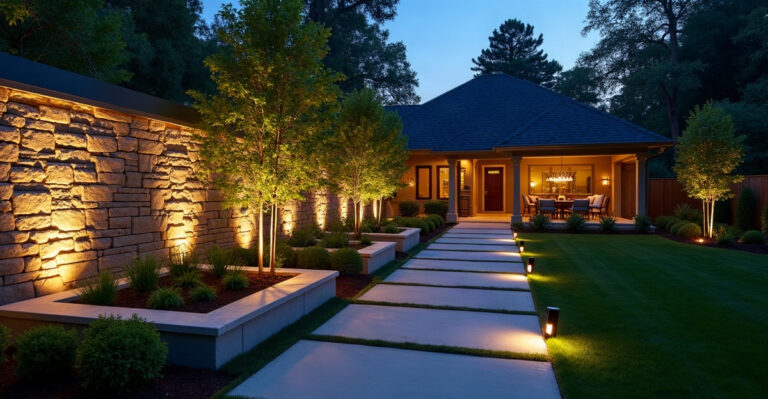
Layered landscape lighting remains one of the most reliable outdoor lighting trends because it replaces a single bright fixture with coordinated light at different heights and purposes. We can combine pathway, patio, task, accent, and architectural light to create depth, guide movement, and support outdoor activities.
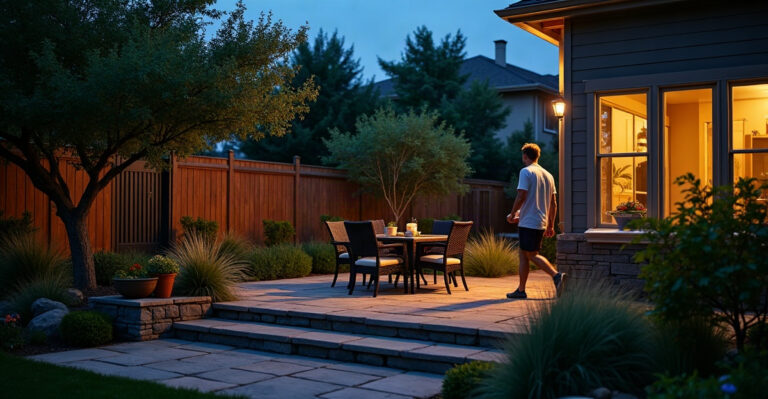
Lighting zones bring flexibility to entryways, driveways, pathways, patios, decks, gardens, seating areas, outdoor kitchens, pergolas, retaining walls, and pool-adjacent spaces. An entry may need a decorative porch fixture, gentle pathway lighting, and an accent on nearby planting. A patio may need ambient light for dining, focused task lighting beside a grill, and subtle garden accents around its perimeter.
Integrated outdoor living space lighting is especially useful in areas used often after sunset. Deck lights, stair-riser lights, pergola lighting, retaining-wall fixtures, and discreet lighting around seating or cooking areas improve use without making the space feel overlit. For practical layered lighting guidance, we should plan each zone around the activity it supports.
Layered lighting suits properties that need balanced curb appeal, comfortable entertaining areas, safer movement, and visual depth. Pathway lighting works best as low, directed illumination that helps people move around without glare. Integrated lighting works best for frequently used decks, patios, stairs, kitchens, and seating zones.
Before selecting fixtures, we should map lighting zones and major sightlines from inside and outside the home. Fixture spacing, cable routing, future landscaping growth, and control preferences all affect the result. A patio-and-garden lighting-zone diagram is a useful visual for showing where ambient, task, accent, and pathway lighting belong.
Warm, Low-Glare and Dark-Sky-Friendly Illumination
Warm white outdoor lighting has become a preferred alternative to harsh, cool blue-white light. It supports visibility while preserving the relaxed atmosphere of patios, gardens, entries, and façades. Shielded fixtures and careful beam direction help the light stay where it is needed.
Glare is excessive or poorly directed brightness that makes comfortable vision harder. Light trespass occurs when unwanted light spills onto nearby homes or properties. Low-glare LED lighting reduces both issues by directing illumination down, across a path, or onto a feature rather than into people’s eyes or neighboring windows.
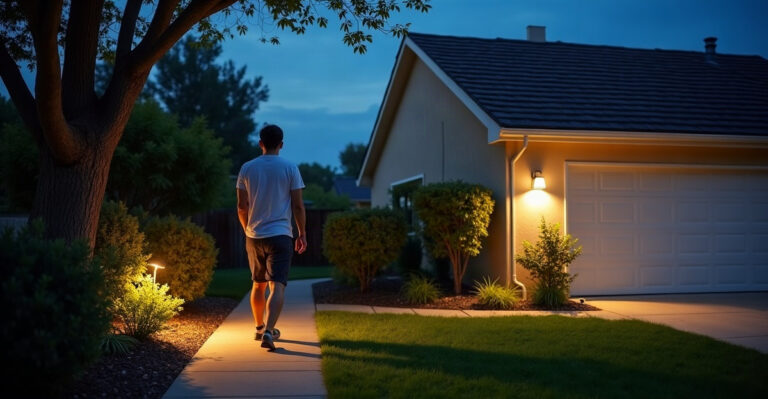
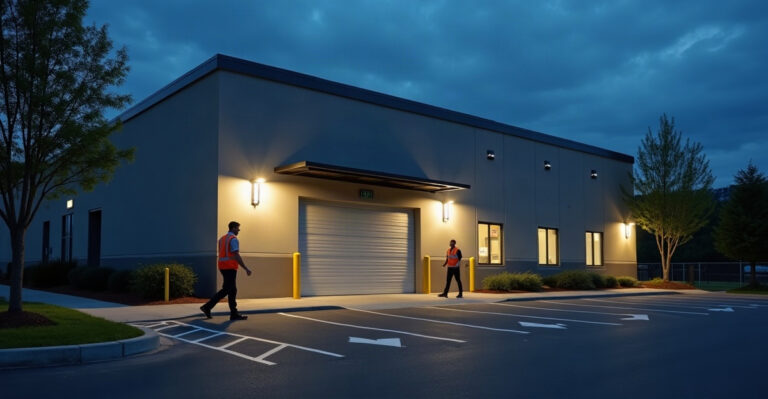
Dark-sky-friendly lighting uses shielded, downward-facing fixtures, properly aimed beams, warm light where appropriate, dimmers, timers, and motion sensors. We should respect neighboring homes, wildlife, local conditions, and applicable dark-sky ordinances. Controlled security lighting can improve visibility and deterrence around side yards, garages, gates, and driveways, but it does not replace locks, cameras, alarms, or other security measures.
Warm, shielded LEDs work well at entryways, pathways, patios, and gardens where comfort and curb appeal matter. Motion-activated lighting is best in targeted areas that need occasional visibility. Before installation, we should review fixture shielding, beam direction, nearby properties, dimming needs, sensor placement, and local rules. Unshielded floodlights should not be the default solution. A comparison image of glare-prone and shielded fixtures can clearly show the difference.
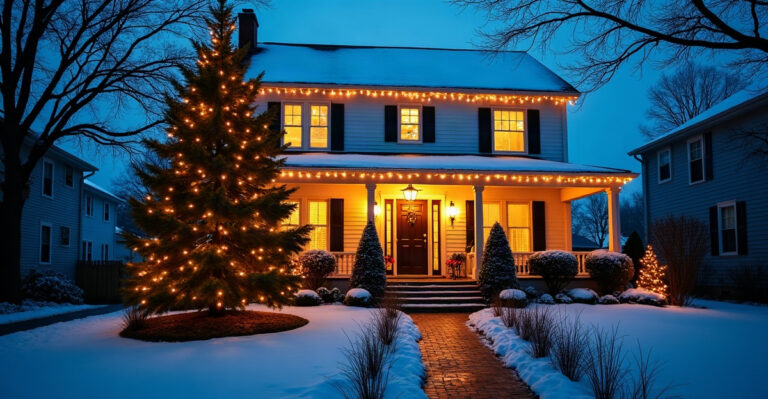
For seasonal atmosphere without sacrificing control, our seasonal outdoor lighting colors can add interest to selected zones while keeping everyday lighting warm and restrained.
Architectural Lighting, Façade Features and Natural-Looking Downlighting
Architectural lighting gives distinctive façades, stonework, entry features, mature trees, and focal-point landscaping greater presence after dark. The strongest results come from selective highlighting, fixture concealment, careful aiming, and controlled beam spread. Lighting every wall, tree, and planting bed usually weakens the overall effect.
Uplighting directs light upward to highlight trees, walls, columns, or façade details. Downlighting aims light downward from an elevated position for softer illumination. Moonlighting is elevated downlighting in a tree or structure that creates a gentle, moon-like pattern below. Grazing places a fixture close to a textured surface to reveal depth. Wall washing creates a broad, even layer of light across a wall or façade.
Downlighting and moonlighting work particularly well for patios, pathways, and natural-looking landscape lighting ideas. Architectural lighting is best for homes with strong façade details, texture, mature landscaping, or prominent entries. We can also use under-eave lighting to add discreet architectural definition around rooflines and covered exterior areas.
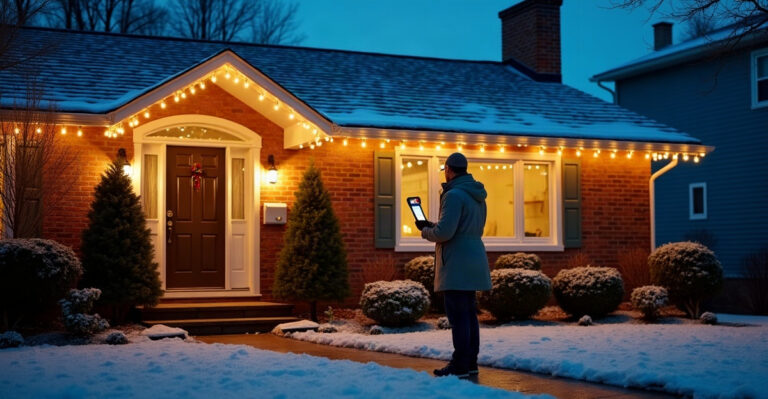
Permanent outdoor lighting offers year-round architectural illumination and seasonal flexibility. The design should still look clean and attractive when the system is switched off. Our permanent roofline lighting provides a practical option for homes that want controlled architectural detail alongside holiday and event scenes.
We should consider glare, fixture concealment, neighboring properties, mounting structures, weather exposure, tree growth, and ongoing tree maintenance before choosing these techniques. Tree-mounted and permanently mounted fixtures often require professional planning and installation to protect the structure, preserve access, and maintain proper aiming over time.
Smart Outdoor Lighting Controls and Low-Voltage Systems
Smart outdoor lighting is optional, but it can make a well-planned system easier to use. Controls can support scheduling, zoning, dimming, scenes, remote management, automation, and seasonal changes. A modern exterior does not require an app, but convenient controls often help us use lighting more consistently and avoid unnecessary operation.
We can set pathway and entry lights to activate at dusk, dim patio lighting for relaxed evenings, and separate the driveway, garden, façade, deck, and outdoor kitchen into individual zones. Scenes can support everyday use, entertaining, holidays, or seasonal displays. Timers and sensors add practical automation where they fit the activity and location. For more planning ideas, see our smart lighting automation ideas.
Low-voltage outdoor lighting remains a strong choice for pathways, planting beds, gardens, and landscape accents. It supports flexible fixture locations and thoughtful expansion when we plan transformer capacity, cable routes, loads, and voltage drop from the start. Our outdoor accent lighting can help define planting, trees, and focal features within a coordinated low-voltage system.
Before choosing smart landscape lighting, we should confirm Wi-Fi coverage, ecosystem compatibility, hub requirements, app reliability, integration needs, and future device updates. Low-voltage projects also need proper transformer capacity, cable routing, load planning, and room for future fixture additions. Solar fixtures are not interchangeable with wired or low-voltage systems. Their performance depends heavily on sunlight exposure, battery quality, seasonal conditions, and use patterns.
Durable Fixtures, Maintenance and Responsible Installation Planning
Long-term ownership matters as much as initial appearance. Durable outdoor light fixtures should suit the local climate and installation location. We should consider weather ratings, corrosion-resistant materials, drainage, fixture finishes, replaceable components, lens cleaning, and access for future maintenance.
Coastal, high-humidity, and severe-weather areas may need added attention to corrosion resistance and material selection. Landscaping also changes. Growing plants can block light output, trees may need pruning around downlights, and shifting soil or garden work can affect fixture alignment and cable protection.
Planning Essentials Before Installation
A complete outdoor lighting installation plan should cover the following points:
- Lighting zones, intended purposes, property sightlines, and neighboring homes.
- Power source options: plug-in, solar, low-voltage, or line-voltage.
- Budget, future expansion, fixture materials, finishes, drainage, and weather exposure.
- Beam direction, glare control, light trespass, timers, dimmers, sensors, Wi-Fi range, hubs, and automation needs.
- Transformer capacity, cable routes, load planning, and voltage drop for low-voltage outdoor lighting.
- Cleaning, pruning, alignment, corrosion checks, app updates, replacement components, local codes, permits, homeowners’ association rules, and dark-sky ordinances.
Some plug-in, solar, and low-voltage options may suit homeowner installation, depending on the system and local requirements. We recommend a qualified installer or licensed electrician for line-voltage wiring, electrical-panel work, complex smart-home integration, permanently mounted fixtures, and projects that require permits or code compliance. Results vary with fixture quality, placement, controls, climate, property layout, and installation quality. A qualified lighting professional or electrician should review technical installation plans before work begins.
Choosing the Right Trends for Your Home, Lifestyle and Project
The right outdoor lighting trends depend on how we use the property. For curb appeal, prioritize warm, low-glare architectural lighting, selective façade illumination, entry lighting, and landscape accents. For entertaining, use layered ambient, task, and accent lighting across patios, decks, pergolas, seating areas, and outdoor kitchens. Dimming and scenes add flexibility without adding visual clutter.
For pathway safety and wayfinding, use low, directed pathway lighting, stair lights, entry lighting, and carefully placed downlighting. Garden-focused projects benefit from low-voltage landscape fixtures, controlled uplighting or downlighting, and accents on trees and planting. For easier routines, smart outdoor lighting controls can manage schedules, zones, dimming, timers, motion sensors, and remote operation.
Renovations and new builds should account for power sources, transformer capacity, cable routes, fixture locations, mounting structures, smart-control infrastructure, and future expansion before hardscaping or landscaping is complete. Permanent systems require the same level of care: assess placement, weather exposure, controls, seasonal flexibility, and the appearance of fixtures when they are off.
Rather than buying fixtures one at a time, we recommend starting with a lighting plan that connects safety, style, and everyday use. Our residential outdoor lighting services can help shape a clear exterior lighting design, smart-control strategy, and installation plan. For clean, restrained home lighting inspiration, explore our minimalist outdoor lighting ideas, then contact Big Pig Smart Lighting to discuss the next step.